2026 RTIH Innovation Awards Startup of the Year finalists include Augmodo and Theseus Robotics
We’re pleased to announce the shortlist for the 2026 RTIH Innovation Awards Startup of the Year category. We received a record number of entries this year and many fantastic examples of technology excellence driving transformative change across the global retail sector.
Check out a rundown of our 2026 shortlists and finalists here.
Congratulations to all those who made it through the initial submission process! It’s now over to our star studded judging panel who will decide the winners to be announced at the 2026 RTIH Innovation Awards Ceremony, taking place at The HAC in Central London.
The event will be held on Wednesday, 4th November and consist of a drinks reception, three course meal, awards ceremony presided over by award winning stand-up comedian, presenter, actor and broadcaster, Aurie Styla, and after party until 1am.
Click here to book your place at the 2026 RTIH Innovation Awards Ceremony on Wednesday, 4th November.
Our 2026 Startup of the Year finalists as follows:
Augmodo
Augmodo builds physical AI infrastructure powered by wearable computer vision for frontline retail teams. A frontline worker wears a passive Smartbadge during standard shifts, automatically building a live 3D map of shelf inventory to spot out-of-stocks, gaps, and misplaced items in real-time with zero manual scanning or operational change.
Founded in 2023 by Ross Finman, who sold his last start up to Niantic and led the mapping team behind Pokémon GO, Augmodo expanded from 8 to 165 stores in under a year, raising nearly $60 million at a $350 million valuation. Chemist Warehouse achieved 30%+ shelf gap reductions.
Clavis Studio
AI visual commerce tool that uses furniture retailers' product catalog to design their shoppers' rooms such that shoppers can 'shop the look' according to their design preference and budget.
Clavis AI provides a whitelabelled, fully embedded AI design tool for furniture retailers to offer personalised interior design to their shoppers online and instore. Fully immersive with deep data analytics providing unrivalled insight into consumer behaviour.
Lyzer
Lyzer is a Lisbon-based logistics-as-a-service (LaaS) startup, launched in September 2024 by the founders of 360hyper and SPEAK. Its platform brings orders from stores, online shops and marketplaces into one system and runs smart task allocation, guided picking and route optimisation, so retailers can turn existing stores into fulfilment hubs.
In two years, Lyzer has processed over 1.1 million orders worth more than €330 million in GMV, enabled Staples Portugal to offer same-day delivery within four hours, opened a Spanish subsidiary and raised over €10 million from Indico Capital Partners, Lince Capital, LC Ventures and C2 Capital.
Minimist
Minimist is the recommerce operating system for charity retail. Every donated item is a one-off with no barcode, no SKU and no product data, so listing one by hand takes up to 10 minutes and 97% of donated stock never goes online at all.
Minimist turns one photo into a priced, described, live listing across eight marketplaces in 30 seconds. In our first year in market we have signed 28 charity retailers across the UK, Ireland and Australia, including Salvation Army, Vision Ireland and Helen and Douglas House. Together they have listed 73,844 donated items and sold 31,580 of them, raising 1,409,994 euros for their causes.
M11 Labs
M11 Labs is an agentic commerce lab helping good products win in a zero-trust internet. The M11 platform puts specialised AI agents to work on a brand's online store across four areas: fact checking every claim against independent evidence, correcting what AI assistants say, completing the product data machines need, and tracking competitor threats.
Everything rolls into one Commercial Score and a prioritised fix list, which M11 agents draft and the brand approves. Within months of launch M11 agents have scanned 1,500+ brands, stress tested 6,500+ claims, published a state of the category scan of the skincare industry, and launched OpenMarket, the first multi-agent marketplace.
Neato
Neato is a second party (2P) e-commerce model that gives consumer brands one accountable partner to grow across fragmented online channels. Neato purchases inventory directly, becomes the seller of record, and manages marketplace execution across pricing, listings, creative, advertising, logistics, reporting, and brand protection.
Over the past year, the company extended this model beyond Amazon into TikTok Shop, direct-to-consumer, social commerce, and Walmart, supported by a new Las Vegas operations hub, and AI enabled workflows. By bringing people, inventory, technology, and execution together, Neato aims to make marketplace growth more coordinated, measurable, and profitable for brands and shoppers.
SquareBySquare
SquareBySquare turns an online purchase into real, mapped rainforest protection. Customers choose a square metre of rainforest, name it, receive a personalised certificate and see it on a live public map.
StudioGo
StudioGo is a workflow platform designed to eliminate content bottlenecks and provide complete visibility across the product imagery lifecycle.
By connecting planning, production, approval, asset management, and publication into a single workflow, StudioGO helps retail, e-commerce, creative, marketing, and studio teams move products from sample arrival to customer facing channels faster and with greater consistency.
TerzyApp
TerzyApp turns two ordinary phone photos into 32 body measurements, letting people order made-to-measure clothing online and matching them with verified independent tailors.
Payments and payouts run across 37 countries and the tailor is paid only after successful delivery. It combines live AI body measurement, a verified tailor marketplace and cross-border money rails in one shipped product - made-to-measure clothing from your phone. TerzyApp UK is pre-revenue, with a working iOS app in TestFlight beta and an AI measurement engine running in production on cloud GPU, ahead of a UK launch.
Theseus Robotics
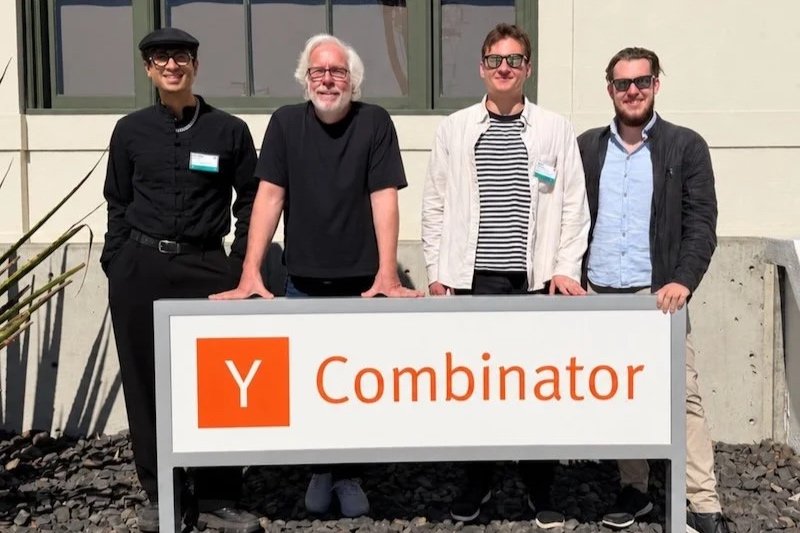
Theseus Robotics (Zürich; Y Combinator backed) has buillt Domi, a wheeled, two-armed robot that restocks supermarket shelves overnight.
Domi tows a trolley of stock to the aisle and places products on the shelf. An AI model trained on Theseus's own demonstrations moves the arms; when Domi meets something new, an operator can step in remotely and the correction becomes training data.
No store retrofit, no capex: a monthly fee per robot. Founded by a team from ETH Zürich, Carnegie Mellon and Flink Robotics, Theseus had Domi restocking autonomously within five weeks of the robot's delivery and is preparing retailer pilots for 2027.