Four best custom software development companies for 2026
Ready made software handles basic needs, but almost every growing business hits its limits very fast. Key features are missing, processes don’t line up properly, and you’re forced to adapt your operations to the software rather than having the software adapt to you.
Custom development fixes that. You build exactly what your operations require, so the technology actually supports how you work.
Benefits of Custom Software Development
Pre-built software works until your business outgrows it. Custom development fixes the things that eventually become problems:
● You're not waiting on anyone. Features get built when you need them, not when a vendor gets around to it.
● It actually fits. No more forcing your processes into a template that wasn't designed for you. The software bends to your business, not the other way around.
● Customers notice. When you build features that address exactly what your customers struggle with, they stick around.
● You're not copying competitors. Off-the-shelf means everyone gets the same thing. Custom means you can build something different.
● You see the numbers that matter. Data is usable from day one because the system was built around how you track and measure things.
Criteria Used to Select the Top Companies
To choose the best development partners, we evaluated each company based on key factors. Strong technical skills in current programming frameworks and modern technologies were required. Proven experience delivering reliable solutions and meeting compliance and security requirements was also given high priority.
We also assessed communication style and project management practices to determine how effectively teams work with clients. Security measures and quality assurance processes were reviewed as well.
The final consideration was whether the company offers continuous support after a product is deployed, not just development services.
2026's Leading Custom Software Development Firms: Top FOUR Picks
These four companies separated themselves from the rest. Their technical skills were solid, they paid attention to what clients needed, and they came up with smart solutions instead of just writing code.
Avenga
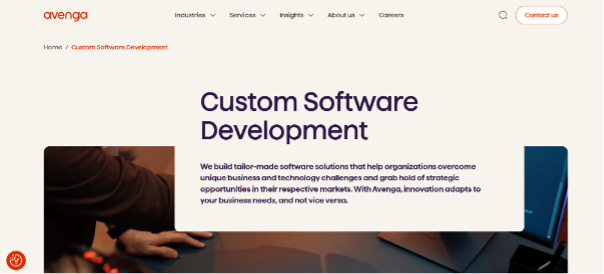
Avenga operates worldwide and has more than three decades of experience, mainly in complete custom software projects.
Avenga Custom Software Development focuses on building applications that match a company’s unique challenges - business side and technical side - so the organisation isn’t stuck reacting but can actually push forward in the market.
The approach stays client centered: tech and ideas adapt to what the business needs. They bring solid knowledge from different sectors, work with modern technologies, follow agile principles, and provide support across the full timeline - planning, development, deployment, and keeping everything running smoothly long term.
Key Services:
● Product Discovery: validating ideas upfront and defining clear next steps.
● UX and Service Design: creating practical, user-friendly experiences and service structures.
● Web Apps Development: developing high performing, cross-device web solutions.
● Full-Cycle App Development: managing every phase from start to ongoing operations.
● Microservices and APIs: building scalable, modular architectures with strong integration points.
● Quality Assurance: applying consistent, thorough testing for dependable results.
Best For: Mid-to-large businesses that need a capable team to drive meaningful progress - the kind where AI, cloud infrastructure, data analytics, or IoT actually help them get ahead of the pack.
Leanware
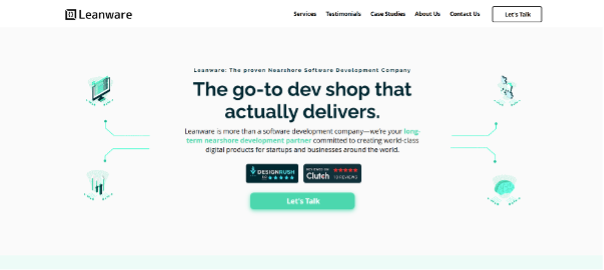
Leanware operates as a nearshore custom software company based in the US (with main delivery from Colombia), mainly partnering with startups and mid-sized businesses to turn ideas into real digital products.
What stands out is how responsive and flexible they are - quick to adjust, easy to work with. Their engineers handle modern stacks like React, Node.js, and Python really well, and they’re building more experience in AI/ML too.
For North American clients, the big plus is nearshore: time zones mostly line up, communication flows naturally, and there are no big cultural gaps.
Key Services:
● Web & Mobile App Development: taking an idea and building apps that actually feel good to use and keep users coming back.
● UX & UI Design: designing interfaces and flows that connect with the right people and help turn visitors into customers.
● Data Engineering Solutions: setting up reliable, scalable data pipelines so analytics actually work and give useful insights.
● Gen AI Integration & Consulting: making AI practical: applying it to real business problems in ways that scale without breaking.
Best For: US startups and mid-sized companies looking for a nearshore team that delivers good quality at lower cost, keeps overlapping hours for smooth daily work, and stays transparent and productive from start to finish.
Mercury Development
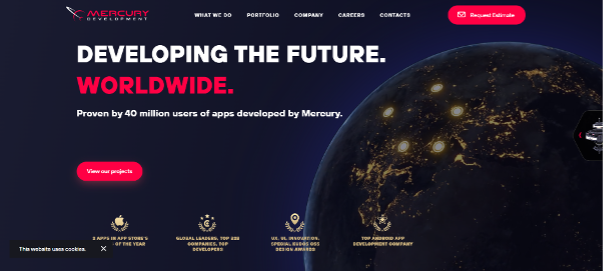
Mercury Development is a US firm established for over 20 years, specialising in custom software with a focus on mobile.
They deliver reliable, high quality work for a range of clients - from Fortune 500 to startups. They excel at native iOS and Android, and cover cross-platform mobile, web apps, and desktop solutions.
Key Services:
● Mobile Development (iOS & Android): building native or cross-platform mobile applications.
● Web & Desktop Development: developing web and desktop software across platforms.
● IoT & Emerging Tech: incorporating connected devices, BLE, beacons, wearables.
● End-to-End Development Services: managing projects from start to ongoing support.
● Staff Augmentation: providing developers to extend client teams.
Best For: Large companies and enterprises that require proven, quality focused development for complex or regulated projects in areas like finance and healthcare.
ScienceSoft
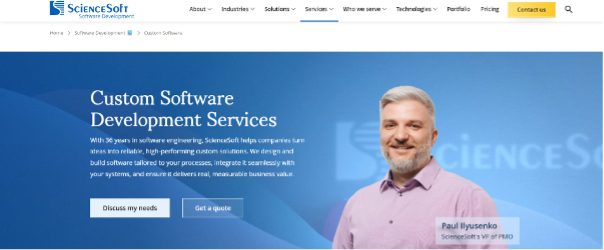
ScienceSoft started in 1989. It’s an established IT consulting firm heavy on custom software development, especially enterprise-level stuff and advanced analytics.
Cybersecurity runs deep in their approach - ISO 27001 certified - and they know how to deliver in industries where mistakes aren’t allowed. Regulated sectors trust them for mission-critical software that stays secure and compliant.
Key Services:
● Custom Software Development: designing and delivering reliable software built around specific processes.
● Data & Analytics (AI/ML): solutions that use data for predictions, reporting, and better decisions.
● Cloud Engineering: scalable cloud applications and infrastructure management.
● Cybersecurity & Compliance: full security controls plus regulatory adherence.
● Software Integration & Modernisation: connecting new tools to existing setups or refreshing outdated systems.
Best For: Big companies and government-related organisations in healthcare, finance, manufacturing, or similar regulated spaces that want a dependable team focused on secure, compliant, and tightly integrated software.
How to Choose the Right Partner
Here's how to choose. Figure out what you need. Write it down. The problems, the must haves, the things you're willing to compromise on.
Find a partner who fits. Same tech stack. Same industry, if possible. Same general time zone, so you're not always waiting for emails. Ask about their process: how do they handle feedback, how often do you see progress, and what happens when things go wrong.
Look at their work. Read case studies. Check client reviews on sites like Clutch.
Also, see if they deliver quality stuff that actually works. And think past launch: do they offer ongoing support, can they help you add features later. Software continues to evolve over time, so you need a partner who stays involved and supports the product as it grows.
Conclusion
We picked these four based on technical skill, client feedback, and the quality of their work. But choosing between them depends on what you need.
Ask yourself a few questions. What industry are you in? How big is your company? Do you need mobile expertise? Heavy security and compliance? How do you prefer to work with outside teams?
Then go through each company. Look at their past projects. Ask about their process. Find out what happens after the software is built. The right partner will have done this before in your space and will stick around to help as things change.