How AI wearables are transforming retail operations, customer experience, and store productivity
Retail has always been shaped by technology. Barcode scanners, self checkout systems, mobile payments, and electronic shelf labels all changed how stores operate and how customers shop. Artificial intelligence is now driving the next stage of that evolution, and wearable devices are becoming part of the conversation.
Unlike traditional retail technology that sits behind a checkout counter or inside a stockroom, AI wearables move with employees and customers. They provide information exactly when it is needed, allowing people to make decisions without stopping to search for data on a computer or handheld device.

For retailers, this is not simply another hardware trend. AI wearables have the potential to improve store productivity, strengthen customer service, and simplify everyday operations. As more retailers invest in AI driven experiences across stores and digital channels, wearable technology is becoming another practical tool rather than an experimental concept.
Giving Store Associates Instant Access to Information
Customers expect store associates to answer questions immediately. They want to know whether a product is available, which size is in stock, whether another location carries it, or which alternative product might better fit their needs.
Traditionally, employees have needed to walk to a computer terminal, check a handheld scanner, or use a mobile phone to find that information. Each interruption slows down the interaction and reduces the amount of time employees spend helping customers.
AI wearables change that process by making information available while employees continue serving shoppers. Voice assistance, visual recognition, and hands free access to inventory systems can reduce unnecessary interruptions and keep conversations moving naturally.
Instead of replacing retail staff, wearable AI supports them by removing repetitive tasks. This allows associates to focus on product knowledge, recommendations, and building stronger customer relationships.
Faster Inventory Management
Inventory accuracy remains one of retail's biggest operational challenges. Even small discrepancies between physical stock and inventory records can lead to missed sales, unnecessary replenishment orders, and frustrated customers.
Wearable technology can simplify many of these processes.
Employees performing stock checks can verify products using cameras and computer vision instead of manually scanning every barcode. AI systems can recognize misplaced products, identify empty shelf space, and guide employees directly to items that need attention.
When connected with inventory management software, wearable devices can also prioritise tasks throughout the day. Instead of following static checklists, employees receive updates based on current store conditions, incoming deliveries, or customer demand.
This approach helps retailers spend less time searching for problems and more time solving them.
Improving Customer Service Without Adding Complexity
Modern shoppers value convenience as much as product selection. They expect quick answers, personalised recommendations, and shorter waiting times.
Wearable AI helps retailers deliver these experiences without introducing complicated customer facing technology.
For example, an associate assisting a customer could instantly check whether another colour or size is available, locate complementary products, or verify delivery options without leaving the conversation.
Some retailers are also exploring AI powered translation tools that help employees communicate with customers who speak different languages. Others are testing visual recognition systems that identify products from images rather than product numbers.
These improvements may seem small individually, but together they create a smoother shopping experience that feels more personal and more efficient.
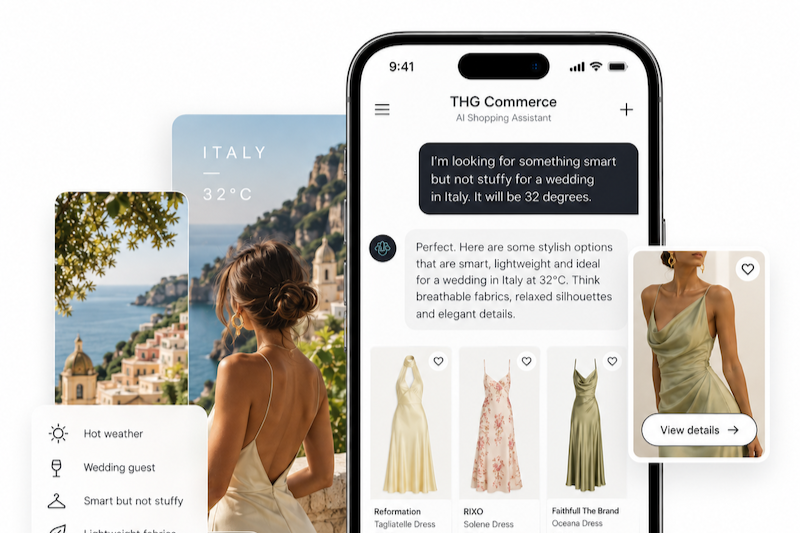
Retail Technology Innovation Hub regularly highlights how retailers are investing in AI not simply to automate processes, but to improve customer experience while supporting store teams. Recent examples include AI shopping assistants, voice AI, intelligent procurement platforms, and AI workspaces designed to help employees perform everyday tasks more efficiently.
Better Training for New Employees
Hiring seasonal workers or onboarding new employees often creates pressure for retail managers.
Traditional training usually combines manuals, classroom sessions, and supervision on the shop floor. While effective, it also requires experienced employees to spend significant time supporting new team members.
AI wearables introduce another approach.
Instead of memorizing every process before starting work, employees can receive guidance while completing real tasks. Step by step instructions, product information, and safety reminders appear only when needed.
This reduces information overload while helping employees become productive more quickly.
Retailers also benefit from greater consistency. Every employee receives the same guidance regardless of store location or experience level, helping standardise customer service across multiple branches.
Supporting Omnichannel Retail
Modern retail no longer separates online and physical stores. Customers expect both channels to work together.
They may research products online, visit a store to see them in person, order for home delivery, or collect purchases from a nearby location.
Wearable technology helps employees manage these connected journeys more efficiently.
Store associates can receive notifications about click and collect orders, online returns, curbside pickups, or customer requests without constantly monitoring separate systems.
As retailers continue investing in omnichannel operations, wearable AI becomes another interface connecting employees with inventory, fulfilment, and customer service platforms.
Rather than replacing existing technology, it complements systems retailers already use.
Helping Managers Make Better Decisions
AI wearables do more than assist frontline employees.
They also generate operational insights that help managers understand how stores function throughout the day.
Anonymous activity data can reveal where employees spend the most time, which tasks create delays, and which areas of the store require additional support.
Combined with sales performance, customer traffic, and inventory information, these insights allow retailers to improve staffing schedules, product placement, and operational workflows.
The objective is not employee surveillance.
Successful retailers use operational data to remove unnecessary work, allowing staff to spend more time engaging with customers and less time performing repetitive administrative tasks. Industry discussions increasingly emphasize that AI should strengthen human capabilities rather than replace them. (TechRadar)
Consumer Wearables Will Influence Shopping Too
The conversation around AI wearables often focuses on retail employees, but customers are beginning to adopt these devices as well.
As smart glasses become more capable, shoppers may increasingly use voice assistants, visual search, and real time product information while browsing stores.
Consumers might compare products, translate labels, receive nutritional information, or search for reviews without taking out a smartphone.
Retailers should prepare for this shift rather than view it as competition.
Websites, product descriptions, structured data, and in store experiences will increasingly need to support AI assisted shopping journeys alongside traditional mobile browsing. As consumers become more familiar with wearable AI, retailers should pay attention to the devices shaping those expectations. Many shoppers already explore Ray-Ban AI glasses to understand how voice assistance, visual search, and hands free interactions can fit into everyday life, giving retailers an early look at the experiences customers may soon expect in stores.
Privacy Must Be Part of Every Deployment
Like any AI technology, wearable devices introduce important privacy considerations.
Retailers must clearly define what information is collected, why it is collected, who can access it, and how long it is retained.
Employees should understand how wearable systems support their work rather than feeling they are constantly monitored. Customers should also know when AI enabled experiences involve cameras, voice interactions, or personalised recommendations.
Building trust will be just as important as deploying new technology.
Retailers that combine transparent governance with practical AI applications are more likely to achieve long term adoption from both employees and customers.
Looking Beyond the Technology
Wearable AI is not becoming important because of the devices themselves. Its value comes from helping people work more efficiently and making shopping easier.
Retail has already shown that technology succeeds when it removes friction rather than adding complexity. Self checkout became popular because it reduced waiting. Mobile payments simplified purchases. Electronic shelf labels improved pricing accuracy.
AI wearables follow the same principle.
The retailers that gain the greatest advantage will not necessarily be those using the most advanced hardware. They will be the ones that integrate wearable technology into everyday operations in ways that genuinely help employees, improve customer experiences, and support smarter decisions across the business.
As AI continues expanding across stores, supply chains, and digital commerce, wearable technology is likely to become another practical part of the connected retail ecosystem rather than a standalone innovation.