
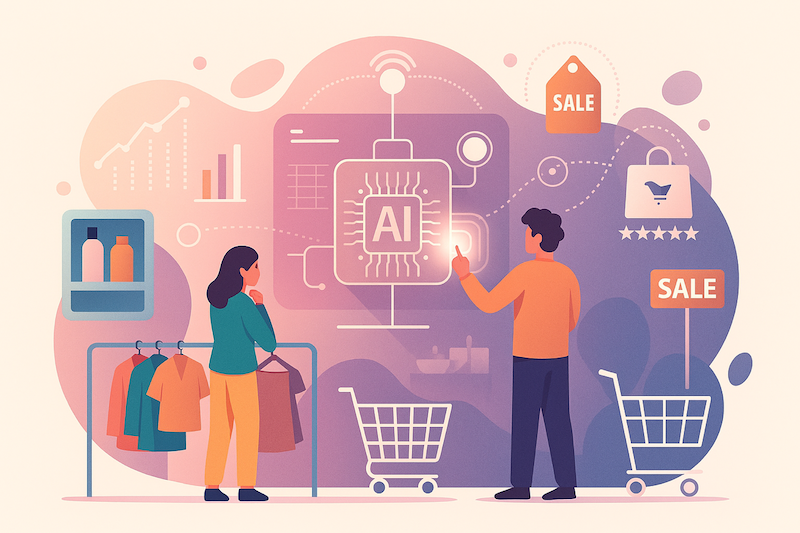
Perhaps more than any other industry, retail has made the biggest effort attempting to understand its customers on the most granular level. Underpinning many enterprise level retailers is a Byzantine network of loyalty schemes, CRMs, analytics, and automation software all in service of this goal.
However, this dense proliferation of systems has given rise to another issue - getting them to actually work together. Enter the buzziest new feature in retail (and most other enterprises): AI agents.
Capable of performing tasks across an array of interconnected systems instead of just generating recommended actions, AI agents are being touted as the answer to the siloing and complexity of retail marketing. But can it deliver?
Retail's Data Problems Haven't Gone Anywhere
Anyone who works in retail marketing will understandably be sceptical of adding yet another tool to the stack. Yet it's worth noting that a huge amount of the data troves that businesses already collect remains untapped. Research from IBM reckons that less than half of the data retailers collect on customers is currently usable with AI, and a mere quarter is actually being used. The takeaway? Collecting customer data is a whole different thing to actually putting it to work.
The consequences of this are real. A customer might do their window shopping online, buy the products in-store, and contact customer service via a separate platform. All of these interactions provide vital data, but probably reside in different, disconnected systems.
Without any consolidated view, marketing teams can't translate this data into relevant, tailored communications. Adding another AI app to the stack won't do much to fix this fragmentation.
AI Agents Move Beyond Mere Recommendations
Conventional AI agents have proven themselves adept at parsing information, drafting messages, and suggesting campaign strategies. Agentic systems, meanwhile, can autonomously carry out whole sequences of tasks within their defined workflows.
One agent might identify a relevant customer segment, prepare the communications, configure specific campaign "triggers", and monitor performance. These are capabilities that, naturally, depend on full access to operating systems and solid customer data.
Some marketing tech players are already pursuing this approach. An AI marketing assistant can incorporate specialised agents for campaign strategy, building, analysis, and ongoing troubleshooting. Operating within the company's marketing automation platform, these agents use connected customer data to prepare full end-to-end campaigns for approval and coordinate tasks across different execution stages.
While designed for a wide range of industries, the underlying approach here shows how agentic systems can address retail marketing's operational challenges.
From Experimenting to Implementing
However, there's a big difference between demonstrating an AI agent and then deploying one systematically across an organisation. McKinsey's own State of AI Survey found that, while a majority of organisations were "experimenting" with AI agents, less than a quarter had actually begun scaling them across a single business function.
For retailers looking to tap AI's potential, it's best to start with a specific, measurable action. You could automate campaign reporting, coordinate customer comms, or find new relevant audience segments to deliver quick operational benefits.
Next is to connect the relevant data, establish clear permissions, and align on what success looks like. Starting smaller can give you and your team an opportunity to show the value add before releasing AI agents onto more complex workflows.
Do More with What You've Got
Retailers don't need another tech layer. The key is to get more from the tech you have already put time and money into.
By connecting customer data with marketing execution, AI agents can help retailers deliver more relevant, impactful comms with less manual labour. Those best poised to reap the benefits of AI will not be the ones deploying the most sophisticated models, but rather those that know exactly where to put that AI to work.

Comments (0)
No comments yet.