
Before the pandemic, about a fifth of UK retail sales happened online. In January 2021 that share hit 37.8%, and it has since settled at around 27%, according to the Office for National Statistics.
The surge faded, but the shift stuck. A large share of shoppers now meet a product on a screen long before they meet it on a shelf.
That has changed what a product launch is for. The event in the room still matters, but it is no longer the whole point. For most retail brands, the launch has become a piece of content production, and the people who matter most are watching from somewhere else.
The audience is mostly not in the room
A launch used to be judged on who turned up: press, buyers, a few well-chosen faces. Now the real audience arrives through a livestream, a run of short-form clips, creator coverage and the product page that goes live the moment the reveal happens. The guests in the room are still important, but they are also the backdrop for footage that will be cut, captioned and pushed across channels for weeks afterwards.
That reframes the brief. The question is less "will the room enjoy it?" and more "will this look and sound right on a phone screen, in a feed, at a size of a few centimetres?"
What a broadcast ready launch needs
Retail teams that run launches like broadcasts tend to ask the same questions of a venue.
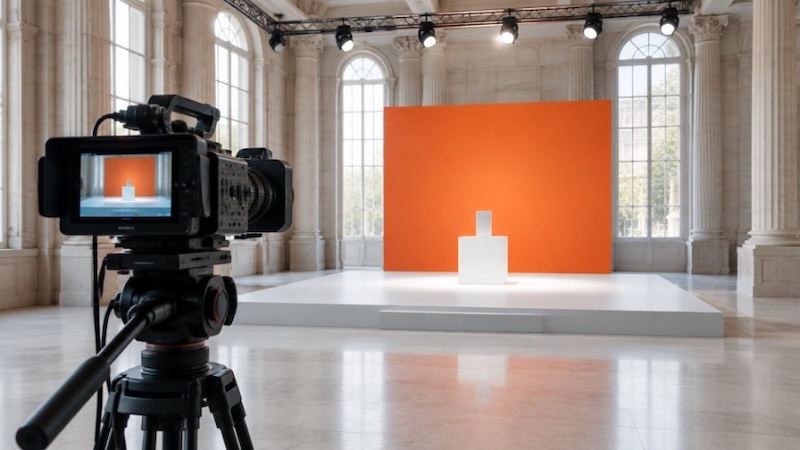
Can the cameras see it?Height matters more than floor space. A tall room lets lighting and screens sit above the audience, so cameras get clean sightlines to the stage without heads in the shot.
Can the light be controlled?Daylight is lovely and unpredictable. The best rooms offer both: natural light for the arrival and the drinks, full control once the cameras roll.
Does it all run from one place?Sound, lighting and video cues land better when a single operator controls them. A missed lighting cue is a small problem in the room and a large one on a livestream.
Is the AV built for broadcast?
If the footage is going out live or being edited into a campaign, the venue's screens and feeds need to be good enough to be filmed, not just watched.
Some venues have designed around exactly this. In King's Cross, the restored neo-classical civic building at spaces.townhall.co.uk pairs 13-metre ceilings in its main hall with 4K, broadcast-ready AV from Pixl Evolution, run from a single central control. It is the kind of setup that lets a brand film a launch to campaign standard without building a studio inside the room.
Treat the launch as a campaign asset
If the launch is content, it should be measured like content. That means planning the outputs before the event rather than after it. Decide which clips you need for which channels, how the livestream links through to a shoppable page, and which tracking will tie views to sales.
Retail technology makes this easier than it used to be. Livestream platforms can carry product links. Tagged URLs and QR codes on screen show which channels drove traffic. Basket data after the event shows whether interest turned into orders. The launch stops being a one-night cost and becomes a measurable piece of the marketing mix.
Location still does a lot of work
A broadcast launch still needs people in the room: press, partners, creators and the senior team. Getting them there easily is part of the job. Venues close to major transport hubs make attendance simpler, especially for guests travelling from outside London. A launch within minutes of King's Cross St Pancras, with its Underground, national rail and Eurostar connections, is within reach for guests coming from across the UK and from Europe.
The reveal is only the beginning
The most effective retail launches now treat the moment of reveal as the first frame of a much longer story. The room sets the tone, the cameras carry it, and the data shows what worked. Brands that plan for all three get far more from a single evening than a good night and a few photographs.
Comments (0)
No comments yet.