Outdoor TV guide: what matters before you install one outside
An outdoor TV looks simple at first. It is a screen, a remote, a few apps, and maybe a wall mount. But once you place that screen outside, the job becomes different.
Sunlight changes the picture. Rain changes the enclosure requirement. Dust, humidity, wind, and temperature changes all become part of the viewing experience. A regular indoor TV may look fine on day one. The real question is whether it can still work well after a summer, a storm, or a long weekend beside the pool.
That is why choosing an outdoor TV is not only about screen size. It is about the place where people watch, the amount of light around the screen, the way the TV handles weather, and how easy it is to use every day.
In this guide, we will walk through the key points in a practical way. No overdone tech talk. Just the details that matter before you install an outdoor TV on a patio, deck, backyard wall, poolside area, RV space, or outdoor entertainment zone.
If you are already comparing options, you can review the MWE 55-inch Outdoor TV specifications and availability before working through the buying criteria below.
What Is an Outdoor TV?
An outdoor TV is a television built for outdoor use. It usually has a stronger housing, weather resistant protection, a brighter screen, sealed ports, and better control over heat, dust, moisture, and glare.
That makes it different from a standard indoor TV. Indoor TVs are made for stable rooms. They expect controlled light, dry air, normal indoor temperature, and little exposure to dust or water. Outdoor spaces do not work that way.
A true outdoor TV should help solve three basic problems:
● Visibility: The screen should stay clear in daylight.
● Durability: The body should resist rain, dust, humidity, and outdoor air.
● Convenience: The system should support streaming, casting, voice control, and easy daily use.
For homes, hospitality areas, restaurants, bars, resorts, outdoor lounges, and entertainment spaces, this balance is what makes the product useful. A good outdoor TV should not feel like a fragile indoor screen moved outside. It should feel like it belongs there.
Why a Regular Indoor TV Is Not a Safe Outdoor Choice
Many buyers ask the same question: can I use a normal TV outside if I keep it under cover?
For short-term casual use, people do it. For permanent outdoor installation, it is not a good idea.
An indoor TV does not normally have sealed ports. It does not protect internal parts from outdoor humidity. It may not handle high heat, low temperature, direct light, dust, or water exposure. Even under a covered patio, the screen can still face moisture, insects, air movement, and strong reflected sunlight.
The other issue is warranty. If a standard indoor TV fails outside, the damage may not be covered. That makes the “cheap” option less cheap once you replace the unit.
A purpose-built outdoor TV costs more upfront, but it gives you a more stable setup. It also gives users a better daily viewing experience. The screen is brighter, the frame is stronger, and the ports are better protected.
Start With the Location, Not the Screen Size
Before choosing an outdoor TV, look at the installation location. This sounds basic, but it decides almost everything.
Ask these questions first:
● Will the screen face direct sun?
● Will it sit under a covered patio, pergola, or roof?
● Will people watch from one angle or from many seats?
● Will the area be close to a pool, grill, garden, or road?
● Is there stable Wi-Fi near the installation point?
● Will the TV stay outside all year?
A TV under a shaded patio has very different needs from a screen beside a pool in bright afternoon sun. A backyard movie area has different needs from a restaurant patio where customers look at the screen from many angles.
So the best outdoor TV is not always the largest one. It is the one that fits the actual viewing environment.
Brightness: The Detail Most People Notice First
Brightness matters more outdoors than indoors. Outdoor light can wash out a screen very quickly. This is why you often see outdoor TVs described by “nits.” A nit measures screen brightness. In simple terms, more nits usually means the screen can fight stronger ambient light.
For outdoor viewing, a low-brightness screen can look dull during the day. Dark scenes can become hard to see. Sports, menus, text, and movie details may lose clarity. At night, almost any TV can look bright enough. Daytime is the real test.
Match Brightness to the Installation Area
● Full shade: Lower brightness may work for a covered patio, screened porch, or shaded deck.
● Partial sun: Choose higher brightness and stronger glare control for a backyard wall, restaurant patio, or outdoor lounge.
● Bright outdoor area: Prioritize an ultra-bright display and strong glare control for poolside spaces, open decks, outdoor parties, and commercial use.
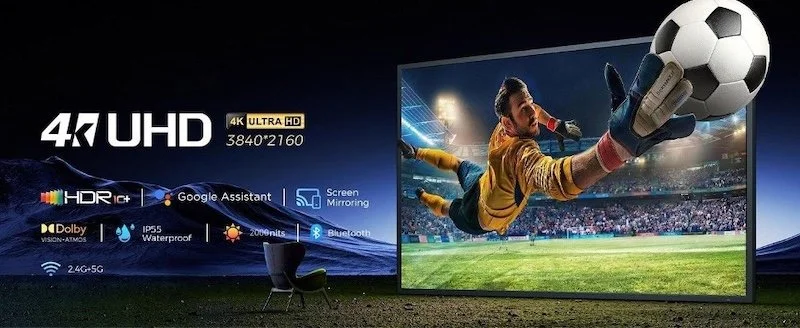
The MWE 4K Ultra-Bright Outdoor Smart TV is built with a 2000-nit 4K UHD display. That level of brightness is useful for outdoor spaces where normal indoor TVs feel weak. The built-in light sensor also helps adjust screen brightness between day and night use, so the picture does not feel too dim in the afternoon or too harsh in the evening.
Weatherproof Rating: What IP55 Means
Outdoor TV product pages often mention an IP rating. IP means Ingress Protection. It is a rating system used to describe how well an enclosure protects against dust and water.
For example, IP55 means the product is protected against dust in normal working conditions and can resist water jets from different directions. It does not mean the TV should be submerged in water. It also does not mean you can ignore installation care. But it does mean the enclosure is built for outdoor exposure in a way indoor TVs are not.
The MWE 4K Ultra-Bright Outdoor Smart TV is available in 43", 55", 65", and 75" sizes, with IP55 weatherproof protection for outdoor use. This makes it suitable for patios, poolside areas, decks, outdoor entertainment zones, RV spaces, and other covered or semi-exposed outdoor areas.
Still, good installation helps any outdoor TV last longer. Place the screen where it has some protection from direct heavy rain when possible. Keep power and cable connections properly arranged. Avoid areas where sprinklers hit the unit every day. Small details like these make a real difference.
4K Resolution: Why It Still Matters Outside
Brightness gets most of the attention, but resolution still matters. A 4K outdoor TV gives cleaner detail, sharper text, and a more polished picture. This is especially useful when people sit closer to the screen or when the screen size reaches 55 inches, 65 inches, or 75 inches.
For sports, live events, streaming shows, family movies, and branded content, 4K helps the screen feel premium. It also matters for commercial spaces. A restaurant patio, hotel lounge, outdoor bar, or event area does not only need a screen that works. It needs a screen that looks clean and professional.
The MWE Outdoor TV supports 4K UHD, so it can show detailed content for both home entertainment and light commercial display use.
Smart Features Make Outdoor Viewing Easier
An outdoor TV should not feel hard to use. People expect the same convenience they have indoors: streaming apps, voice control, casting, Bluetooth, Wi-Fi, HDMI, and easy access to content.
This is where a smart outdoor TV becomes useful. The MWE Outdoor TV includes a smart platform with support for apps such as Netflix, YouTube, Prime Video, and more. Voice control also makes daily operation easier. You can adjust volume, search content, open apps, or change settings without walking back and forth.
This matters more than it may seem. Outdoor viewing is often social. People are grilling, swimming, hosting friends, watching a game, or relaxing after dinner. A smooth smart system keeps the moment easy.
Viewing Angle: Important for Patio and Poolside Setups
Indoor TV viewing is often simple. Most people sit in front of the screen. Outdoor spaces are different. People move around. Some sit at a dining table. Some stand near the grill. Some watch from a lounge chair or poolside seat.
That is why a wide viewing angle matters. The MWE Outdoor TV uses a 178° wide viewing IPS panel. This helps the picture stay clear from different positions, not only from the center seat.
For backyard parties, restaurants, outdoor bars, and family spaces, this feature makes the setup feel more natural. People do not need to fight for the “best seat.”
Audio: Do Not Forget the Outdoor Sound Environment
Outdoor audio has more space to fill. There are no room walls to hold the sound. Wind, people, water, and road noise can make dialogue harder to hear.
The MWE Outdoor TV includes Dolby-powered audio and Bluetooth support. That gives you two options. You can use the built-in speakers for normal viewing. You can also connect Bluetooth headphones, a soundbar, or outdoor speakers when you want stronger sound.
For a quiet deck, built-in audio may be enough. For a larger patio, poolside setup, or commercial outdoor area, external speakers are worth considering.
Connectivity: Check This Before Installation
A clean outdoor TV setup depends on connection planning. Before you install, check how you will bring power, internet, and media sources to the screen.
The MWE Smart Outdoor TV supports Wi-Fi, Bluetooth, HDMI, USB, antenna input, and screen casting. This gives you room to connect streaming devices, game consoles, Blu-ray players, phones, tablets, and live TV sources.
Here is a simple setup checklist:
● Make sure the TV location has stable Wi-Fi.
● Use outdoor-safe power planning.
● Keep cable runs clean and protected.
● Decide whether you need HDMI devices before mounting.
● Plan external audio before the final install.
● Choose a mount that matches the screen size and outdoor setting.
It is better to plan these points before installation. Fixing cable access after the TV is already mounted can be annoying.
Best Outdoor TV Use Cases
An outdoor TV can serve many spaces. It is not only for luxury backyards. It can improve normal outdoor areas and make them more useful.
Choose Features by Use Case
● Backyard movie night: Prioritize a 4K picture, easy app access, and clear audio.
● Poolside viewing: Look for weather-resistant construction, high brightness, and a wide viewing angle.
● Outdoor bar or restaurant: Focus on brightness, durability, and stable operation for sports, menus, and branded content.
● Deck or patio: Smart TV features, glare control, and simple operation improve everyday outdoor viewing.
● RV or mobile outdoor area: A compact setup, strong casing, and flexible inputs make installation easier.
How to Choose the Right Outdoor TV Size
The MWE 4K Ultra-Bright Outdoor Smart TV is available in 43", 55", 65", and 75" sizes. This gives you more flexibility for different outdoor spaces, from compact patios to larger backyard and poolside setups.
A 43-inch outdoor TV works well for smaller patios, balconies, RV spaces, and compact deck areas. It is easier to place and does not visually overwhelm the space.
A 55-inch outdoor TV is a balanced choice for many homes. It works well for regular patios, outdoor dining areas, and backyard walls where viewers sit at a moderate distance.
A 65-inch outdoor TV gives a more immersive viewing experience for larger decks, poolside areas, outdoor kitchens, and family entertainment spaces.
A 75-inch outdoor TV is better for larger outdoor lounges, restaurants, bars, hospitality spaces, and areas where more people watch at the same time.
Do not choose size only by price. Choose it by viewing distance, wall space, seating layout, and how many people will watch together. For outdoor use, the right size should feel clear, comfortable, and natural in the space.
Why MWE Built an Outdoor TV for Real Outdoor Use
MWE is the hardware brand of Marvel Tech Group Co., Ltd. Its display portfolio serves homes, brands, retail spaces, events, offices, and outdoor environments, including indoor and outdoor digital signage, floor-standing kiosks, compact wall-mounted displays, interactive screens, and outdoor displays.
This MWE TV commercial presents the broader hardware portfolio, including outdoor TV and other display solutions.
The MWE Outdoor TV follows the same thinking. It is not just a television placed inside a stronger shell. It is built for people who want a more reliable outdoor viewing setup.
Key features include:
● Available in 43", 55", 65", and 75" sizes for different outdoor spaces.
● IP55 weatherproof protection for outdoor exposure.
● 2000-nit ultra-bright 4K UHD display for clearer daytime viewing.
● Automatic light sensing for day and night adjustment.
● Smart voice control for easier operation.
● Streaming app support for daily entertainment.
● 178° wide viewing angle for social outdoor spaces.
● Dolby audio and Bluetooth for flexible sound setup.
● Wi-Fi, HDMI, USB, casting, and antenna inputs for easy connection.
The 55-inch model offers a balanced option for many patios, outdoor dining areas, and backyard walls where viewers sit at a moderate distance.
Outdoor TV Buying Checklist
● Choose the location first.
● Check whether the area is full shade, partial sun, or bright open space.
● Pick enough brightness for daytime viewing.
● Look for a real weatherproof rating, such as IP55.
● Choose 4K resolution for sharper viewing.
● Make sure the TV has the smart apps and casting options you need.
● Check viewing angle for group spaces.
● Plan audio before installation.
● Check Wi-Fi, HDMI, USB, antenna, and power access.
● Use proper mounting and cable protection.
Final Thoughts
A good outdoor TV should make outdoor life easier, not more complicated. It should handle daylight, weather, sound, space, and daily use without asking you to babysit it.
For a patio, poolside, backyard, deck, RV area, or outdoor entertainment space, the right screen can turn a normal outdoor area into a place people actually use more often. Sports feel better outside. Movie nights feel more relaxed. Weekend gatherings become easier to host.
The key is to choose a TV that fits the real environment. Look at brightness. Look at weatherproofing. Look at smart features. Look at installation. Then choose a product that matches how the space will be used.
For users who want a bright, weather-resistant 4K smart outdoor TV with simple daily control, MWE Outdoor TV offers a purpose-built option for outdoor viewing. You can also search “MWE TV” across your preferred search engine, marketplace, or social platform to find more product details, reviews, and availability information.
FAQ
Can I use a regular TV outside?
For a short temporary setup, some people do. For long-term outdoor installation, it is not recommended. A regular indoor TV is not built for moisture, dust, outdoor temperature changes, or strong sunlight.
What brightness is good for an outdoor TV?
It depends on the location. Shaded areas need less brightness. Bright patios, decks, and poolside spaces need a brighter screen. A 2000-nit outdoor TV gives stronger daylight visibility than a normal indoor TV.
What does IP55 mean for an outdoor TV?
IP55 means the enclosure has protection against dust and water jets. It is suitable for many outdoor environments, but it does not mean the TV should be submerged in water.
Is 4K worth it for an outdoor TV?
Yes, especially for larger screens and closer viewing distances. 4K gives sharper detail for sports, movies, streaming content, and branded display use.
What sizes does the MWE Outdoor TV come in?
The MWE 4K Ultra-Bright Outdoor Smart TV is available in 43", 55", 65", and 75" sizes. Smaller sizes fit compact patios and RV spaces, while larger sizes work better for backyards, poolside areas, restaurants, and outdoor lounges.
Where can I install an outdoor TV?
Common locations include patios, decks, poolside areas, backyards, outdoor kitchens, RV areas, restaurants, bars, resorts, and hospitality lounges. The best location should have proper mounting, power access, and stable Wi-Fi or media connection.