.png)
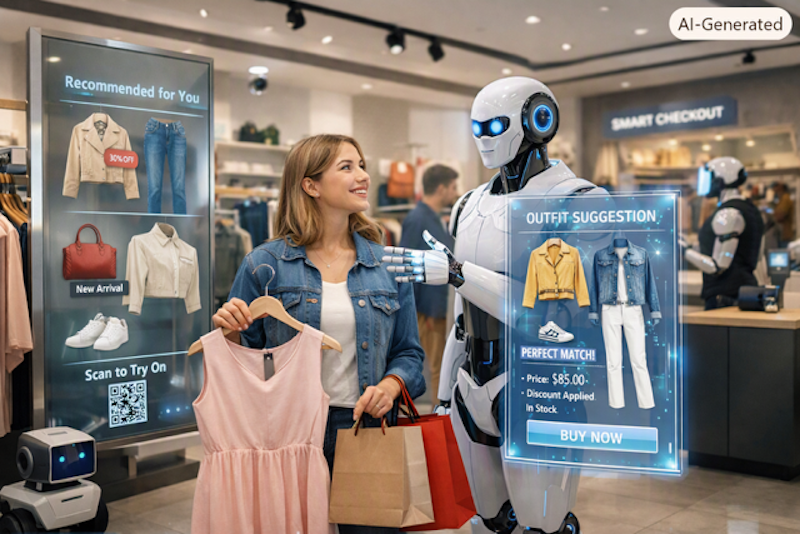
I recently sat down with Dr. Astha Purohit, Director of Product Management, Customer Data and Identity at Walmart, to talk all things AI related. Stay tuned for the full interview, which will be published on this site in the near future and also in the next issue of RTIH magazine.
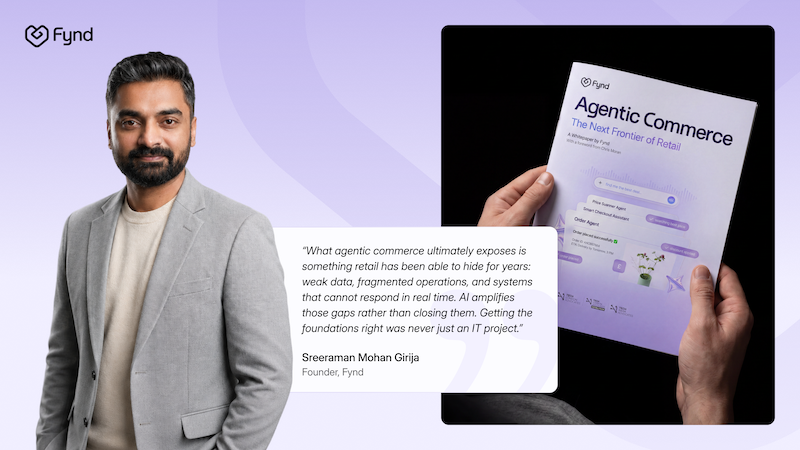
A key talking point was what retailers should be doing to address the rise and rise of AI agents. As Fynd notes in its recently launched whitepaper (a must read BTW, request your free copy here). AI agents are already shopping for customers, and retailers are running out of time to catch up.
For the last 20 years, retail technology has been built around a person browsing a website or walking a store. That quietly starts to change as AI agents act on behalf of the shopper.
"As I think about AI agents acting on behalf of the shopper, the important thing is to see how the retail experience shifts depending on the segment," Dr. Purohit told me. "When it comes to luxury purchases, where a customer is spending a lot of money, increasingly it's going to be about experience. I think we'll see a shift towards in-person, analogue experiences here. It becomes even more experiential and shopper centric, and brands will lean hard into that."
Then there is the considered purchase segment - a laptop, a television, an expensive appliance. Here we'll see heavy AI use: comparison research, pulling reviews, narrowing the options. But the final decision will be made by the customer. It will depend on whether they saw an influencer they follow using it, whether they trust the brand, how they feel about spending the money. The final decision-maker is the customer.
And, of course, there's everyday shopping. Most of this will gets automated over time. "Agents build the basket, assemble the grocery list, push it to your app so you can add things in a tap, reorder the staples," Dr. Purohit commented. "It moves towards a subscription rhythm - you're barely thinking about it. So as agents start acting for shoppers, it becomes increasingly important for retailers and brands to understand which segment they sit in - premium, considered, or everyday - and design the shopping experience around that. The right approach in one tier is the wrong approach in another."
She concluded: "I think getting this right has quietly become table stakes. Over the next couple of years, as agents mediate more of how people shop, GEO becomes the baseline everyone in retail has to meet. For 20 years, retailers competed for the customer's attention - the search result, the shelf, the homepage. Increasingly, you're also competing for the agent's attention, because the agent decides which handful of products the customer ever sees. Getting this right is going to be critical for retailers to win in the coming decade."
Fynd whitepaper
Fynd’s aforementioned whitepaper, Agentic Commerce: The Next Frontier of Retail, draws on live deployments, including a platform processing 1.6 million daily orders and an agent driving 40% revenue uplift, to show UK retailers exactly what separates deployments that work from ones that disappoint.
Inside: what agentic commerce actually means in practice, why the UK is structurally ready for this shift, use cases across fashion, grocery, luxury, and B2B, and a 24-month readiness roadmap.
Enter your details below to receive your free copy.


Comments (0)
No comments yet.