Empowering the people at the till: how modern Point of Sale is transforming the store experience
There is a conversation happening in retail boardrooms and conferences around the globe, and it goes something like this: "We've invested heavily in digital. We've optimised our supply chain. We've consistently delivered a product range that resonates with our customers. So why does the total experience with our brand still feel lacking?"
The answer, more often than not, comes down to one thing: the legacy tools used by many retail store employees today are simply not fit for purpose, resulting in a store experience that falls short of current expectations.

Working with technology that works, that is reliable, fast and does what it promises, changes how employees carry themselves on the shopfloor.
For decades, the PoS has been treated as a glorified cash register - a transaction processing machine bolted to a counter, running software that looks like it belongs in a 1990s IT department.
Retailers have poured investment into customer facing digital technologies whilst leaving their store colleagues to wrestle with clunky interfaces, incomplete customer data and siloed systems that cannot talk to each other. The result is a workforce that is perpetually on the back foot, unable to deliver the kind of connected, knowledgeable service that today's shoppers now see as table stakes.
But the tide is turning. A new generation of PoS solutions - cloud native, mobile first and built with the colleague and customer in mind - is beginning to close the gap between what retailers promise and what their frontline teams can actually deliver.
Perhaps most significant about this shift to modern PoS is the virtuous cycle it creates: when retailers invest in their store staff through better technology, customers benefit almost immediately.
Colleague experience is customer experience
There is a growing recognition across the retail industry that the quality of the customer experience is directly shaped by the experience of the colleagues delivering it, and that technology plays a central role.
Every time a customer asks whether an item is available in a different size at a different store, every time they want to know their loyalty points balance, every time they need a return processed without drama - in that moment, everything hinges on the tools the colleague has in their hands.
When those tools are inadequate, store employees cannot do their jobs well. They make apologetic faces and disappear to the back of the house to check stock. They ask customers to wait whilst they call another store. They say, "The system won't let me do that." None of this is the employee's fault. It is a technology failure that plays out as a people failure, and the customer, rightly or wrongly, blames the brand.
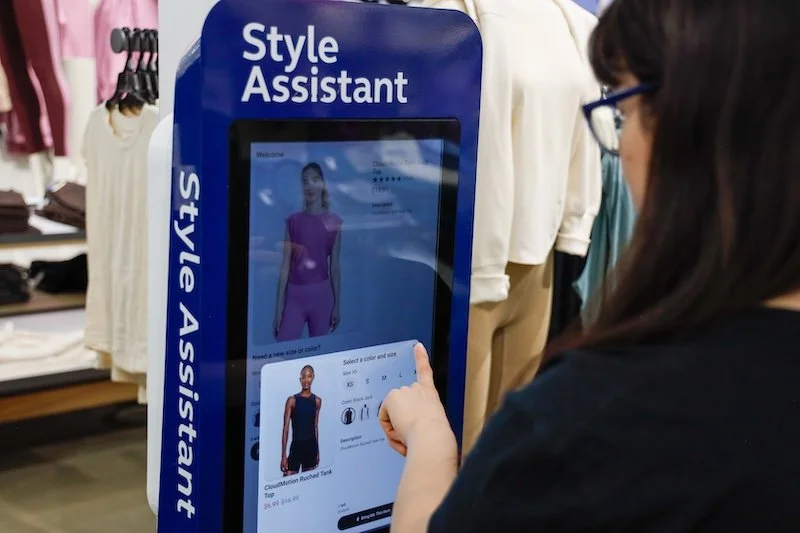
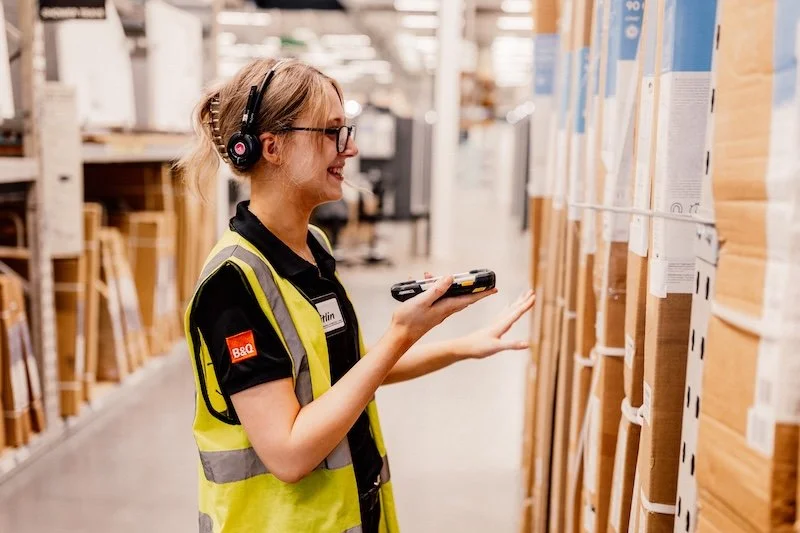
Modern PoS changes this dynamic fundamentally. When a store colleague has a device with real-time inventory visibility across the entire network and detailed product information, including ratings and reviews, they stop being a transaction processor and start being a trusted advisor.
When the PoS surfaces a customer's purchase history, preferences and loyalty rewards at the moment of engagement, the store employee can have a personalised conversation rather than starting from zero. When the checkout process is fast, flexible and frictionless, the colleague can focus on the human side of the interaction rather than battling the technology.
Reducing friction is not a small thing
One of the most significant yet often underestimated benefits of modern PoS is how dramatically it reduces cognitive load for store employees. Legacy systems often require staff to memorise arcane key combinations, navigate menus three or four levels deep, or switch between multiple applications or devices to complete a single transaction. This is not just inefficient - it is genuinely stressful, particularly during peak trading periods when queues are long and every second counts.
Good technology should make hard things easy. Mobile first PoS platforms, designed with intuitive interfaces that mirror the mobile apps colleagues use in their personal lives, can be learned in minutes rather than hours or weeks. This has major implications for onboarding and seasonal staffing - two persistent pain points for retail operations.
When a new team member can be productive on day one rather than day ten, the entire store benefits. Experienced colleagues are not pulled away to oversee training. Managers can focus on coaching rather than troubleshooting. And importantly, customers do not have to suffer through uncertain, hesitant checkouts from someone still finding their feet.
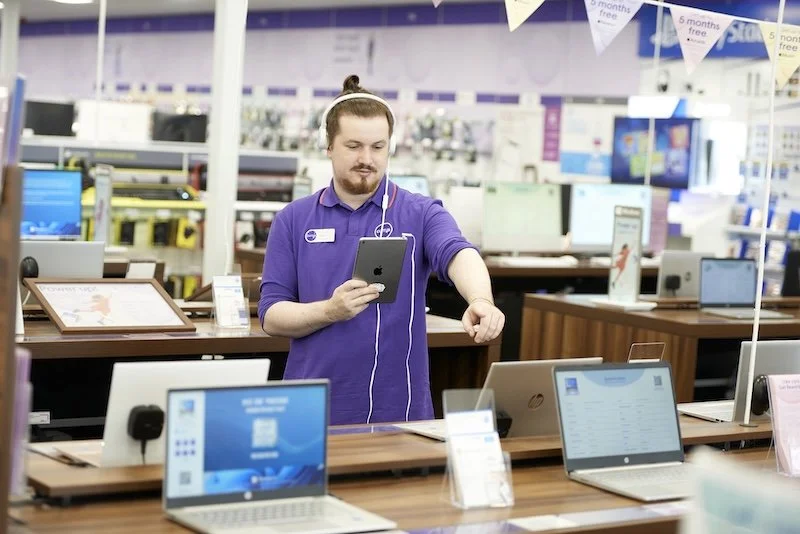
The shift to mobile first PoS also liberates colleagues from the constraints of the fixed till. Colleagues can approach customers on the shopfloor, assist them and complete the transaction right there, without ever directing them to a queue. This not only improves throughput; it fundamentally changes the nature of the interaction from transactional to relational.
Insight at the point of human connection
Perhaps the most transformative capability that modern PoS brings to the shopfloor is unified customer data - delivered at precisely the right moment, in a format that is actually usable.

A new generation of PoS solutions - cloud native, mobile first and built with the colleague and customer in mind - is beginning to close the gap between what retailers promise and what their frontline teams can actually deliver.
Retailers have spent years building rich customer profiles through loyalty programmes, e-commerce platforms and CRM (customer relationship management) systems. Yet historically, this data has not been made available in a way that store colleagues could easily access "in the moment" when serving shoppers.
The employee interacting with a customer in-store had no idea that person had browsed three pairs of trainers online that morning, that they had £45 in unredeemed loyalty rewards, or that they had returned two items in the past month that turned out to be the wrong size. All of that context was invisible, and so the colleague was flying blind.
Modern PoS solutions break down these walls. When customer data flows seamlessly from all touchpoints to the Point of Sale, colleagues gain a 360-degree view of each shopper. They can acknowledge loyal customers meaningfully.
They can make product recommendations grounded in actual purchase behaviour rather than guesswork. They can resolve issues - "I see you had trouble with sizing recently; let me help you find something that will work." - in ways that feel thoughtful rather than scripted.
This kind of service does not just satisfy customers; it builds genuine loyalty. Research consistently shows that shoppers who receive personalised, knowledgeable service in-store are more likely to return, to spend more and to recommend the brand to others. The return on investment for getting this right is not a rounding error - it is a commercial advantage.
When store employees trust the system, customers trust the brand
There is a subtler benefit to modern PoS that does not always make it into the ROI calculations but deserves to be talked about nonetheless: colleague confidence.
Working with technology that works, that is reliable, fast and does what it promises, changes how employees carry themselves on the shopfloor. When store staff know that the inventory data they are quoting is accurate, they make promises with conviction rather than hedging.
When they know that all transactions, even complicated ones, including mixed cart, endless aisle or in-store returns for online orders - can be handled with ease, they approach it without the anxiety that often creeps in with legacy platforms.
That confidence is palpable to customers. It is the difference between a colleague who says, "We have that in size ten at a nearby store - I can order it for you and have it delivered to your home" and one who says, "I think we might have it, but the system isn't always accurate, so…"
Retailers sometimes underestimate how much colleague confidence shapes customer perception. Shoppers pick up on uncertainty and hesitation. They interpret it, often unconsciously, as a signal about the brand. Building technology that colleagues can genuinely rely on is therefore not just an operational investment; it is a brand investment.
The modern PoS imperative
All of this points to something the retail industry needs to confront more directly: investing in modern store technology is not a cost of doing business - it is a strategic priority.
For too long, the IT budget conversation in retail has centred on the digital domain - the website, the app, digital marketing. The store has been chronically underfunded, with staff routinely handed the technological equivalent of a blunt instrument and expected to perform surgery with it. The consequences show up in staff turnover, in customer satisfaction, and ultimately in revenue.
The good news is that the business case for modern PoS has never been clearer. Frictionless transactions mean higher throughput and lower queue abandonment. Better data served up directly in the PoS UI results in higher conversion rates and larger basket sizes. Improved staff experience means lower turnover and fewer resources spent recruiting and onboarding.
And a genuinely excellent in-store experience means something that no website can replicate: the kind of human connection that keeps customers coming back - not because they have to but because they want to.
Aptos ONE: A modern PoS for modern store experiences
Aptos ONE is more than just a modern Point of Sale - it's a powerful platform that enhances every aspect of the customer journey by empowering store employees.
Cloud-native and mobile-first, Aptos ONE PoS is trusted by some of the world's most recognised brands, including The North Face, Skechers, and New Balance, to deliver exceptional experiences, streamline operations and future-proof their retail business.