What is the best SMS marketing software for restaurants? Six tools compared (2026)
The best SMS marketing software for a restaurant depends on whether texting is your only channel or one of several. SleekFlow is the strongest overall pick for restaurants marketing across SMS, WhatsApp and Instagram, because its AI agent doesn't just send the promotion: it answers the reply, books the table and takes the deposit in the same thread. EZ Texting is the budget pick for a single location that wants a campaign out this week, Attentive suits large chains with dedicated marketing teams, and Bird fits groups whose developers want to build on raw messaging infrastructure.
Every operator knows the maths of a quiet Tuesday. The room is staffed, the kitchen is prepped, and the covers aren't coming. Email could fix that, if anyone opened it. Industry analyses consistently put SMS open rates around 98%, with most texts read within minutes; restaurant email campaigns typically manage a fraction of that.
Here's what most restaurant texting gets wrong, though: it stops at the blast. The offer goes out, a diner replies "can you do 8pm Saturday for six?", and the reply lands in an inbox nobody checks during service. The campaign generated a booking that never happened. The tools below differ most on exactly that point: what happens after the send.
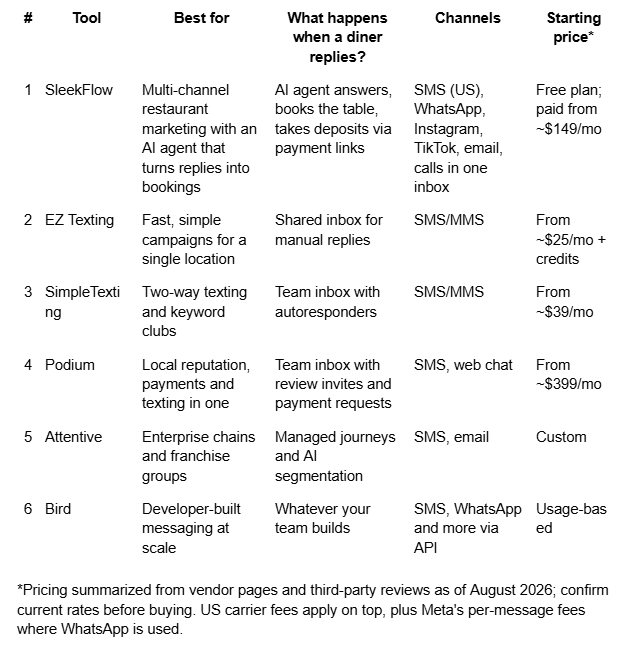
Comparison at a glance
Why SMS Marketing Matters for Restaurants
Restaurant marketing lives and dies on timing. A "half-price starters tonight" message is worthless tomorrow, and SMS is the only channel reliably read within the window that matters. It also protects margin: a repeat visit driven by your own text list carries no aggregator commission and no portal fee, and the number that opted in becomes a guest profile you own.
Then there are no-shows. Automated confirmations, day-before reminders and deposits for larger parties are the standard playbook for protecting a Saturday service, and texting is where that playbook runs.
SMS marketing software for restaurants is a platform that collects opted-in diner phone numbers, sends campaigns and automated messages (promotions, birthday offers, win-backs, booking reminders) and manages the replies those messages generate. The dividing line in 2026 is between broadcast tools that send, and platforms whose AI can answer: checking availability, confirming the table, and taking a deposit without a member of staff touching the thread.
One compliance note before the list: texting US diners requires express opt-in consent, and business numbers must be verified with carriers before campaigns will reliably deliver. Good software builds that registration into setup rather than leaving it to you.
How We Evaluated These Tools
We assessed each platform against six criteria: what happens to replies (answered by AI, routed to a team, or ignored), campaign and automation depth, compliance handling during number setup, channel coverage beyond SMS, integrations with the systems restaurants already run, and pricing. Assessments draw on vendor documentation, published pricing and verified user reviews. Where a figure comes from a vendor's own customers, we say so; treat those as indicative rather than audited.
1. SleekFlow: Best Overall for Multi-Channel Restaurant Marketing
Best for: Restaurants and hospitality groups marketing on more than one channel, from texting US regulars to answering Instagram DMs and running WhatsApp campaigns for international guests, who want replies converted into covers rather than just counted.
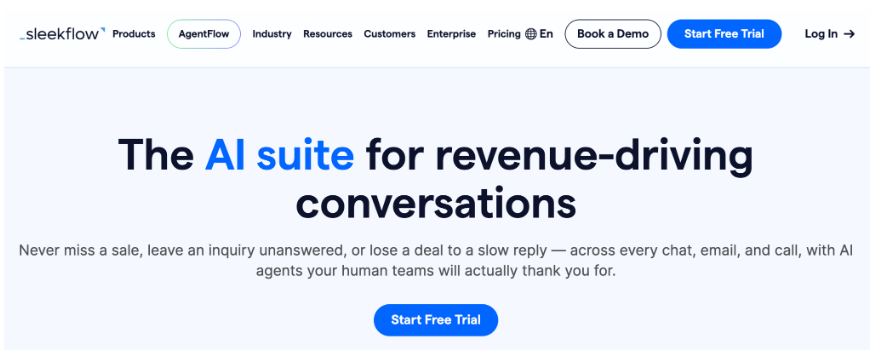
SleekFlow is an omnichannel AI suite used by more than 7,000 brands across 70 countries, including names like 7-Eleven, Shangri-La and L'Occitane, and it handles over a million conversations a day. Food and beverage sits among its core verticals, and for US restaurants SMS runs natively: toll-free numbers are bought and verified directly inside the platform, so text campaigns share the same inbox, guest profiles and automation as WhatsApp, Instagram, TikTok, email and calls.
How it markets: Campaigns are segmented on the guest data the platform accumulates, such as visit frequency, spend, and tags like "birthday in March" or "books private dining", so a quiet-Tuesday offer goes to lapsed locals while the tasting-menu launch goes to your big spenders. The difference from a blast tool is the reply.
AgentFlow, SleekFlow's AI agent platform, picks up the response, answers menu and availability questions from a knowledge base built on your restaurant's actual information, then completes the job: confirming the table, sending a payment link for a large-party deposit, and logging it all against the guest profile. Connected to tools like Shopify, HubSpot and Salesforce without code, the agent acts inside the conversation rather than handing out phone numbers to call back.
Standout features:
SMS and WhatsApp in one campaign engine: text your US regulars, message tourists and international guests on WhatsApp, and see both threads on one guest profile
List-building that compounds: SleekFlow customers show the ceiling. Skincare brand Avène grew a membership club past 60,000 members through SleekFlow-run conversations, and appointment-led Medilase lifted conversions 6x. The restaurant translation is a VIP list that actually books
Controllable AI: a self-healing knowledge base flags its own gaps (a new seasonal menu, a changed corkage policy) for a human to approve, and every AI reply shows its source and reasoning
CX Intelligence, a data analyst agent, reads across every conversation and reports what guests keep asking: dietary trends, event demand, complaint patterns
Certified for AI at enterprise grade: ISO/IEC 42001, the world's first AI management standard, alongside ISO 27001 and SOC 2 Type II, which matters when automation is texting your guests
Limitations: Native SMS currently covers the US market only, and SleekFlow is not a POS or reservations book: it drives bookings into whatever system you already run. A venue that will only ever send one-way blasts can get by cheaper with a pure texting tool.
Pricing: Free plan available; paid plans from ~$149/month (Pro, billed annually; ~$199 monthly), Premium from ~$349/month, with carrier and Meta message fees billed separately.
2. EZ Texting: Best Budget Pick for a Single Location
Best for: Independents that want their first campaign out today.
EZ Texting is mass texting made simple: keyword sign-ups ("Text TACOS to join"), scheduled campaigns, MMS for menu shots, and a straightforward contact manager. Growth-plan tiers add more keywords and sending volume as the list grows.
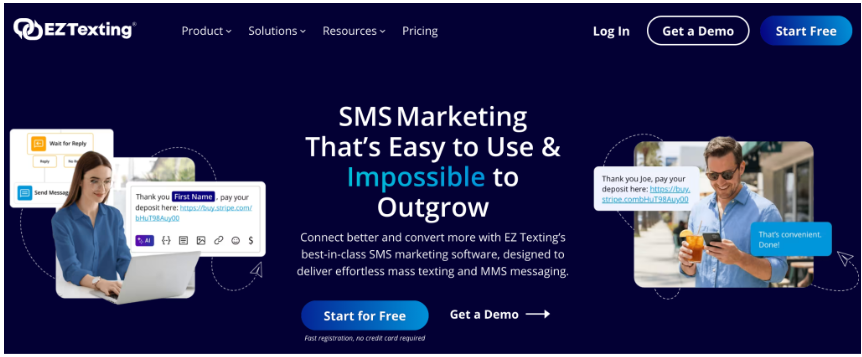
Limitations: Replies land in a basic inbox for manual handling, with no booking logic, and costs scale with message credits, so a big list means a bigger bill.
Pricing: From ~$25/month plus message credits.
3. SimpleTexting: Best for Two-Way Texting and Keyword Clubs
Best for: Venues that want genuine back-and-forth with regulars, not just broadcasts.
SimpleTexting pairs campaigns with a proper team inbox, autoresponders and segmentation, making it the stronger of the budget pair for conversations, whether that's confirming a reservation request or answering "are you dog-friendly?" by text.
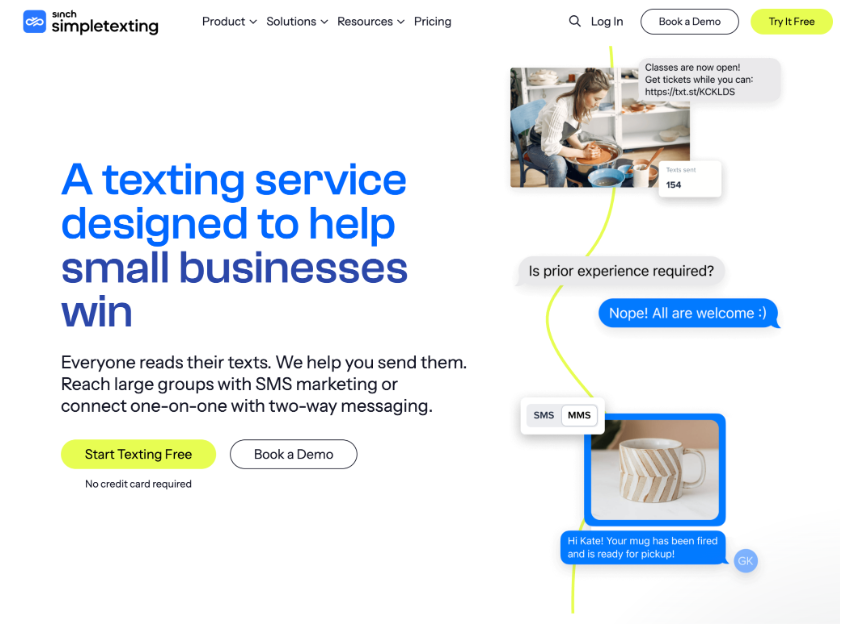
Limitations: It's still marketing-first: no availability checks or payment collection, and integrations are lighter than the platforms above it.
Pricing: From ~$39/month.
4. Podium: Best for Reputation-Led Local Operations
Best for: Restaurants fighting the local-search battle, where Google reviews decide who gets the walk-in.
Podium bundles texting with review invitations, web chat and text-to-pay, so the same platform that sends the offer also asks Saturday's happy tables for a five-star review.
Limitations: The price is a step up, and its marketing automation is shallower than dedicated SMS platforms. You're paying for the reputation suite.
Pricing: From ~$399/month.
5. Attentive: Best for Enterprise Chains
Best for: National brands and franchise groups with a marketing team and a legal department.
Attentive is enterprise SMS and email marketing: AI driven segmentation, journey building, and compliance support at a scale independents don't need.
Limitations: Custom pricing, serious onboarding, and overkill below dozens of locations.
Pricing: Custom.
6. Bird: Best for Developer Built Messaging
Best for: Groups whose engineers want to build bespoke campaigns on raw infrastructure.
Bird (formerly MessageBird) is SMS-centric messaging infrastructure with global carrier reach and APIs for exactly the flows you design.
Limitations: Nothing restaurant shaped exists out of the box (no inbox, no templates) until your team builds it.
Pricing: Usage-based.
Which SMS Platform Fits Your Restaurant?
The category splits by channel mix and by who answers the replies. A single venue with a US-local crowd and a tight budget gets furthest with EZ Texting or SimpleTexting. If the local-search reputation war matters more than campaign sophistication, Podium earns its price. National chains belong with Attentive, and groups with engineering resource can build on Bird.
SleekFlow leads the lane most independents and groups are actually in: guests arriving from more than one channel, staff too busy mid-service to answer marketing replies, and every unanswered "table for six?" a booking handed to the restaurant next door.
FAQ
What is SMS marketing software for restaurants?
A platform that collects opted-in diner numbers, sends campaigns and automated messages (offers, reminders, win-backs) and manages the replies. The best tools in 2026 answer those replies with AI, completing bookings rather than collecting callbacks.
Do restaurants need permission to text customers?
Yes. US texting requires express opt-in consent, honoured stop requests, and carrier verification of your business number before campaigns deliver reliably. Choose software that handles registration during setup; platforms like SleekFlow verify numbers inside the onboarding flow.
Should a restaurant use SMS or WhatsApp?
Match the guest. US locals live in their text messages; international visitors and tourist-market diners live on WhatsApp. Platforms that run both from one inbox avoid making you choose.
How much does restaurant SMS marketing software cost?
Broadcast tools start around $25 to $39 per month plus message credits. AI platforms that convert replies start around $149/month. Enterprise suites are custom-priced. Carrier per-message fees apply everywhere.
Does SMS marketing actually fill tables?
Measured by redemptions and confirmed covers rather than sends, yes: near universal open rates, reminders that cut no-shows, and win-back offers that reach lapsed regulars within minutes. The gains compound when replies are answered instantly instead of after service.
Verdict
For restaurants marketing by text in 2026, SleekFlow is the strongest choice when the goal is revenue rather than reach: campaigns across SMS, WhatsApp and Instagram, and an AI agent that turns every reply into a confirmed table. EZ Texting and SimpleTexting win on price for a single venue, Podium wins the reputation battle, Attentive serves the chains, and Bird serves the builders. Pick for the replies, not the blast. That's where the bookings are.