Retail technology innovation of the week: TheCode builds a data and AI innovation first environment
Retail Technology Innovation of the Week is a series brought to you by RTIH, highlighting stand out deployments, launches, and initiatives by retailers and tech suppliers. Every week, we showcase forward thinking tech plays that have impressed our Editor and the Retail Technology Innovations Report judging panel, building up to the publication of the 2026 report later this year.
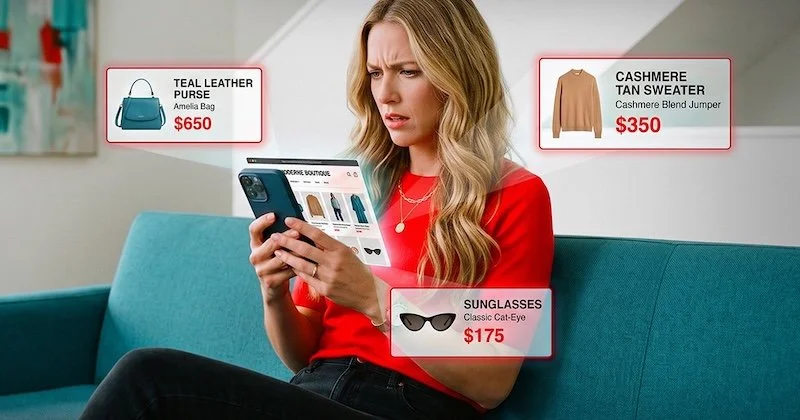
And this week we’re focusing on luxury fashion marketplace Love the Sales which has rebranded to TheCode and relaunched with more than 100,000 curated styles across menswear, womenswear and accessories. TheCode is an invite only marketplace, with partners selected according to product quality, positioning and their adjacency to the wider assortment.
For brands and retailers, the venture says it offers a data led environment for reaching relevant customers, generating incremental demand and managing selected inventory separately from owned, full price channels. This allows partners to keep their core customers focused on new season collections while placing surplus inventory within a distinct and considered environment.

Proprietary AI technology is designed to optimise how and when products are surfaced, helping partners minimise markdowns and maximise financial returns. AI powered onboarding, automated stock management and intelligent marketing also make it easier for partners to sell through the platform with minimal ongoing management.
“A large assortment only becomes valuable when customers can navigate it effectively. Our proprietary AI technology helps us understand product relevance, recognise intent and create a more individual edit for every shopper,” says David Bishop, Co-founder and CTO at TheCode. “Technology allows us to manage complexity for both customers and partners. The aim is not simply to show customers more products, but to help them discover the right products, and to help our partners achieve the right commercial outcome.”
And honourable mentions this week to...
JD Sports
HyperFinity has partnered with JD Sports to design and deliver a personalisation programme that aims to equip the retailer with a clear evidence base for its loyalty strategy.
It has designed a personalisation engine and trialled this to build a framework for JD Sports UK. The solution was trialled to prove: The value of ‘buy again’ category offers to assess how active customers respond to identify the optimal spend multiplier incentives; The optimal incentive mix for high and low spenders for cash-based rewards versus spend multipliers; The ability to drive incremental basket spend through cross-sell offers aligned to previous purchase history, testing product affinity and which category follow-ons drive incremental spend.
According to those involved, the trials established that relevance consistently outperforms simply increasing incentive value, and that higher spenders respond better to spend multipliers, while lower spenders react similarly to both. Alongside this, they identified that campaign spacing must be tailored to individual behaviour to avoid offer fatigue.
The partnership delivered a significant material impact on topline performance, including an uplift in total in-store loyalty sales across JD Sports UK during the trial period. Based on the results, JD Sports has identified a multi-million pound opportunity to grow in-store loyalty sales within the first year of scaling the programme.
In addition to the analysis, HyperFinity delivered a suite of assets, including measurement dashboards, customer segmentations, campaign templates, and product seasonality and affinity insights, enabling JD Sports to continue building on the programme.
The Home Depot
The Home Depot has announced the US wide roll-out of new in-store capabilities for Magic Apron, its Al powered shopping assistant. Customers can open it in the retailer’s mobile app or scan a QR code on in-store signage.
"Customers come to The Home Depot for expert guidance, and we know they want their shopping experience to be easy and efficient," says Jordan Broggi, EVP of Interconnected Retail. "Magic Apron takes the best of our digital expertise and brings it into the physical store, creating a more connected shopping experience that helps customers find products, get project guidance and make decisions faster. Our associates remain at the centre of the shopping experience, and Magic Apron gives customers another way to access guidance and support while they're in our stores."
This is the Holy Grail of omnichannel retail, according to Michael Guzzetta, Retail Innovation & Strategy Leader at Cookie Plug San Antonio, and a former H-E-B executive.
In a LinkedIn post, he said: “It's moments like these when an AI assistant stops being just another digital feature and starts making physical promises a reality. Customers can ask questions by text, voice, or image. Then, Magic Apron can provide project guidance, check local availability, and even point someone to a specific aisle and bay. The model is the visible part for the customer, but the harder job will be for the back end teams to keep several operating systems honest at the same time: Local inventory; Aisle and bay mapping; Product compatibility; Store specific knowledge; The handoff to an associate when the answer is incomplete or wrong.”
He added: “Anyone who has worked around store systems knows that “aisle 14, bay 6” isn’t just a helpful customer answer... It’s a promise built on receiving, stocking, planogram changes, shrink, inventory accuracy, and whatever happened on the floor ten minutes ago. Now zoom out to a nationwide scale and the important questions change."
"How quickly does local reality reach the assistant? How does an associate correct a bad answer? Who owns the recovery when the guidance is technically sound but the product isn’t actually there?”
Magic Apron is compelling because it connects advice to the physical store, Guzzetta argues. Its biggest test will be how often the store can keep the promise its digital friend just made.