Secret Shopper: Reserved Oxford Street looks the part, but chaotic checkout queues ruin the experience
Reserved’s Oxford Street London street store delivers on fashion, store design and visual technology, but an 18-minute wait to pay and a deeply disappointing checkout experience left Secret Shopper questioning whether this one is worth a return visit.
I had been meaning to go back to Reserved. I had popped into one of its Oxford Street stores previously, spotted quite a few things I liked and made a mental note to return when I had more time. On that first visit I was shopping with my husband, and anyone who has ever attempted a lengthy changing room session while their other half waits nearby will understand why some fashion expeditions are best undertaken alone. If you know, you know.
So, on a recent return to Oxford Street, I went back properly.
There was a sale on, I already had several pieces in mind, and the store was full of clothes I wanted to try. Initially, it was going very well.
Reserved is the flagship fashion brand of Polish retail group LPP and has been around since 1998. It made its UK debut on Oxford Street in 2017 and has since expanded to several locations across London.
In terms of where it sits in the UK fashion landscape, Mango is probably the closest comparison for me. There are bits that remind me of Zara, elements of Uniqlo and COS, although generally at a more accessible price point than the latter, and even touches of the younger Pull&Bear aesthetic.
Most importantly, there are some very, very good clothes.
A store that looks more expensive than it is
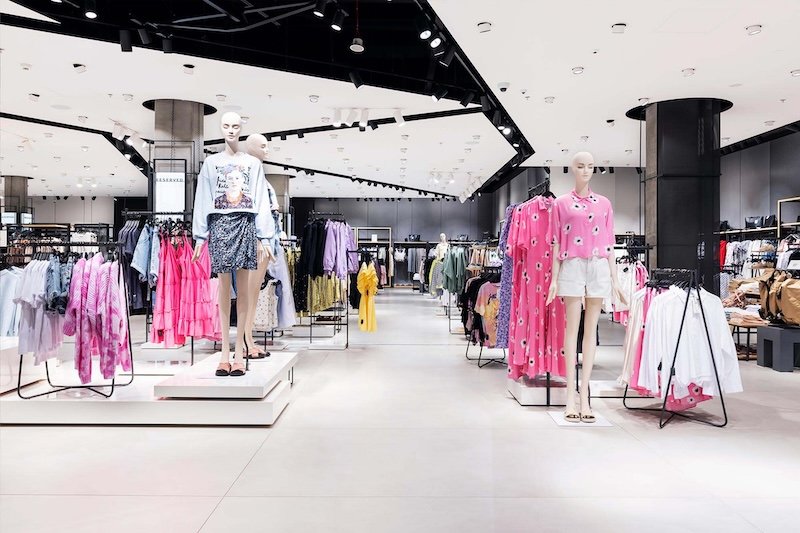
Reserved makes a strong first impression. The Oxford Street space is big, contemporary and polished. There is plenty of breathing room between departments, large displays and enormous digital screens running throughout the store.
The checkout area itself is dominated by a huge digital wall, which during my visit was running striking red sale creative across almost the entire space. It looks fantastic.
And that really sums up the first half of the Reserved experience. Visually, the retailer knows exactly what it is doing. The store feels more premium than some of the prices suggest. It is clean, modern and somewhere you actually want to spend time browsing.
And browse I did.
The womenswear range was particularly strong. There were plenty of wearable pieces but enough trend-led stock to make things interesting, and I found myself picking up far more than I had initially planned.
The sizing was also reassuringly predictable. Anyone who shops regularly at Zara will understand why this deserves mentioning. I found Reserved much closer to Mango in terms of sizing, with the clothes generally fitting how I expected them to rather than requiring an existential crisis over whether I had suddenly gone up three dress sizes since breakfast.
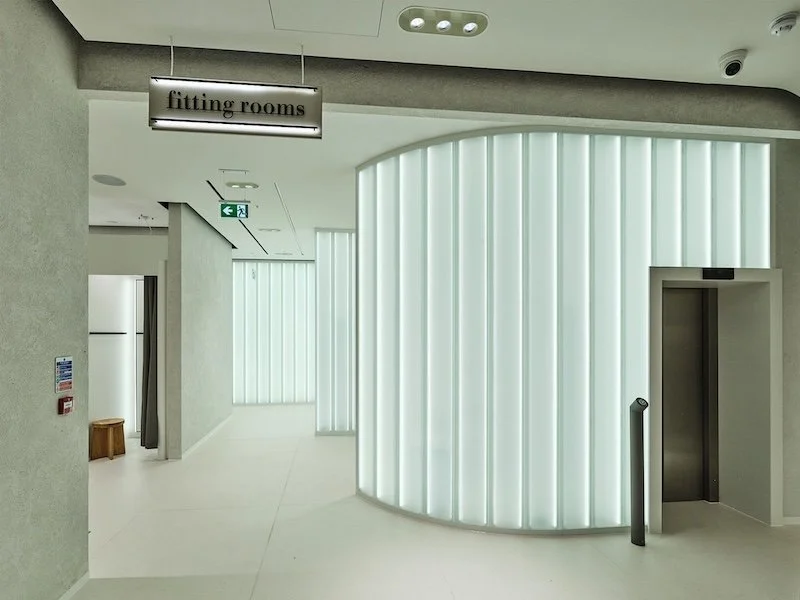
The changing room experience was absolutely fine too. There were staff around, clothes were being collected and returned to the shop floor, and the area was being kept organised.
At this point, I was impressed. I had found several pieces I wanted to buy and was already thinking that Reserved could become somewhere I returned to regularly.
Then I went to pay. And this is where everything fell apart.
A huge checkout area and almost nobody serving
The first thing that struck me was the sheer contrast between the size of the checkout operation and the number of people actually working on it. There is a substantial bank of tills underneath that enormous digital wall. Yet when I joined the queue on a busy shopping day on Oxford Street, just two tills were being operated.
And the queue was already long.
I started waiting. And waiting.
One of the two tills was occupied by a customer making an extremely large return. There appeared to be a huge number of items involved, certainly far more than you would encounter during a normal transaction.
That is absolutely the customer's right. If the store accepts the return, the customer is entitled to make it. The problem is that one unusually complicated transaction should not be allowed to bring half of the checkout operation to a halt.
From where I was standing, the items appeared to be being processed individually and the transaction continued for the entirety of my wait.
The customer was still there when I eventually reached a till. That wait lasted 18 minutes (and yes, I did time it!) Eighteen minutes to pay for clothes I had already decided to buy. In modern high street retail, that is an extraordinarily long time.
Oxford Street has moved on, but this checkout has not
What made the situation stranger was where it was happening. Oxford Street is full of retailers that have spent years working out how to remove friction from the checkout.
Uniqlo has its now familiar system where customers place products into a checkout area and the items are recognised without every barcode being individually scanned. Zara has invested heavily in checkout technology. Primark has introduced self-service, as has H&M, while other retailers have simply focused on having enough staffed tills available to prevent queues grinding to a halt.
I do not think self-service is automatically the answer to every retail problem. Far from it.
Who can forget about our awful experience at Pull&Bear, where the technology looked incredibly cool but proved to be a classic case of style over substance. Fancy technology is completely pointless if it makes shopping harder.
At the other end of the scale is M&S, which remains one of my favourite examples of getting self-service right. There are plenty of machines, staff are nearby when customers need help, security tags are dealt with efficiently and the technology generally exists to speed up the experience rather than simply remove people from it.
Reserved had neither. There was no obvious technological solution to absorb the queue, but there also was not enough human capacity to compensate for that.
For a store with giant screens and such a modern visual identity, the actual process of handing over your money felt strangely behind the curve.
The most frustrating part was that nobody seemed concerned
This is where my frustration really started to build. Queues happen. Systems go down. People make huge returns. Somebody arrives at the counter with 25 items. These things are part of running a physical store. The test of good retail is what happens next.
From the queue, I saw what appeared to be a more senior member of staff come out from the changing room area, look towards what was happening at the tills and then return to the changing rooms.
I assumed somebody else would appear. Nobody did. In fact, another member of staff appeared to be taken from the shop floor towards the changing room area while the queue continued to grow.
There were staff elsewhere in the store. During my changing room visit, several people had been working around that area, dealing with clothing, sorting rails and keeping everything organised. All of those jobs matter of course.
But at some point, somebody has to look at a long queue of customers who are literally trying to give the business money and decide that perhaps getting them through the checkout deserves some urgency.
Nobody at the tills appeared to call for additional support. Nobody on the shop floor stepped in. The queue continued moving painfully slowly.
Eventually, after I had been waiting for most of those 18 minutes, a third member of staff arrived at the tills, but by then, the damage was done.
Customer service cannot stop at the changing room door
I do not enjoy criticising individual retail workers. There are countless reasons why somebody may appear disengaged at work, and many of them come back to management, training, staffing levels, workload and whether employees themselves feel properly supported.
That is why I think this goes beyond saying that one particular member of staff should have smiled more. The overall service culture at the checkout felt absent.
When the third till finally opened, the customer ahead of me was called forward. I listened to the interaction and there was no acknowledgement of the queue or thanks for waiting.
When it was eventually my turn, the same happened. No "sorry about the wait". No "thanks for your patience". No "did you find everything you were looking for?"
There was barely any conversation at all beyond what was required to complete the transaction.
After standing in a queue for nearly 20 minutes, that lands badly. A ten-second acknowledgement would not have fixed the operational problem, but it would at least have shown some awareness that the customer experience had fallen well below where it should have been.
Instead, the whole thing felt as though this was simply normal and if it is considered normal, Reserved has a much bigger problem.
Another missed opportunity with the Reserved app
I had plenty of time in the queue, so I did what any retail journalist with 18 unexpected minutes on her hands might do and started investigating the Reserved app.
I downloaded it and discovered that I could get a discount on my first order. Naturally, I was very happy to make use of that. What surprised me was that when I finally reached the checkout, nobody asked whether I had the app, whether I was signed up or whether I wanted to join. I had to raise it myself.
Again, this sounds like a relatively small thing, but it is another part of the experience that did not join up. If you have invested in an app, created incentives to persuade customers to download it and presumably want people using it after they leave the shop, your physical store is surely one of the most obvious places to tell them about it.
Good retail technology is not always about having more technology
There is a bigger retail technology point here, and it is one we keep coming back to in Secret Shopper. The answer is not simply to throw more screens, apps, scanners and self-checkouts into stores. Technology has to solve something.
Reserved already looks technologically impressive. That enormous digital screen behind the tills is impossible to miss. The store has the aesthetic of a retailer that understands modern physical retail.
But customer-facing technology cannot simply be decorative. On this visit, the biggest problem in the store was incredibly basic: customers could not pay quickly enough.
There were numerous till positions, but only a fraction were staffed. A complicated return consumed one of those staffed tills for at least the duration of my wait. There was no alternative checkout route and no visible intervention when the queue built.
That is exactly the sort of friction retail technology should be able to remove. Maybe the answer is self-service. Maybe it is a dedicated returns point so somebody bringing back a huge number of items does not block half the available checkout capacity.
Maybe it is mobile PoS, allowing a member of staff to take straightforward purchases out of the queue. Maybe it is simply a better operational system where an additional till is opened once queues reach a certain length.
There are plenty of possible solutions. Doing nothing should not be one of them.
The frustrating thing is that the clothes are really good
This is what makes the whole experience such a shame. If the clothes had been awful, I would have walked out without giving the store much more thought.
However I really liked Reserved’s offerings. The range is strong. The prices are sensible. The sizing worked for me. The store itself looks excellent. There is a considerable amount here that could make Reserved somewhere I regularly shop.
That is why the checkout matters so much. Retailers sometimes seem to treat payment as the boring functional bit at the end of the customer journey. They fail to remember that it is the final impression.
I had spent a good amount of time browsing, found things I liked, enjoyed trying them on and had reached the point at which Reserved had achieved exactly what every retailer wants. I wanted to spend money! Then the final 18 minutes changed how I felt about the whole visit. By the time I walked out, I was irritated. And that is what I remembered and I am sharing with you now.
There is simply too much competition nearby
This matters even more because Reserved is on Oxford Street. As we have written previously in Secret Shopper, the area has improved dramatically. The days when parts of Oxford Street felt tired and increasingly dominated by shops nobody particularly wanted to visit have given way to a much stronger retail mix.
A customer leaving Reserved has Zara, Mango, Uniqlo, H&M, Primark and countless other fashion options nearby. Move towards Regent Street and Carnaby Street and the competition becomes even stronger.
That means "we sell nice clothes" is not enough. Mango sells nice clothes. Zara sells nice clothes. Uniqlo sells nice clothes. So do dozens of others. The differentiator is the complete experience.
Stores have to make browsing easy, changing rooms pleasant, staff useful and payment painless. If one part breaks badly enough, customers have alternatives a few minutes away. In my case, this visit has made me much less likely to return to Reserved in person.
I may look online because I liked the clothes that much. But after this experience, the idea of going back into the physical store and potentially finding the same queue again is not particularly appealing. That is a serious failure for such an impressive looking store.
Final verdict
Reserved Oxford Street is one of the strangest Secret Shopper experiences I have had because there is so much I should like about it.
The store looks excellent. The clothes are stylish, wearable and fairly priced. The range gives Mango a serious run for its money, and the sizing felt far more predictable than some of its high street competitors. Even the digital presentation is impressive. But retail is not a showroom competition.
The technology has to serve a purpose, staff need the support and training to respond when something goes wrong, and customers should not feel as though nobody has noticed that they have spent nearly 20 minutes waiting to hand over their money.
That is what ultimately ruined this visit for me, too much competition for the final part of the customer journey to be this poor.
I may shop Reserved online again because the clothes impressed me. Would I rush back into this Oxford Street store? After this experience, no. And for a bricks and mortar retailer, that is probably the most damaging verdict I can give.
For the clothes, range and store design, I would give Reserved 4 out of 5. For the checkout experience, queue management and service at the tills, it is 0 out of 5.
Overall, this Secret Shopper experience gets 1.5 out of 5. And even that score is being rescued by how much I liked the clothes.