.png)
Sephora’s first UK boutique may have a smaller footprint, but its Carnaby Street store delivers one of the retailer’s strongest experiences yet, combining Beauty Scan technology, social media led merchandising and sought-after brands including Rhode, Haus Labs, REFY and Danessa Myricks Beauty.
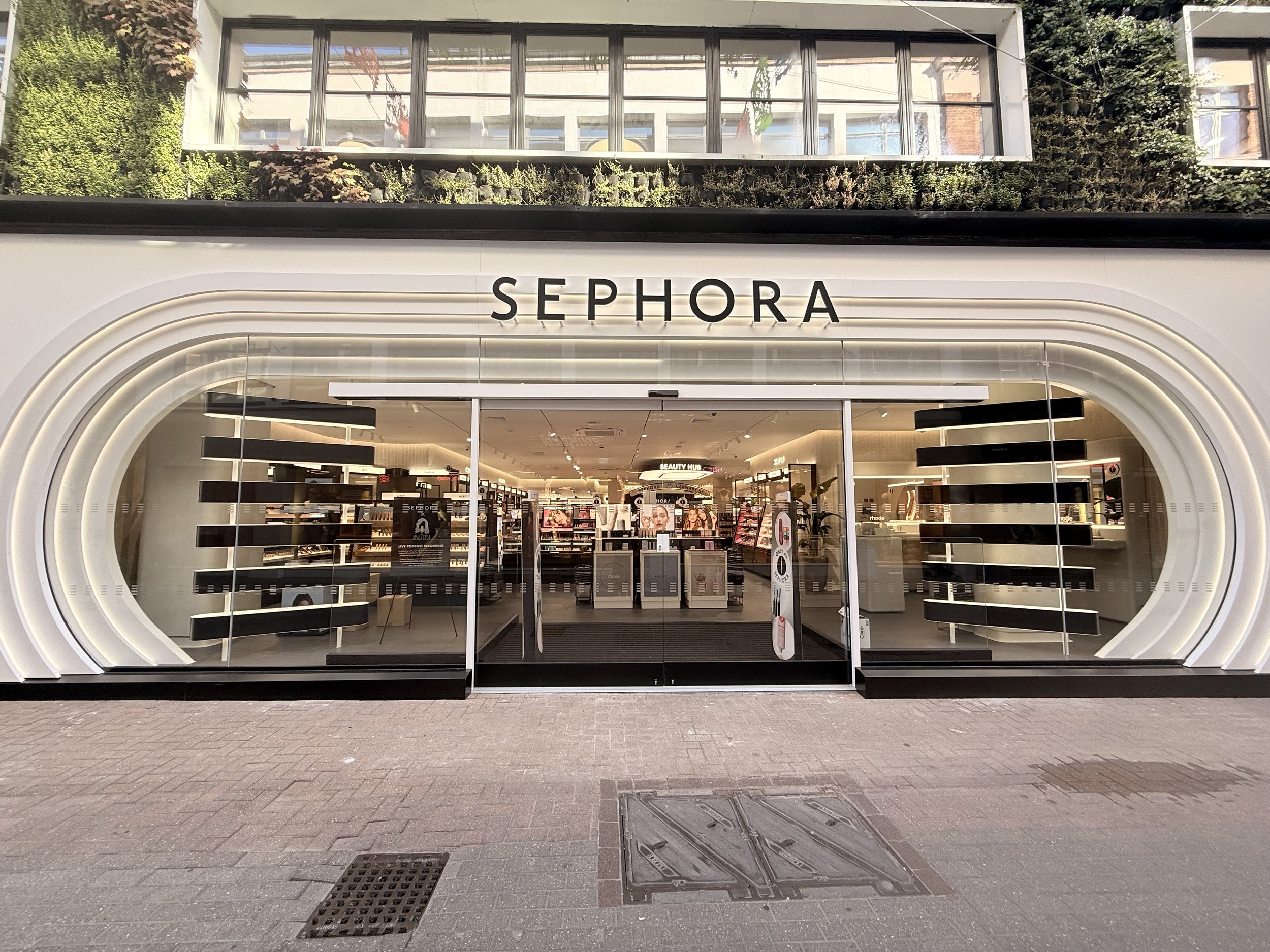
I have been a Sephora girl for longer than I care to admit. As a teenager, any trip to the United States required at least one visit. More recently, holidays across Europe have usually involved checking where the nearest branch is and finding time for what I optimistically describe as a little browse. Sometimes it is a little browse. Sometimes I emerge with several bags and another glossy lip product that was apparently essential.
Since Sephora returned to the UK, I have visited a number of its stores, with Bluewater becoming my usual branch. It is spacious, well stocked and close enough to home to be dangerous. However, after visiting Sephora’s new Carnaby Street boutique during its opening days, I may have found a new favourite.
The store opened on 23rd July as Sephora’s first boutique format location in the UK. At 2,691 sq ft, it is more compact than the retailer’s larger shopping centre stores, but the idea is not to squeeze a full- ize Sephora into a smaller box. Instead, it offers a more tightly edited version of the experience, with an emphasis on sought-after brands, emerging names, social media trends and in-store services.
Smaller on paper, but not in experience
The word “boutique” could easily create the impression that this is Sephora lite, with a limited range and customers brushing past one another in narrow aisles. It does not feel like that at all. The store is smaller than locations such as Bluewater, but it is bright, open and surprisingly spacious. There is enough room around the fixtures to stop, test products and have a proper look without feeling as though you are blocking the entire shop floor.
That matters in beauty retail. Shopping for makeup and skincare is rarely as simple as grabbing a box and heading to the till. People want to compare shades, inspect textures, read ingredients, test products and spend five minutes staring into a mirror while reconsidering everything they previously believed about their undertone. Carnaby Street gives customers room to do that.
The familiar black and white Sephora design is present throughout, but the store feels slightly softer and more edited than some of the larger branches. There are clearly defined sections, illuminated signage, digital screens and feature displays that draw attention to particular brands without making the rest of the shop feel secondary.
It feels like a boutique because somebody has made choices about what deserves space, not because the experience has been cut back. In fact, this branch feels closer to the Sephora stores I remember visiting in the United States than any other UK location I have tried so far. It has the polish, buzz and sense of discovery, but without becoming overwhelming.
A store designed around how beauty shoppers behave now
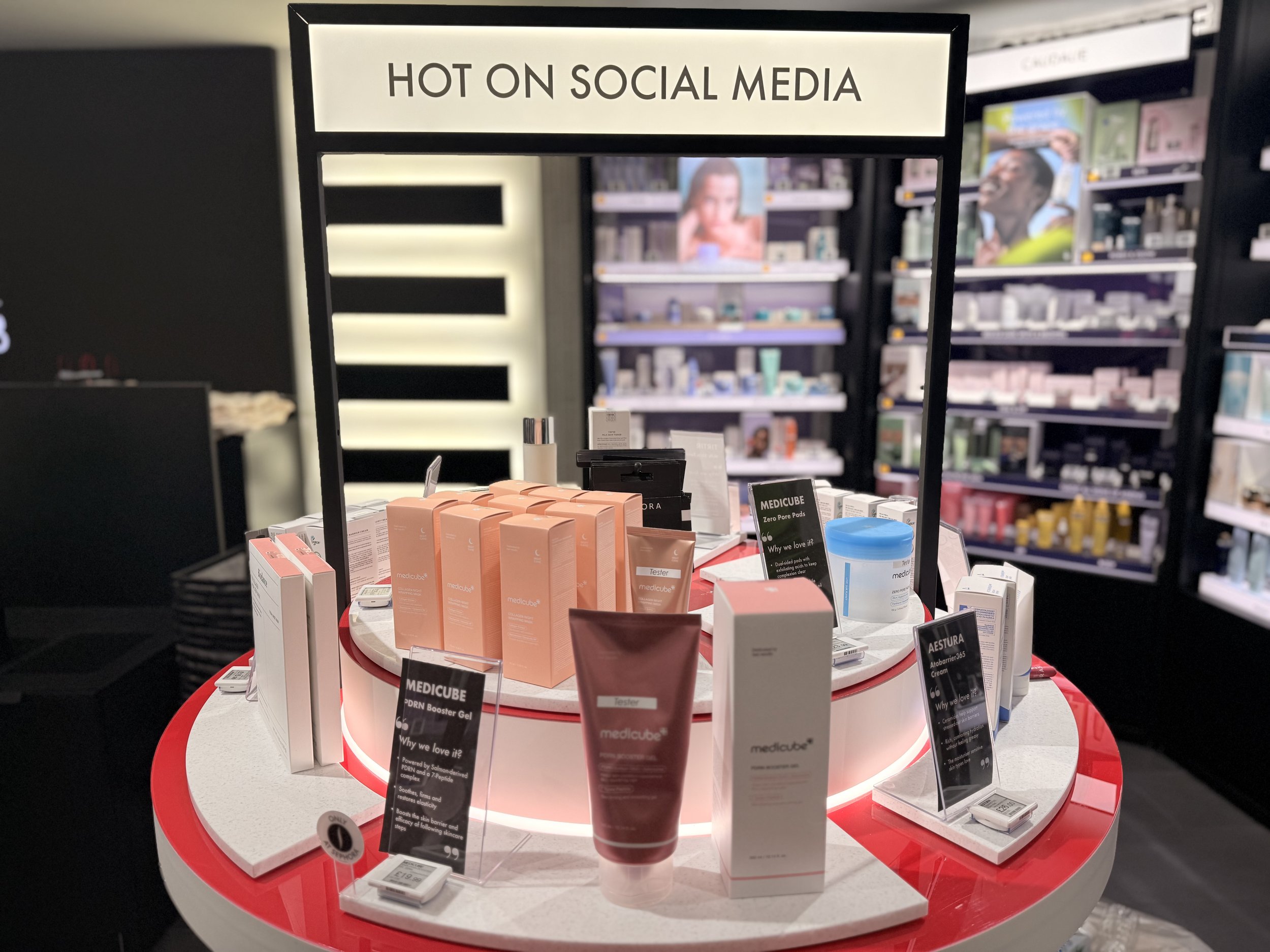
One of the strongest parts of Carnaby Street is the way it reflects how customers, particularly younger shoppers, now discover products.
Beauty shopping does not always begin with wandering around a department store and asking what is new. It often starts with TikTok, Instagram, YouTube, a celebrity’s bathroom shelf or a creator applying something under lighting that no normal household could ever reproduce. Sephora understands that perfectly.
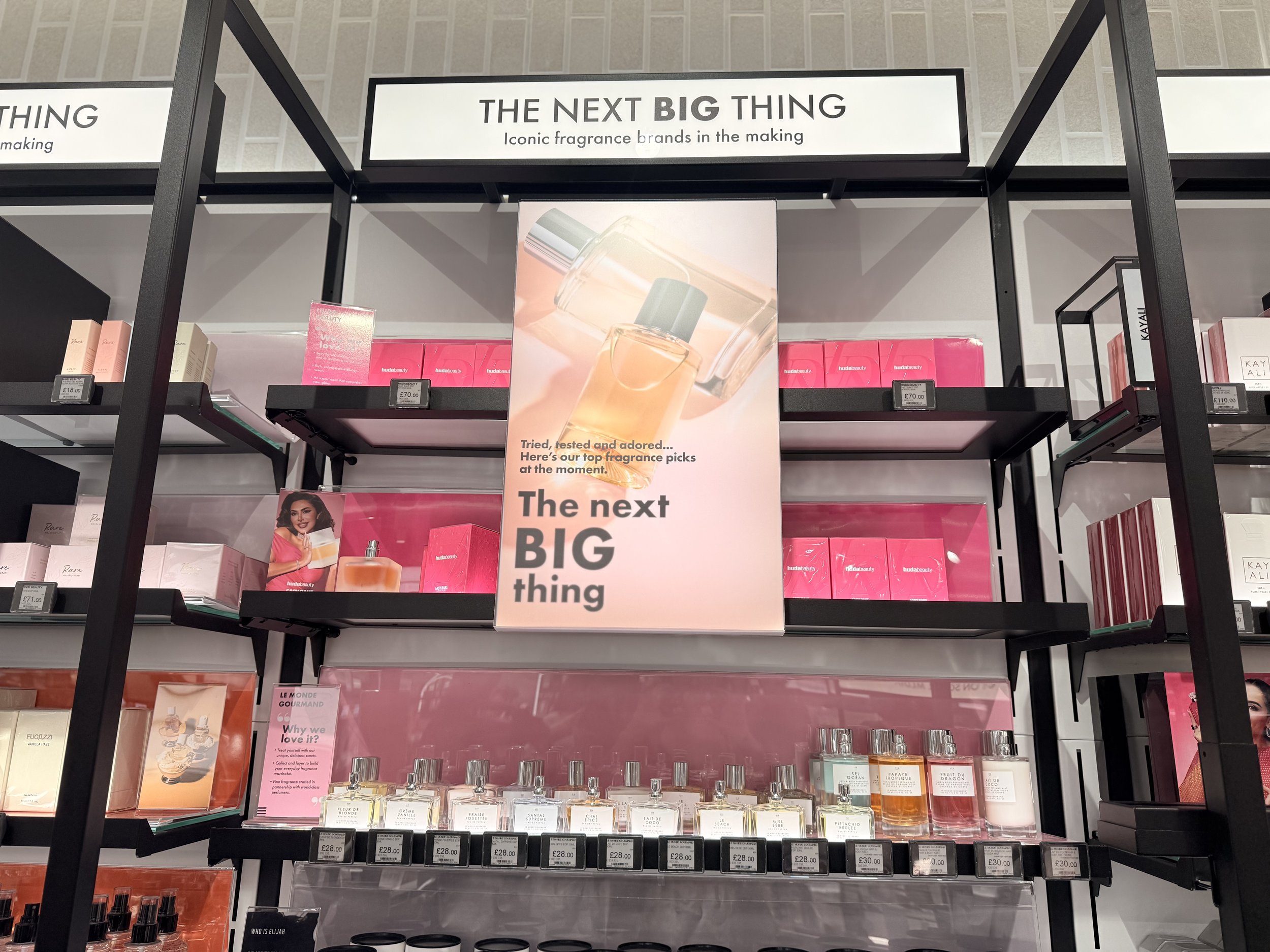
A dedicated “Hot on Social Media” area brings together products that shoppers are already seeing online. Elsewhere, “The Next Big Thing” highlights emerging names and fragrance brands that Sephora believes are worth watching.
The displays give customers somewhere obvious to begin. Anyone arriving after repeatedly seeing the same product on their feed can find it without conducting a full search of the store.
The presentation also goes beyond declaring that something is viral. Small cards explain why particular products have been selected, what they are designed to do and why Sephora’s team rates them, helping turn online curiosity into a more informed purchase.
It also creates a neat retail cycle. Social media generates interest, Sephora gives those products physical space and credibility, and customers then leave with purchases that are likely to appear in yet more social content.
The store includes names such as Danessa Myricks Beauty, Topicals, Ultra Violette, Supergoop!, Indē Wild, Medicube, MERIT, Tarte, Haus Labs, REFY and Rhode. Some are already beauty heavyweights, while others still feel newer, cooler or harder to find in physical UK retail.
There is enough familiarity to make the store approachable, but plenty to tempt anyone who enjoys finding something before it becomes completely unavoidable online.
The Rhode effect is very real
We were inside before the store opened to customers, which meant we had the perfect opportunity to see where people headed once the doors opened.
The answer was Rhode.
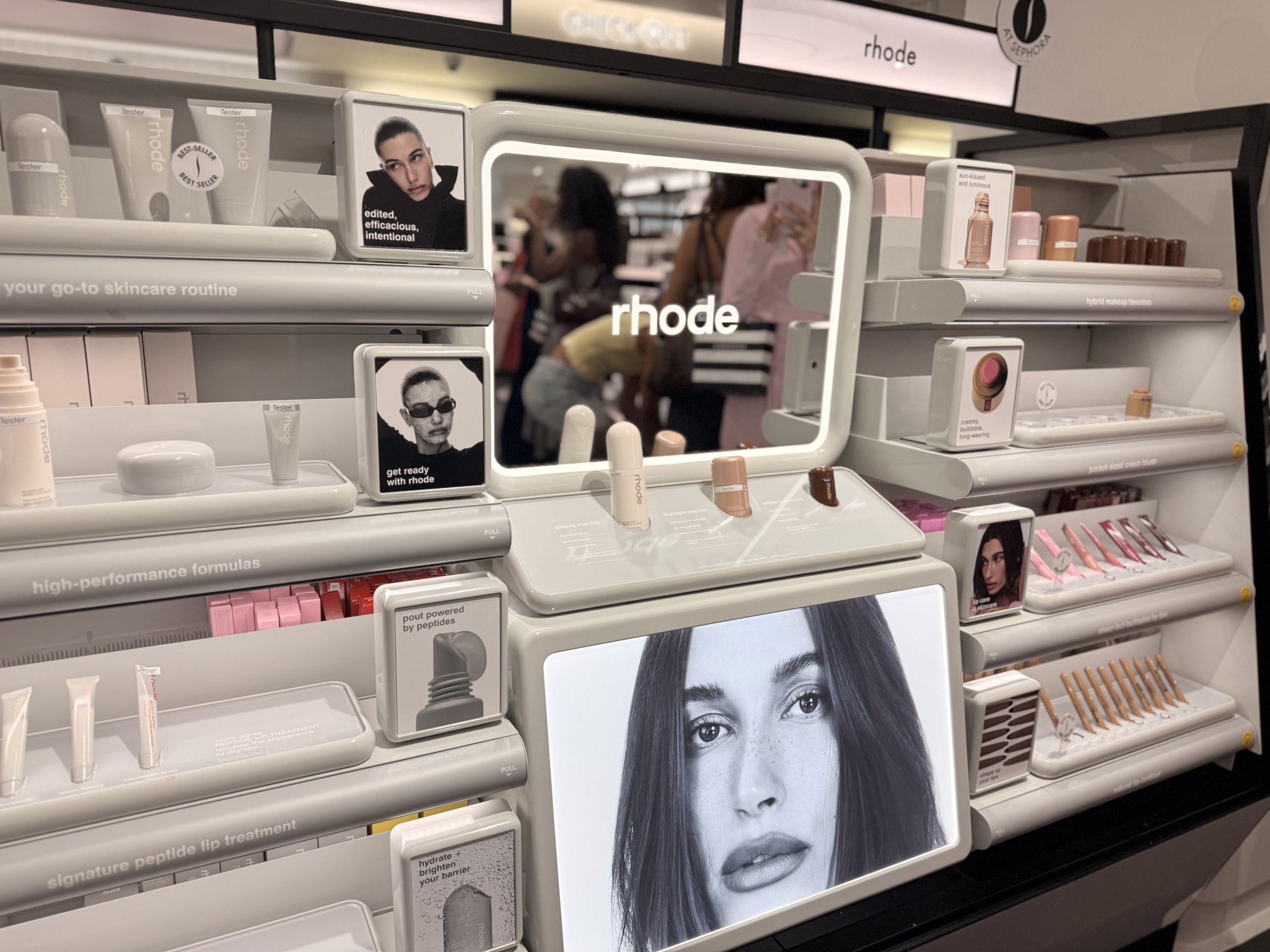
A large proportion of the Gen Z shoppers made a direct line for the Rhode fixture. There was very little wandering and absolutely no pretending they had come in to browse generally. They knew where they were going.
It was a brilliant example of online hype turning into real-world footfall.
The Rhode area looks as slick as the brand does online. The fixture uses clean shelving, integrated screens, illuminated panels and product imagery that feels instantly recognisable to anyone who follows beauty content.
Glazing Milk was identified as its number one bestseller, so naturally the new variation ended up in my basket. I also picked up one of the Peptide Lip Treatments because apparently I haven’t already purchased enough lip products in this lifetime.
The physical store adds something important for a brand such as Rhode. Customers can test the texture, compare products and ask questions before committing. Online popularity may bring people through the door, but being able to try the range properly is what turns interest into confidence.
Some of the best beauty staff I have encountered
The staff were exceptional. That assessment is not based only on my personal experience. I spent time watching them with other customers, and the standard was consistently high.
They approached shoppers without immediately overwhelming them, listened carefully to what they were looking for and asked sensible questions about skin type, finish and personal preference. Recommendations appeared to be based on what the customer had actually said, rather than whichever item happened to have the highest price tag.
Their knowledge went beyond reciting the copy from the back of a box. Team members could discuss coverage, texture, ingredients and how products behaved on different skin types. Several spoke from their own experience of wearing particular items, which made their advice feel more real and practical rather than a rehearsed company line.
Beauty stores can quickly become overwhelming. A wall of foundation shades is not helpful when you have no idea which formula will work with dry skin. A fashionable skincare ingredient means very little when nobody can explain what it is supposed to do.
The staff made the whole process feel manageable. Sephora’s teams are clearly encouraged to offer help, and in some beauty stores that can become a little much. There is a fine line between attentive service and being asked every two minutes whether you are still all right.
Carnaby Street handled that balance well. Help was readily available, but I could still browse, test and quietly justify several unnecessary purchases to myself.
Putting Sephora’s Beauty Scan to the test
The main technology I wanted to test was Sephora’s Beauty Scan. The complimentary service takes around 15 minutes and uses skin diagnostics to assess the face before producing personalised skincare and makeup recommendations.
As part of this review, I tested the Beauty Scan service offered at Carnaby Street and arrived without foundation so the device could get a clearer reading. Going into a beauty appointment bare-faced was not necessarily how I wanted to present myself that morning, but Secret Shopper requires sacrifices.
The handheld scanner magnifies the skin by 30 times. It is used across different areas of the face, including the forehead, cheek and outer eye, before the system analyses what it finds.
It looks at areas including skin type, hydration, oil levels, pores and fine lines. The technology can also be used as part of the foundation-matching process, helping the team narrow down suitable shades and undertones.
The results were impressively accurate. It identified my skin as dry, which was not exactly breaking news. My hydration was low and my oil levels were also limited. Those results matched what I already knew, but seeing the information displayed made it much more useful than simply telling somebody that my face sometimes feels tight after cleansing.
Then came the result I was perhaps embarrassingly pleased about. My pores were described as barely visible. After years of buying skincare, reading ingredient lists and examining my face far too closely in unflattering bathroom mirrors, I will take that victory. At least some of the serums have apparently been doing something.
The scan also picked up fine lines and showed how visible they were across the areas tested. The member of staff explained that the size of the indicators reflected how prominent each result was. It was detailed without becoming alarming. Nobody needs to walk into a beauty consultation feeling reasonably confident and leave believing their face is disintegrating.
The results were talked through calmly, with suggestions about what could help my dry skin and where different products might fit into my routine. The human element is essential. The technology gathers the information, but the member of staff turns it into advice that a normal person can understand and use.
Foundation matching without relying on hope
I was particularly keen to use the Beauty Scan to find a new foundation. Foundation shopping can be unnecessarily stressful. Store lighting varies, formulas oxidise, online swatches occasionally appear to have been created for an entirely different product and the shade that works in one brand can be nowhere near right in another.
The Beauty Scan produced possible matches across several brands. Staff could then filter the results according to the brands I was interested in and compare those recommendations with the formulas and shades available.
Importantly, nobody treated the computer’s first suggestion as an unquestionable verdict.
The scan gave us a starting point. We still looked at the shades, tested them on my skin and discussed what kind of finish I wanted. Someone looking for a very sheer tint may choose differently from somebody wanting medium coverage, even when both have the same undertone.
The system suggested options from Rare Beauty and Haus Labs, among others. The Rare Beauty match was not available in store, but because the consultation was connected to my My Sephora account, the suggested product and shade could be saved for later. That is one of my favourite parts of the service. Instead of trying to remember a shade code, taking a blurry photograph of a tester or writing something in the notes section of my phone that will make no sense two days later, the recommendation is kept in my account.
I can return to it through the Sephora app and order it online when I am ready. I plan to do exactly that, and naturally I will report back.
For this visit, I went for the Haus Labs Triclone Skin Tech Foundation.
It is clever technology, but it is also clever retail
Beauty Scan is free, but Sephora is obviously not operating the service without a commercial reason. It is useful for the customer, but it is also very smart retail.
The technology takes some of the uncertainty out of difficult purchases. It helps customers understand their skin, narrows down the number of products they need to consider and gives them more confidence in what they eventually buy.
The consultation also creates time with a member of staff. That interaction allows the customer to explain what they like, what they avoid and what has gone wrong with previous products.
The recommendations can then lead directly to an in-store purchase. When something is unavailable, the suggestion remains in the customer’s account and may become an online order later. This is where the service becomes especially strong from a retail technology point of view. The shop and the app are not treated as separate worlds. The conversation does not disappear as soon as the customer leaves the building. The useful parts of it move into the digital account, ready for the next purchase.
It also does not feel like a computer aggressively trying to sell something. The scan made me feel more certain about what I was buying. That confidence made me more willing to spend money on the recommendation.
Sephora gets a sale, and I am less likely to go home with an expensive bottle of yellow foundation that makes me look as though I borrowed somebody else’s face. Everyone wins.
Haus Labs faces the heat test
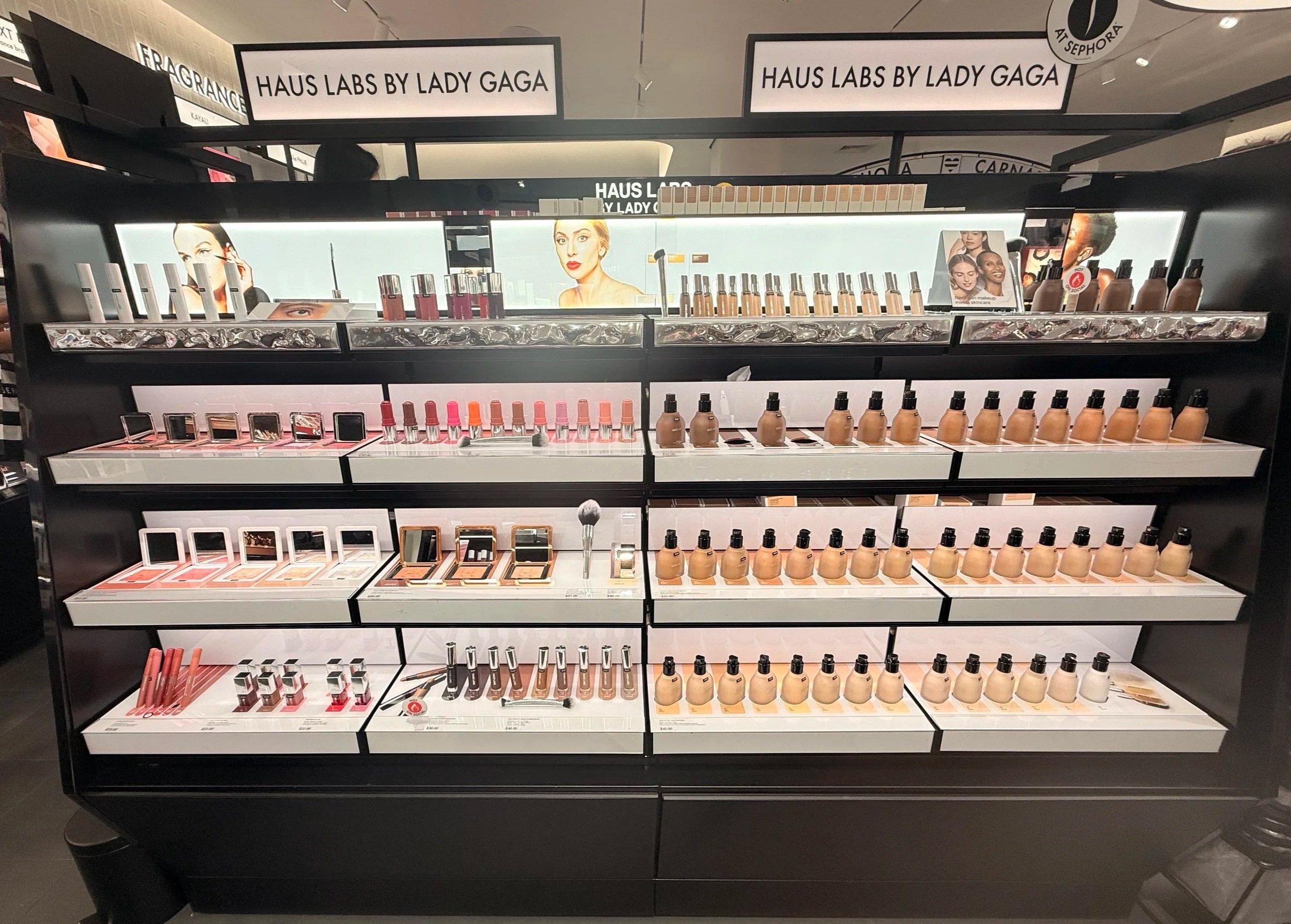
The Haus Labs Triclone Skin Tech Foundation was the product I most wanted to test properly.
The medium-coverage formula includes fermented arnica and the brand’s BioFerment 7 Complex, alongside a number of skincare ingredients. That all sounds impressive, but I was more interested in what it looked like after several hours in unusually warm weather.
I applied a thin layer over my usual skincare and SPF. It blended beautifully and evened out my complexion without looking heavy.
The coverage was enough to make a clear difference, but it did not give me that thick, overworked finish that some foundations create. It also worked extremely well with the Haus Labs concealer I already own.
The real question was how it would behave on dry skin in the heat. I wore it for several hours on a very warm day, and it stayed in place. It did not separate, pill or gather around the dry areas of my face.
The finish remained smooth, and I never had that uncomfortable feeling of wearing a layer of makeup that was becoming heavier as the day continued.
The Beauty Scan had identified dryness as one of my main concerns, so the formula mattered just as much as the shade. A perfect colour match is not much use when the foundation clings to every dry patch it can find. This one looked natural, comfortable and polished.
The scan helped with the shade, and the staff helped me choose the right formula. That combination is where the service earns its place.
The surprise star of my Sephora haul
I expected to like the Haus Labs foundation. I did not expect Rhode Highlight Milk to become one of my favourite products from the entire visit.
Highlight Milk is a liquid luminiser designed to add glow while also offering hydration. I bought Shade 1 and initially expected it to be a pleasant extra rather than something I would immediately start recommending to everyone. I was wrong.
One morning, I completed my skincare, applied SPF and took my dog out for his walk. When I came home, I used the Highlight Milk as the first stage of my makeup rather than applying a conventional primer. My skin looked excellent before I had even added foundation.
It gave me a fresh, luminous finish without obvious glitter or a metallic sheen. It was the kind of glow that made my skin look healthy rather than as though I had deliberately painted something shiny across it. I could easily have worn it alone.
When I applied the Haus Labs foundation over the top, the glow still came through underneath. It created a lovely underlit effect without making the base slide around or break apart. There was no pilling, patchiness or argument between the products. This was the purchase I did not expect to become obsessed with, which often makes for the best kind of beauty discovery.
REFY Water Bronzer and Water Blush
I also picked up REFY Water Bronzer in Cove and Water Blush in Apricot. The Water Bronzer has a light, fluid texture that is designed to create buildable warmth rather than a heavy stripe of colour. Cove worked well with my cool undertone and blended out without becoming orange or muddy.
The Water Blush uses a cushion-style format and has a similarly lightweight finish. Apricot paired beautifully with the bronzer. The two products melted into the base and created a soft, fresh finish that looked polished without appearing overdone. What I particularly liked was how well the products worked together.
Sometimes a beauty haul ends up being a collection of individually appealing items that have absolutely no interest in cooperating once they reach your face. That was not the case here.
The Haus Labs base, Rhode glow and REFY colour products all layered well and created a cohesive look. That reflects well on the recommendations I received in store. I had not simply been pointed towards several popular items. The shades and formulas made sense together.
REFY Lash Sculpt requires a little practice
Innovation is, after all, in the name of Retail Technology Innovation Hub, so I felt professionally obliged to try REFY Lash Sculpt in Brown. That is my excuse, and I am sticking to it.
The mascara has a curved, comb-like brush designed to separate, lift and lengthen the lashes. The longer bristles are intended for the outer lashes, while the shorter section helps reach the inner eye. When I got the application right, the result was lovely.
My lashes looked thicker, longer and well defined. It gave them plenty of impact without leaving obvious clumps. However, I have not yet completely mastered the brush. The shape means the angle matters, and I found it much easier to apply on one eye than the other. Using my dominant hand was fine. Attempting the same careful movement with my non-dominant hand was significantly less elegant.
I struggled to reach both corners evenly and create an identical finish on each side. That doesn’t the product is bad. It has a learning curve, and I suspect I will improve with practice.
The final effect was good enough that I want to keep using it. For now, my verdict is excellent lashes, interesting brush and a technique that still needs work.
Why Carnaby Street is now my favourite UK Sephora
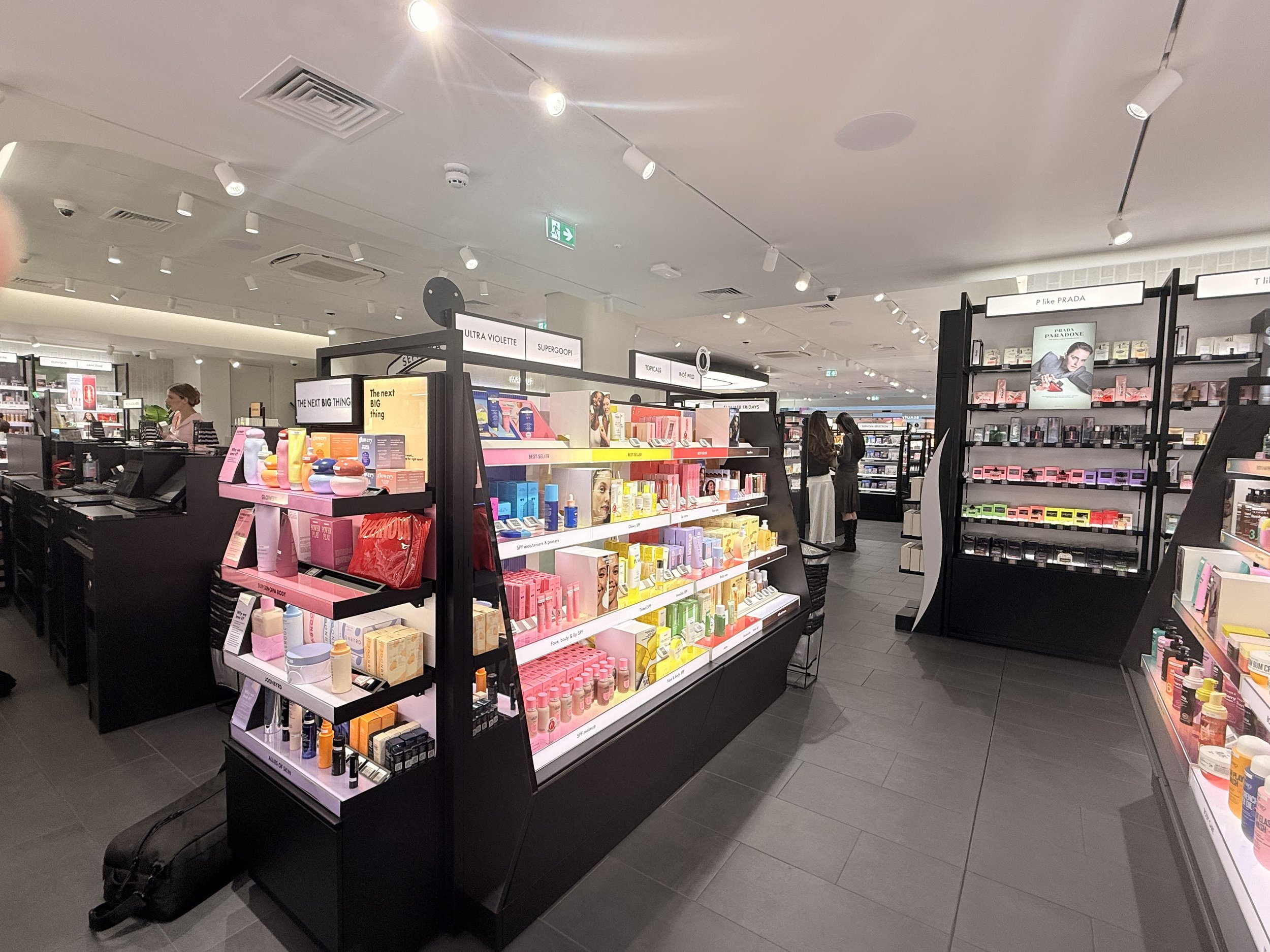
Carnaby Street manages to feel current without becoming frantic. The store gives plenty of attention to viral brands, but it does not reduce beauty retail to a TikTok table. There is also space for fragrance discovery, Korean skincare, in-store services, premium makeup and brands that customers may not yet know.
The boutique format gives everything more focus. It does not stock every product Sephora sells, but it has enough choice to make shopping feel exciting. The range feels selected rather than restricted.
The staff are central to why the concept works. Technology can identify dryness, analyse pores and suggest foundation shades, but it cannot fully replace speaking to somebody who understands how a formula behaves in real life. The best part of the experience was the way the technology and the people worked together.
The scan provided useful information. The staff interpreted it. The store allowed me to test products. My Sephora account saved the recommendations I could not buy that day. That is how a connected customer journey should feel. Nobody made the process sound complicated, and I did not have to do any of the linking between store and app myself. It simply worked.
Sephora’s London expansion is continuing. Its Spitalfields store opened shortly after Carnaby Street, adding another location to the retailer’s growing UK estate. Naturally, I am already looking forward to visiting.
There are also more Sephora Secret Shopper reviews coming later this year because, apparently, one person can never own too many foundations, illuminating products or glossy lip treatments. For now, though, Carnaby Street has set the standard.
Final verdict
I went into this review expecting to enjoy the store. I did not expect it to become my favourite Sephora in the UK.
The boutique looks beautiful, feels spacious and offers a strong mix of established names, sought-after exclusives and products that customers are actively searching for online.
The staff were informed, patient and warm. Their recommendations worked not only under store lighting, but after several days of testing at home. Beauty Scan was the standout piece of retail technology. It was easy to understand, impressively accurate and useful beyond the consultation itself. Saving product and shade recommendations to a customer account is a simple feature, but one that removes a lot of the usual friction from beauty shopping.
Most importantly, the whole visit was enjoyable. Beauty shopping should feel exciting. Customers are spending their hard-earned money on products they hope will make them feel good. They deserve informed advice, time to experiment and people who make the process feel personal rather than pressured.
Carnaby Street delivers all of that. The store, staff and technology each receive five stars.
The full experience gets five stars plus.


Comments (0)
No comments yet.