NRF Europe 2026 star Hanshow: the Store Digital Twin will become the operating system for future retail
Introduction: the next frontier of retail AI
As the retail industry heads to NRF 2026: Retail’s Big Show Europe in September, much of the conversation continues to centre on artificial intelligence. From generative AI to emerging agentic commerce, retailers are exploring how AI can improve decision-making, streamline operations and create more responsive shopping experiences.
Yet a fundamental challenge remains. While AI has become increasingly capable of analysing information and generating recommendations, physical retail environments remain highly dynamic and complex. Products move, shelves change, store conditions evolve, and customer behaviour shifts continuously throughout the day. Understanding what is actually happening inside the store, and acting upon it in real time, remains one of the industry's greatest operational challenges.
As AI moves closer to the heart of store operations, the question is no longer simply how to deploy AI, but how to provide the operational foundation that enables AI to understand, interpret and act within physical retail environments. This is where Store Digital Twin is becoming increasingly important. More than a technology initiative, Store Digital Twin is emerging as the foundational operational platform that enables AI powered retail operations.
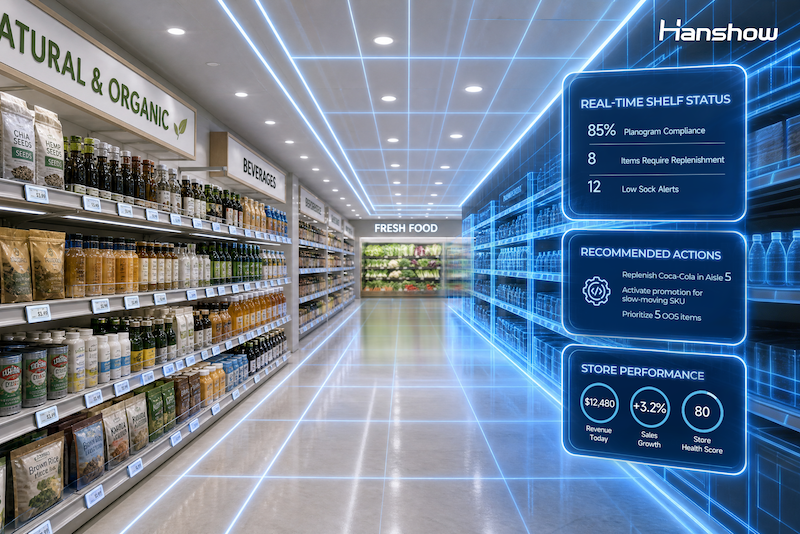
Understanding what is actually happening inside the store, and acting upon it in real-time, remains one of the industry’s greatest operational challenges.
From visibility to autonomy: the evolution of retail operations
Store Digital Twin is becoming increasingly important as retailers seek to move beyond traditional approaches to store management. While early digital initiatives focused primarily on visibility, the next stage of retail transformation is about creating the conditions for smarter and more responsive operations.
The journey often begins with understanding what is happening across products, shelves, shoppers and store assets in real time. Once these signals are connected, retailers can begin identifying patterns, uncovering root causes and understanding why issues occur. This deeper level of insight creates the foundation for AI powered decision-making, enabling organisations to prioritise issues, evaluate business impact and determine the most appropriate actions.
The greatest value emerges when intelligence is connected directly to execution. Insights become operational outcomes through store teams, automated workflows and increasingly intelligent systems capable of coordinating actions across the retail environment. Over time, this creates a path towards greater operational autonomy, where sensing, analysis, decision-making and execution function as a continuous cycle of optimisation.
Viewed through this lens, the significance of Store Digital Twin lies not only in improving visibility, but in providing the platform that connects awareness, intelligence and execution. As AI becomes more deeply embedded within retail operations, the transition from visibility to autonomy is likely to become one of the defining themes of the industry's next phase of transformation.
For technology providers, this also requires a shift in focus. Rather than addressing individual operational challenges in isolation, the goal is increasingly to create an operational foundation where data, intelligence and execution work together within a unified framework. This thinking underpins Hanshow's approach to Store Digital Twin.
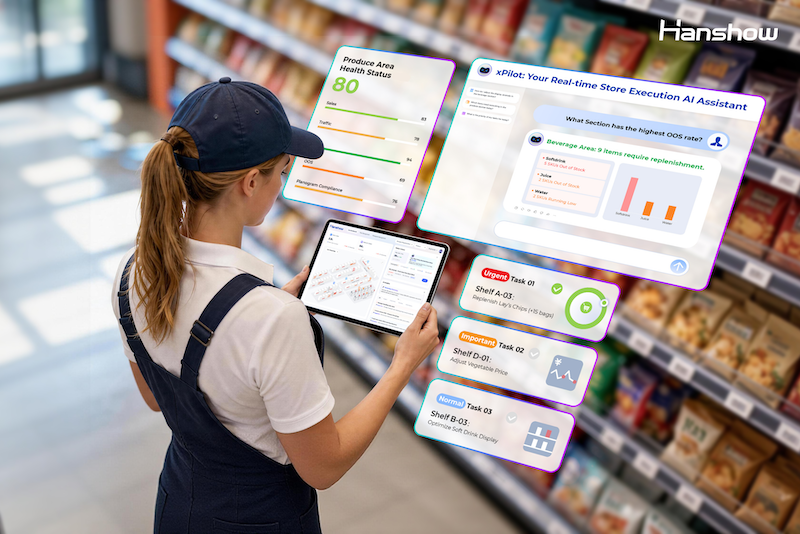
As retailers explore the next generation of AI powered operations, the conversation around Store Digital Twin is only just beginning.
Building an AI powered Store Digital Twin ecosystem
At Hanshow, the Store Digital Twin is built through a connected ecosystem that links products, people, assets and operational processes across the store. At its core, a Store Digital Twin provides a real-time digital representation of store operations. More importantly, it creates the foundation that enables information, intelligence and execution to work together within a single operational environment.
At the frontline, Hanshow’s solutions such as NexShelf, NexConnect Smart Cart and NexMate robotics help create real-time awareness across the retail environment. Together, they provide visibility into product availability, shelf execution, shopper interactions and operational conditions within the store. By connecting information from multiple touchpoints, retailers gain a more complete understanding of how their stores are performing in real time.
Building upon this operational awareness, AI powered solutions such as xPilot help transform information into actionable intelligence. By analysing operational conditions, identifying issues and recommending next steps, AI can help store teams focus resources where they create the greatest impact, improving consistency and responsiveness across the store network.
At the same time, Store Digital Twin continues to expand beyond the sales floor itself. Store operations are increasingly influenced by critical infrastructure and energy systems, making operational visibility across these assets equally important. NexGrid and NexOptim solutions bring energy management, in-store systems and other critical store assets into a unified operational environment, helping retailers improve efficiency, resilience and sustainability.
Together, these capabilities contribute to a connected Store Digital Twin ecosystem where people, products, assets and operational processes are linked through a shared operational foundation. This foundation enables AI not only to observe the store, but also to support decision-making, coordinate execution and lay the groundwork for increasingly autonomous operations.
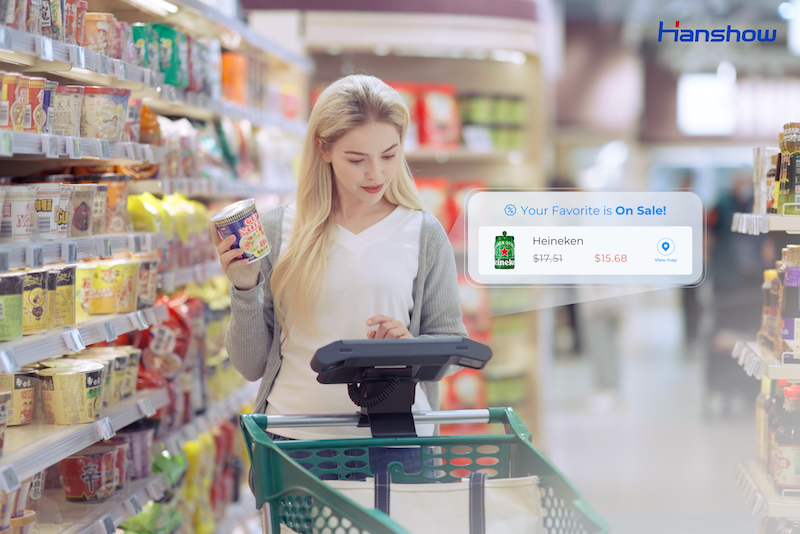
At the frontline, Hanshow’s solutions such as NexShelf, NexConnect Smart Cart and NexMate robotics help create real-time awareness across the retail environment,
Case study: how Rainbow & Lingzhi built an AI ready operational model
Rainbow's collaboration with Hanshow provides a practical example of how Store Digital Twin can support AI enabled retail operations.
As one of China's leading digital retailers, Rainbow operates in one of the world's most competitive retail markets, where e-commerce, instant delivery and omnichannel competition continue to raise expectations for operational speed, efficiency and execution.
Rainbow has been exploring how to connect real-time operational awareness, intelligent decision-making and execution across its store network. Through the deployment of a Store Digital Twin ecosystem incorporating solutions such as NexShelf, NexConnect and xPilot, Rainbow has established a more connected operational environment capable of supporting data driven store management.
In an award winning joint initiative in merchandise precision management, Rainbow brings Store Digital Twin and AI powered intelligence into operations. One key application focuses on out-of-shelf (OOS) management. Hanshow provides the store-wide sensing hardware that captures real-time shelf images and inventory data, while Lingzhi contributes its self-developed AI analytics engine to interpret that data.
Together, the two capabilities enable continuous, around-the-clock monitoring of shelf availability - automatically identifying out-of-stock SKUs and pinpointing their exact locations. Lingzhi's demand forecasting algorithms then automatically issue replenishment tasks, helping store teams respond faster and more consistently. By connecting detection, analysis and task creation within a single workflow, the project helps reduce response times while improving product availability and operational efficiency.
Rainbow is also among the first retailers to deploy xPilot in live store environments. By introducing intelligence driven, automated workflows into daily operations, xPilot helps store teams respond more quickly to merchandising, pricing and inventory issues, reducing reliance on manual inspections and improving execution consistency across the store network.
More importantly, this co-developed operational model pioneered by Rainbow highlights a broader industry direction: the shift from deploying individual technologies to building a unified operational foundation capable of supporting AI powered retail execution.
Conclusion: the operating system for future retail
As retailers explore the next generation of AI powered operations, the conversation around Store Digital Twin is only just beginning. The next chapter of retail transformation will not be defined by visibility alone, but by how effectively retailers connect awareness, intelligence and execution across the physical store. As these capabilities become increasingly integrated, the path towards more autonomous operations becomes clearer.
At NRF 2026: Retail's Big Show Europe, Hanshow will showcase how its AI powered Store Digital Twin ecosystem is helping retailers establish a unified operational foundation for the future, creating the conditions for more intelligent, adaptive and increasingly autonomous store operations.
Visit Hanshow at Hall 6, Booth E-020, and follow Hanshow on LinkedIn for the latest insights on retail innovation.