.png)
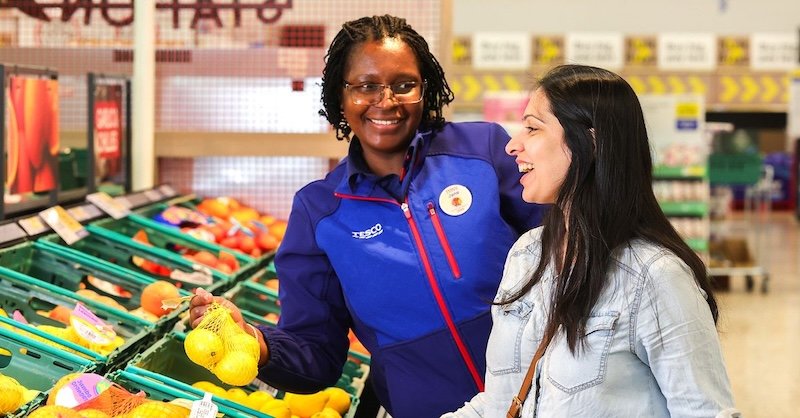
Tesco has launched a version of its Tesco Clubcard for 16 and 17-year-olds, enabling them to access Clubcard prices in the retailer’s stores and collect points that can be converted into vouchers for money off at the checkout.
To join, they must be invited to join from the Clubcard account of a parent or guardian. The easiest way to access this for a parent or guardian to click on the identity icon in the top corner of their Tesco app, which allows them to access their account settings. They can then click on the ‘Invite to Clubcard’ button and choose the option to send a sign-up link to their 16 or 17-year-old.
Tesco Clubcard is the most popular supermarket loyalty scheme in the UK and has been running for more than 30 years. Today more than 24 million UK households have one, with a Clubcard used in more than 80% of sales at Tesco and thousands of Clubcard prices offers in stores each week.
“We are delighted to be giving younger customers access to Clubcard for the first time, and we have no doubt that it will prove popular with 16 and 17-year-olds, whether they are shopping in one of our ‘big Tesco’ or ‘little Tesco’ stores,” says Tesco Group Membership & Loyalty Director, Shama Wilson.
“Our new Clubcard for 16-17s members will not only be able to get Clubcard prices in-store, including our iconic Tesco lunchtime meal deal for just £3.85, but also collect points that they can turn into vouchers for money off their in-store shopping.”
The nation’s favourite
Recent research revealed that major retailers in the UK are losing out on huge revenue streams by not applying strategic investment to their customer loyalty programmes.
The Retail Loyalty Index (RLI), developed by HyperFinity, in partnership with Bloomreach and Eagle Eye, surveyed 2,200 UK customers of 51 major retailers to identify the UK’s top performing retail loyalty schemes and the revenue impact of customer loyalty.
The research covered nine sectors, including grocery, quick service retail (QSR), coffee, health and beauty, and fashion. Customers were asked to rate two loyalty programmes they actively use by answering questions about satisfaction, how likely they are to recommend the scheme and how it influences their decision to shop with the retailer over any other.
They were then asked questions around seven ‘core revenue drivers’ of customer loyalty. These included: how valued the programme makes them feel, personalisation, ease of use, the appeal of rewards and whether the retailer handles their data securely.
The index found there was a clear ‘power trio’ of revenue drivers, accounting for 53% of total influence on customer loyalty. These were: Better value (18.8% influence) - customers want clear financial returns; Feeling valued (18.5% influence ) - recognition matters as much as rewards; Appealing rewards (16.1% influence) - benefits must be desirable and relevant.
The findings were then analysed to generate an all-in-one revenue indicator score for retailers, coined as the ‘RLI score’. The score out of 10 incorporates customer satisfaction, likelihood to recommend, and influence on choice, as well as how highly each retailer scored for the core revenue drivers.
Overall, the analysis showed that a one point increase in RLI is associated with a 7-8% increase in the likelihood to shop again, therefore generating increased revenue for retailers.
Tesco Clubcard is the nation’s favourite loyalty programme - scoring highly across each of the ‘power trio’ of revenue drivers. Fans describe Clubcard as a “very generous programme with plenty of options to redeem” and as making shopping “extra affordable and easy.”
Customers scored Tesco Clubcard highly for emotional loyalty and frequency, with the highest ‘continue to shop’ score (9.16/10).
Leon Club ranked second in the UK, scoring highest for providing value to customers (8.03), how valued customers feel (8.28), and the personalisation of loyalty schemes (8.22). Despite a restructure of store estate following administration, Leon's loyalty programme is going from strength to strength.
The quick service restaurant scored highly in the index for personalisation and how valued customers feel. It also scored highly for satisfaction (8.05) and recommendation (8.28), indicating customers are happy to refer the programme to others. One customer surveyed in the poll commented: “It's quicker and cheaper to build up rewards compared to other schemes."
Also making the top ten were Pret Perks, Sainsbury’s Nectar, Itsu Rewards, Wickes Trade Pro, Gregg Rewards, JD Status, Sweaty Betty Insiders, and Hamleys Rewards Points.
Peter Denby, CEO at HyperFinity, comments: “There are a number of reasons Tesco Clubcard and Leon Club scored so highly, but primarily, it comes down to simplicity, flexibility and ease of use. They both stand out as experiences built around emotional connection, relevance and trust, rather than complex mechanics or heavy discounting. The Retail Loyalty Index shows the message from consumers is clear: loyalty works when it’s valuable, visible, and personal, and emotional loyalty now matters just as much as financial value.”
Huh Kimber, SVP and General Manager EMEA & APAC at Bloomreach, says: "The best loyalty programmes don't just reward transactions - they create meaningful, connected experiences across every touchpoint. Our research shows that shoppers want to feel recognised whether they're in-store, online, or on an app. Personalisation isn't a nice to have anymore; it's the foundation of loyalty that actually lasts. Retailers who use data to deliver consistent, relevant experiences are the ones building genuine emotional connections with their customers."
Tim Mason, CEO at Eagle Eye, comments: "The findings from this year’s Retail Loyalty Index reinforce what we’re seeing across the market: loyalty performance is increasingly tied to a retailer’s ability to execute real-time, personalised offers and engagement that are relevant and of value to the individual. Programmes that move beyond points and discounts to deliver targeted rewards and clear customer value are driving stronger revenue impact, long-term customer retention and lifetime value.”

Comments (0)
No comments yet.