Fynd founder Sreeraman Mohan Girija talks going global and AI powered unified commerce
Starting when the internet was truly transforming Indian business, “even though connectivity wasn’t great back then”, Sreeraman Mohan Girija (SMG), Founder at Fynd, an AI native unified commerce firm headquartered in Mumbai that counts Diesel among its fashion inventory clients, tells RTIH how e-commerce has changed since its inception and what the future holds.
As the retail sector now pivots towards AI and Fynd celebrates going global via the opening of new Dubai and London offices this decade, plus its recent recognition at the RTIH AI in Retail Awards in the UK capital, we track the company’s journey thus far and discuss its future plans.
“I could see back in 2012 when Amazon India and its local digital marketplace equivalent, Flipkart, were really taking off that there was technology potential in the fashion area. India’s textile sector is historically large and its tech sector growing, so there was an opportunity there to provide better inventory updates and other services initially in-store and then online,” says SMG.
He set the business up with his technologist colleague, Farooq Adam, with the intention of improving inventory management integration and consumer updates with later delivery, payment and other associated e-commerce services following on. SMG has been successful in this long-term aim. Fynd, which was called Shopsense Retail Technologies up until 2015, now effectively offers a Shopify alternative for bigger brands and it is expanding rapidly.
“We target brands in the $50-$250 million revenue range that are too big for Shopify startups but would benefit from our technology help and expertise. That is our sweet spot, although the platform also works effectively across the spectrum - from emerging DTC brands to large enterprises,” says SMG, as he discusses Fynd’s journey from an in-store clothes finding aid to an online, business (B2C) and direct-to-consumer (D2C) tool, and back again.
Ironically, fashion retailers are increasingly looking to reinvigorate their high end stores with a unified commerce service that recognises big spenders in a shop and personalises their digital loyalty and other customer experiences in an integrated manner, thereby completing the circle of Fynd’s expansion across all segments of retail operations.
“Fynd gives you all the retail technology you will need under one umbrella, so you don’t have to deal with multiple partners,” says SMG. “We’re an end-to-end service provider that can assist with fashion product inventory design, catalogue shoots - using AI backgrounds to cut timeframes and photography/model costs, for instance via our sign-up and Fynd Snap tool - right through to updating stock systems, driving CX personalisation, and sorting out payment and delivery options.”
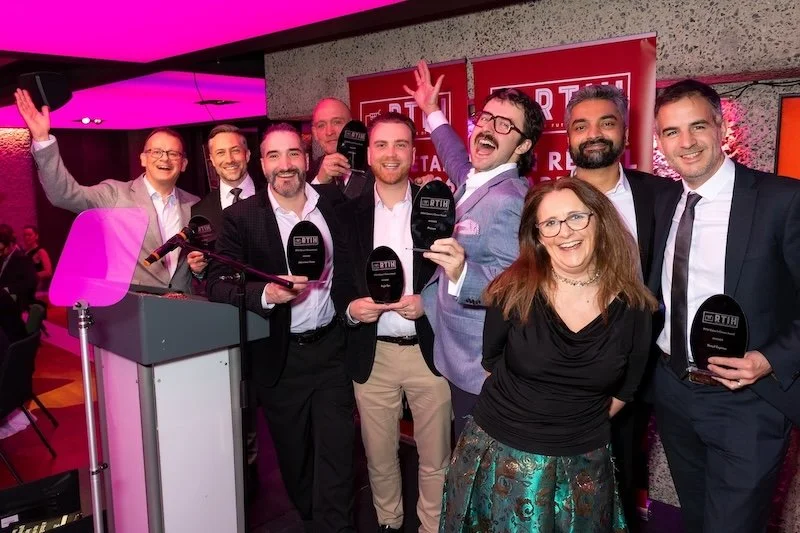
Fynd was among the winners at the RTIH AI in Retail Awards Ceremony, which took place in London last month.
Tech trends: AI
“We’re also readying ourselves for the imminent era of agentic AI as well, where more and more automation and self-service will be evident as retail technology evolves,” says SMG.
Agentic commerce will be key, via Fynd’s new Kaily product. “This allows customers to talk to an AI agent, shop and do the entire customer journey with it to maximise convenience, ‘stickiness’ and brand loyalty for our clients,” explains SMG.
“AI will be useful, in its agentic and other forms. But only if the data centric operations of retailers and their technology partners, such as ourselves, are good enough to take full advantage of it. Data mastery will be everything in the 21st century, including how it can drive good AI outcomes, feeding it appropriate lakes to learn from.”
RTIH AI in Retail Awards
Fynd emerged victorious in the RTIH Editor’s Choice Award category at the RTIH AI in Retail Awards.
It was recognised for how its AI native suite has been deployed at numerous retailers across the fashion, beauty, and eyewear sectors, principally via its:
· Fynd AI Photoshoot & Snap tool: that helps make catalogues easier and cheaper to produce with virtual tools.
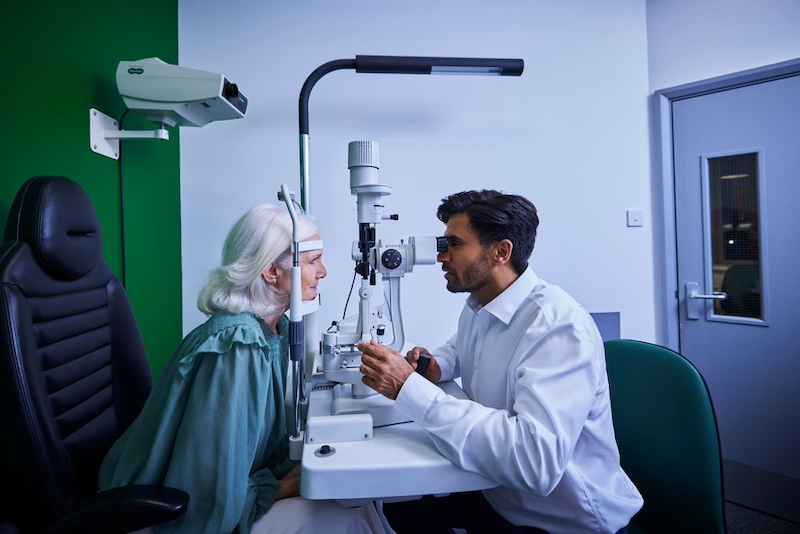
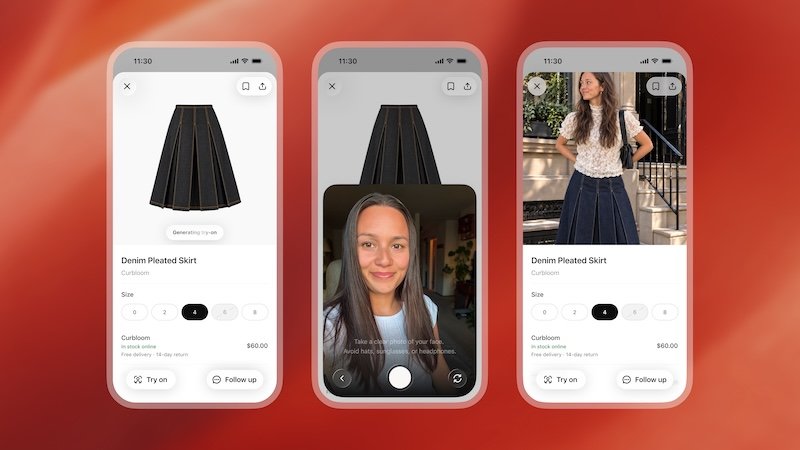
· GlamAR: that enables ‘try before you buy’ augmented reality offerings, especially on its 3D/AR-VR Try-On and AI Skin Diagnostics tools, which improve CX and provide an immersive experience.
· Fynd Create: this offers AI enabled planning, designing and manufacturing capabilities, so that clients can design fashion products themselves.
Over the past year, Fynd has enabled brands such as Asos (UK), Low Cost Glasses (UK), Foxtale (India), The Pant Project (India), and August Society (Singapore) to launch faster, reduce costs, personalise journeys, and scale globally with these AI enabled tools. In some cases, this has resulted in 80% lower photography costs, 86% faster catalogue readiness, 35% higher conversion rates, and 3× improved design outputs.
“Autonomous commerce will also be a big future tech trend I think,” adds SMG, alluding to the idea of the Internet of Things (IoT) whereby everything is hyperconnected and integrated. For example, when your net connected fridge can order replacement foods that have run out automatically and use machine-to-machine (M2M) payments to facilitate automatic delivery, without any human involvement whatsoever.
Ditto if your socks get a hole, or you’ve a function that requires a dinner jacket that evening. More pertinently for Fynd’s future clients it could power a one-person retail brand of the future that hooks into social media personalities to drive sales and growth, via a cheap to implement automated back-end. This could open up the SME sector to the company, away from its present bigger brand customer base.
Early days of Fynd
That is all in the future. Having started in the B2B arena, helping retailers find out what stock they had from their fashion suppliers and helping consumers to explore if clothes were available and how the clothes would look on them, via a net connected in-store TV screen, SMG has seen the industry change massively over his company’s lifespan.
“We used to be B2C customer facing small player helping shoppers search for and model a piece of clothing that was stored in the back of a physical shop via a 14” TV screen, before morphing into more online and home delivery services via a different computer screen, and latterly entering full scale inventory integration, D2C services, and now unified commerce.”
“Footfall used to be everything when we started in-store back in 2012. Our second client Being Human Clothing, backed by Bollywood star Salman Khan, was a big draw getting people to come to the shop back in the day. We ensured they spent whatever the state of the inventory, helped by his star power obviously.”
Moving into the large scale back-end complexities of inventory management and electronic and mobile e-commerce, exemplified by Flipkart owned Myntra at the time in India, was simply a case of following the fashion digital marketplace of a decade ago. Physical stores were being de-emphasised back then.
“It was an exciting time. We were very ambitious and looking for a space in the evolving market. I could see the rise of e-commerce and digitisation just accelerating massively all around us. We wanted to be a part of it somehow,” says SMG, as he explains how Fynd pivoted away from its TV screens, “which were expensive hardware then”, towards online, mobile, home delivery, inventory and other such software-as-a-service (SaaS) retail technology options.
Omnichannel and nascent e-commerce
“We worked with Nike as we diversified, and then hit it really big when we built the inventory integration solution for Reliance Brands,” says SMG, explaining that this is a huge multibillion revenue Indian company that imports Diesel, and many other big famous global fashion brands, into the country.
A latter cooperation project with its new Go Fynd mobile solution meant that if a Diesel clothing, or another Reliance Brands product, couldn’t be found locally in flagship stores in Mumbai, or in other big city shops in Assam or elsewhere, it could now be ordered from smaller shops via a ‘fast store’ function - or even online for home delivery. This was reflective of the rise of e-commerce at that time.
“This required a change in mindset from the fashion brands themselves who traditionally liked to tightly control their CX, branding, access and exclusivity back then [and consequently didn’t initially embrace the omnichannel –Ed.]. But Diesel and Reliance were reassured we could offer a good non-shop mobile inventory finding tool that would drive new business, while protecting its in-store offering,” says SMG.
The industry’s evolution back then required the rise of open API led connectivity and easier data exchange models as Application Programming Interfaces became the ‘new normal’ way to drive operational integration, plus new business opportunities and partnership models.
“It’s interesting to me,” adds SMG, “that fashion brands are now pivoting back towards prioritising their in-store experiences and seeking to retain profitable pricing, and integrate it more fully and personally into their e-commerce offering, which they’ve spent the last decade developing. This omnichannel and unified approach is now de rigueur but the circularity of the journey - which mirrors our own company’s journey - appeals to me.”
Reliance Brands takeover pre-pandemic
Fynd’s efforts and status as one of the first Indian retail tech startups won it investment from Google back in 2018. They exited late the following year, however, after Reliance Brands became the majority shareholder in August 2019 after being impressed with Fynd’s technological progression and capabilities, since its 2012 startup inception.
SMG likes to point out Google left with 9x their return on investment (RoI). Fynd themselves “benefitted from a lot of cultural and innovation learnings,” he adds.
Luckily, Reliance Brands’ majority shareholder takeover happened pre-pandemic, with the founders remaining in-situ to drive Fynd forward towards their planned 2022 entry into the Middle Eastern marketplace via a new Dubai, UAE, office.
“We didn’t have to worry about meeting payroll when Covid-19 lockdowns and business disruptions initially hit 2020 onwards. Actually, the very strict implementation of shop shutdowns in India led to a huge spike in our business because the first governmental relaxation measures came in for the home delivery sector. This led to a huge bounce in business for us.”
“It gave us the momentum and money to drive forward with our long planned expansion into MEA in 2022 where luxury clothing is a big and profitable sector. We’ve a four-person strong Commerce City, Dubai, office.”
Situated just across the Indian Ocean, Dubai has a long-standing history of trade via the Dhow boats moored in its Creek. This pre-existing cultural link no doubt helped Fynd’s expansion into the wider UAE and Gulf region, working with Landmark Group among others. It has since expanded into South Africa, working with Surtee Group, and into Southeast Asia in Malaysia and Indonesia.
“We are targeting around 10% of our revenue from outside India within the next year as we expand globally,” says SMG.
An expanding company
The UK and ultimately Europe, especially France and Germany, is Fynd’s next big planned regional expansion into new marketplaces. “We’re presently looking for offices in Britain in Q1 2026 and indeed that is partly why I am here in London to pick up the RTIH AI in Retail Awards that we received for our project.
The geographically and technologically expanded company that Fynd has become over the last 14 years since its founding is reflected in the full service offering that it now provides to its global client base.
“Our platform is very modular, giving our white labelled and other clients easy access to all ID, payment, inventory, delivery, AI, design and other such tools,” says SMG, adding there is no need to replatform even if a company is already using Shopify, Salesforce, Amazon or other providers. The company is set fair for the future and to ‘fynd’ more success.

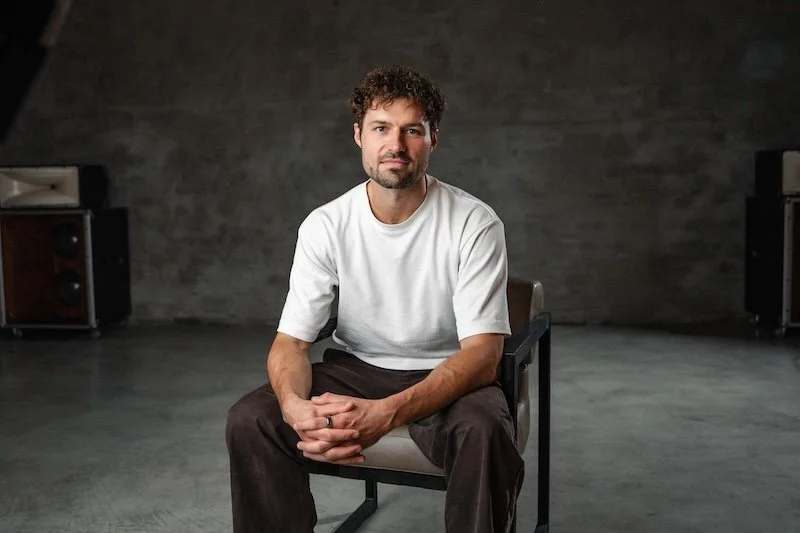
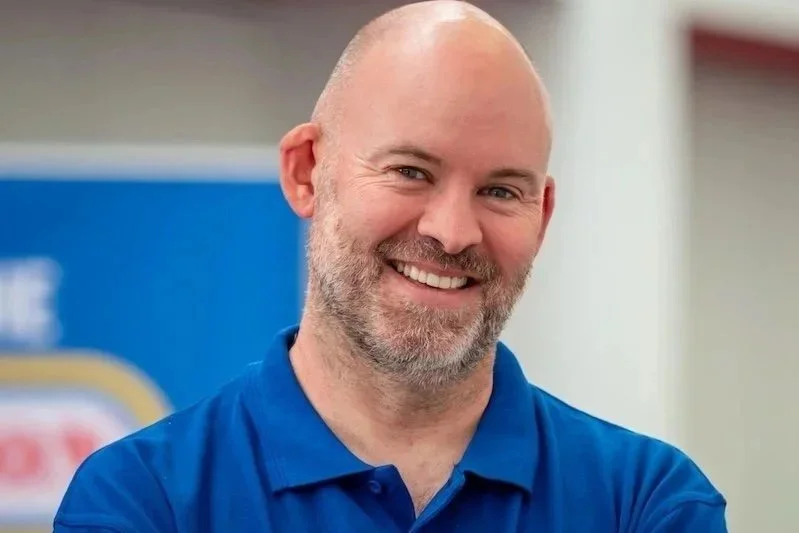
Fynd founder Sreeraman Mohan Girija: “We were very ambitious and looking for a space in the evolving market. I could see the rise of e-commerce and digitisation just accelerating massively all around us. We wanted to be a part of it somehow.”