Retail tech M&A in 2026: what founders should expect from their lawyers
Retail technology acquisitions are accelerating as investors and larger technology platforms consolidate specialist tools across payments, supply chain infrastructure, and retail analytics. Corporate lawyers guide founders through the legal and commercial realities of selling a business during this period of consolidation.
Founders should expect legal advisers to manage transaction structure, coordinate due diligence, allocate risk, and navigate regulatory approvals. Early preparation and a clear legal strategy can significantly affect deal timelines and outcomes.
Industry Consolidation Is Reshaping Retail Tech M&A
Retail technology consolidation has intensified as strategic buyers and private equity investors seek to build integrated platforms. Acquisitions increasingly focus on companies providing data infrastructure, payment systems, customer analytics, and AI driven retail solutions.
This consolidation trend creates opportunities for founders but also introduces more complex transaction processes. Legal advisers must balance commercial objectives with regulatory obligations and investor expectations.
Strategic Buyers and Platform Expansion
Large technology groups and retail infrastructure providers often acquire specialist companies to expand their product capabilities. A business offering a niche technology may become valuable once integrated into a larger ecosystem.
Mergers and acquisitions solicitors assist founders in evaluating transaction proposals and structuring deals that preserve commercial value. Early advice from a mergers and acquisitions solicitor can clarify risks and help founders approach negotiations with greater certainty. For example, Rubric Law has supported transactions valued at >£750m across multiple sectors, advising founders and investors as consolidation reshapes technology markets.

Private Equity and Multi-Acquisition Strategies
Private equity funds increasingly build technology platforms through multiple acquisitions. A fund may acquire one core business and expand through additional purchases in adjacent areas such as logistics software or payment infrastructure.
Corporate lawyers coordinate these transactions and ensure the legal structure supports future acquisitions and integration plans.
Structuring the Transaction: Share Sale, Asset Sale, or Hybrid
The transaction structure determines how ownership transfers and how liabilities are allocated between buyer and seller. Corporate lawyers help founders understand how each structure affects tax, regulatory exposure, and operational continuity.
Different structures can produce significantly different outcomes for founders.
Share Sales
A share sale transfers ownership of the company itself. The buyer acquires the business, including its contracts, intellectual property, and liabilities.
Retail technology companies often favour this structure because it maintains operational continuity. Customer subscriptions, supplier agreements, and platform integrations usually remain intact.
Corporate lawyers negotiate warranties and indemnities in the share purchase agreement to allocate risk between the parties.
Asset Sales
An asset sale transfers selected business assets instead of the company itself. Buyers sometimes prefer this structure to avoid inheriting historical liabilities.
Asset sales can require additional steps, including:
● contract novation agreements
● employee transfers under TUPE regulations
● separate intellectual property assignments
These additional steps can extend transaction timelines.
Earn-Out Arrangements
Retail technology companies often rely on projected growth when determining valuation. Earn-out provisions link part of the purchase price to the company achieving future performance targets.
Corporate lawyers draft these provisions carefully to define:
● performance metrics
● accounting methodology
● reporting obligations
Clear drafting reduces the risk of disputes after completion.
Managing Due Diligence in Retail Technology Deals
Due diligence allows the buyer to investigate the business before completing the acquisition. Corporate lawyers coordinate the process and manage the flow of legal information between parties.
Retail technology companies often face deeper scrutiny due to their reliance on intellectual property and data systems.
Intellectual Property Verification
Buyers must confirm that the company owns the software and technology it claims to sell. Corporate lawyers review development contracts, contractor agreements, and intellectual property assignments.
Incomplete IP assignments remain one of the most common issues discovered during technology due diligence.
Data Protection and Platform Compliance
Retail technology companies frequently process significant volumes of personal data. Buyers therefore review compliance with data protection laws such as the UK GDPR.
Corporate lawyers examine:
● data processing agreements
● cybersecurity procedures
● SaaS customer contracts
● platform licensing arrangements
Well-prepared documentation reduces delays and helps transactions progress smoothly.
Regulatory Scrutiny Is Increasing in Technology Transactions
Technology acquisitions often attract greater regulatory attention than traditional retail deals. Corporate lawyers analyse whether a transaction triggers review requirements.
Regulatory analysis often begins early in the process to avoid unexpected delays.
National Security and Investment Act
The UK National Security and Investment Act allows government review of acquisitions involving sensitive sectors, including artificial intelligence and data infrastructure.
Transactions involving these areas may require notification to the government before completion.
Corporate lawyers assess whether mandatory notification applies and coordinate submissions when required.
Cross-Border Investment Screening
Cross-border retail technology transactions can also trigger foreign investment screening in EU jurisdictions. These processes review acquisitions that may affect national economic interests or security.
Corporate lawyers coordinate with advisers in other jurisdictions to ensure regulatory requirements are satisfied.
Negotiating Risk Allocation in M&A Agreements
M&A agreements allocate risk between buyer and seller. Corporate lawyers negotiate these provisions carefully to reflect the commercial realities of the transaction.
Clear drafting reduces the likelihood of disputes after completion.
Warranties
Warranties are contractual statements about the condition of the business. They confirm matters such as intellectual property ownership, tax compliance, and the accuracy of financial statements.
If a warranty proves incorrect, the buyer may claim compensation.
Indemnities
Indemnities cover specific known risks identified during due diligence. A seller may agree to compensate the buyer if a particular issue later causes financial loss.
Corporate lawyers negotiate the scope, time limits, and financial caps of settlement.
Completion Accounts
Completion accounts determine the final purchase price after closing. The calculation typically considers working capital, cash balances, and debt levels at completion.
Corporate lawyers ensure the accounting mechanism reflects the commercial agreement reached between the parties.
Practical Steps Founders Should Take Before Starting an M&A Process
Preparation plays a significant role in determining whether a transaction progresses smoothly. Corporate lawyers often encourage founders to organise documentation well before formal negotiations begin.
Strong preparation can reduce due diligence timelines and maintain buyer confidence.
Preparing Key Corporate Documents
Founders should gather essential documentation before approaching potential buyers.
Important documents include:
● shareholder cap table
● employment agreements for senior staff
● intellectual property assignments from developers
● customer and supplier contracts
● data processing agreements
● recent financial statements
Corporate lawyers review these materials early to identify potential risks.
Addressing Common Legal Gaps
Technology companies frequently encounter documentation gaps during due diligence. Missing intellectual property assignments or incomplete data agreements can delay a transaction.
A corporate lawyer can identify these issues early and help founders resolve them before entering negotiations.
Typical Timeline for a Retail Technology Acquisition
Transaction timelines vary depending on deal complexity and regulatory review requirements. Corporate lawyers help coordinate each stage and maintain momentum.
A simplified timeline often includes the following stages.
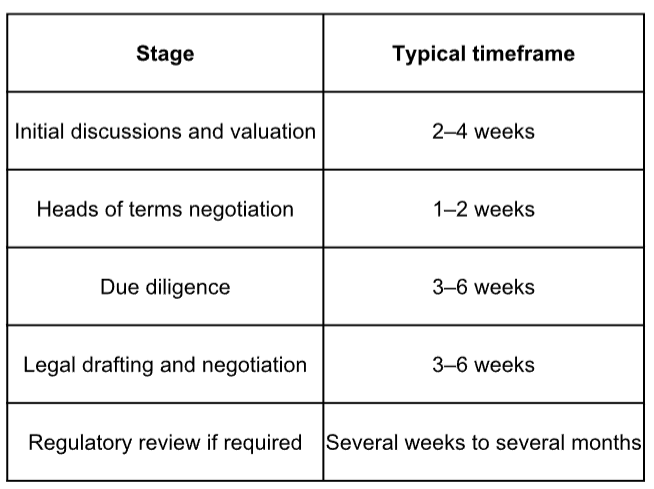
Straightforward transactions may complete within eight to twelve weeks. Cross-border or regulated deals often take longer.
FAQ
What do corporate lawyers do during an M&A transaction?
Corporate lawyers structure the transaction, draft legal agreements, manage due diligence, and coordinate regulatory approvals. They guide the process from heads of terms through completion.
When should founders engage a corporate lawyer?
A corporate lawyer should ideally become involved before negotiations begin. Early advice helps founders structure the transaction correctly and prepare documentation for due diligence.
Why is due diligence important in retail tech acquisitions?
Due diligence confirms ownership of intellectual property, reviews software licensing arrangements, and assesses data protection compliance. Buyers rely on this process to verify the value and risk profile of the business.
How long does a retail technology acquisition usually take?
Straightforward acquisitions may complete within eight to twelve weeks. Cross-border transactions or deals requiring regulatory approval often extend several months.
What risks do corporate lawyers help founders manage?
Corporate lawyers manage risks involving contractual liabilities, intellectual property ownership, data protection compliance, and regulatory approvals.
How Legal Strategy Supports Retail Tech Transactions
Retail technology consolidation continues to reshape the sector as strategic buyers and investors seek scalable platforms and specialised infrastructure.
Corporate lawyers help founders navigate the legal, regulatory, and commercial complexities of these transactions. Clear legal strategy and early preparation allow founders to approach acquisitions with greater confidence and control.