Including Profitmind and Croissant: 12 retail technology funding rounds you need to know about
RTIH rounds up 12 retail tech ventures who have recently secured significant investments in their businesses, including order management systems companies, grocery technology startups, and agentic AI decision intelligence specialists.
1. Fluent Commerce
1. Fluent Commerce, an Australian order management systems company whose customers include Prada Group, L’Oreal, Kingfisher, LVMH and JD Sports, has secured A$46 million in new funding from Bain Capital. It says that the investment will support global growth, and enable customers to scale faster with new AI powered capabilities in its Fluent Order Management offering.
Fluent Commerce CEO Graham Jackson says: “Our goal is to serve our customers with real-time data to enable them to remove profit leaks and to grow. Whether it’s into a new market or launching a new brand or experience, we provide the decision-making engine for AI ready commerce operations. This investment from Bain Capital enables us to supercharge our international growth and become the AI powerhouse for global brands.”
Paul Kennedy, Partner at Bain Capital, says: “We are excited to partner with Fluent Commerce as it accelerates its global expansion. Fluent has built a best-in-class order management platform guided by a proven management team, a focused customer first strategy, and technology leadership that has earned the trust of leading global brands. Our conviction in the company is grounded in our global technology investing experience, which we will continue to apply as we support its ongoing growth.”
2. Vori
Vori has raised a $22 million Series B to help with its mission to make every supermarket in America autonomous.
In a LinkedIn post, Brandon Hill, CEO at Vori, said: “Grocery is a $1.5 trillion domestic market - bigger than restaurants, bigger than hotels. But it's running on technology from the Reagan administration. This industry is massive, essential, and near and dear to my heart.”
He added: “My parents met in a supermarket. My grandparents owned a grocery store. My mom Tori works at Vori. Walmart and Amazon have invested heavily in this space, capturing 25% of US grocery spending. But no one is building tech for the other 75% of the market. Vori is the engine for grocery: an AI native operating system that handles checkout, payments, pricing, ordering, inventory, and loyalty.”
Since launch, the company has processed $500 million+ in payments across 140+ stores in 55+ cities, serving over one million consumers nationwide. In the past six months, it lays claim to doubling payment volume, with new stores being onboarded every day. “The revenue we used to close in a year, we now close in a month,” Hill said.
The Series B round, led by Adrianna Samaniego at Cherryrock Capital with participation from Mike Duboe at Greylock Partners and Factory, brings total funding to date to $50 million. The cash will go toward expanding the engineering and product teams, shipping the next generation of AI agents for grocery, and bringing Vori to thousands more stores.
3. Pepper
Pepper, a technology platform for independent food distributors, has raised $50 million in Series C funding to expand product innovation and deepen AI enabled capabilities. The round was led by Lead Edge Capital, with participation from existing investors including ICONIQ, Index Ventures, Greylock, Harmony Partners, and Interplay.
Pepper’s suite of products helps independent food distributors in modernising core workflows across ordering, sales and marketing, accounts receivable, and embedded payments. The company serves more than 500 distributors, representing approximately $30 billion in annual gross merchandise volume, and supports over 100,000 active operators nationwide.
“Food distribution is one of the largest and most fundamental markets in the world, yet it has long operated on manual systems and fragmented technology,” says Bowie Cheung, CEO at Pepper.
“This newest round of funding enables us to build the next generation of platform capabilities our customers rely on to run every critical part of their business, from ordering workflows to sales productivity and payments capabilities. Independent distributors can no longer survive on legacy technology, and our product suite gives these business owners the same technological advantage that has historically been reserved for food industry giants.”
4. Burst
Burst (formerly Float), a healthcare payments platform that helps retailers and wellness brands unlock FSA and HSA spending, has raised $3 million in total funding, including a $2.1 million seed round led by Pear VC with participation from Rock Health Capital, Alumni Ventures, and others.
The capital will accelerate product development and fuel partnerships with retailers, e-commerce brands, and plan administrators looking to capture more health spending.
"We can help activate more of your customers to look like your best segment," says Anthony Rangel, Co-founder and CEO at Burst. "HSA and FSA cardholders are already retailers' most loyal customers, returning often and spending more when they do. We eliminate the friction and empower consumers to use their pre-tax health benefits at your storefront."
Burst works entirely post-purchase. Retailers keep their existing payment stack, checkout flows, and tooling. Shoppers pay as they normally would with Apple Pay, credit cards, or loyalty rewards. After purchase, Burst identifies HSA/FSA eligible items, notifies customers of their savings opportunity, and files reimbursement claims automatically with their plan administrator.
The platform integrates through a Shopify app or API and works across every sales channel, including e-commerce, in-store PoS systems, telehealth platforms, and subscription services. For subscriptions, Burst supports Letter of Medical Necessity (LMN) issuance and helps enable automatic recurring reimbursements.
5. Profitmind
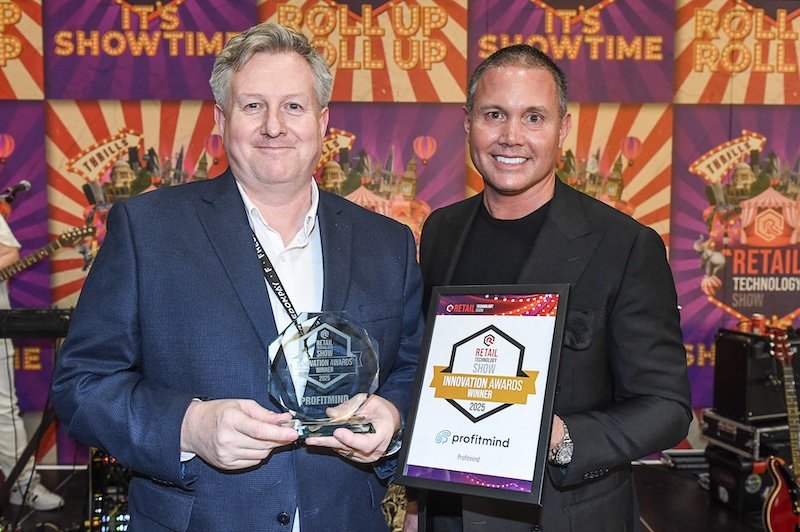
Profitmind, an agentic AI decision intelligence platform, has announced a $9 million Series A financing led by Accenture Ventures.
New investor Thorndale Farm participated in the round, alongside reinvestment from existing backers Magarac Venture Partners; AI Fund, led by Profitmind Chairman Andrew Ng; and Lightscape Partners. Several individual investors also participated, including board member Mario Ciampi, former President of Disney Store and former COO of The Children’s Place.
The funding will be used to scale the platform to more retailers globally, expand product capabilities and grow the team to support those efforts. It builds on a recent partnership with Microsoft to bring the platform to Microsoft Marketplace and Azure.
“Retail teams are not short on data, but they are short on time and decision-making confidence,” says Dr. Mark Chrystal, Co-Founder and CEO at Profitmind. “This investment allows us to scale a platform that replaces days of manual work with clear, strategy aligned recommendations teams can act on immediately with predictable outcomes.”
6. Croissant
Croissant has raised $28 million in capital as it looks to accelerate growth and deepen partnerships with brands and retailers. The round includes $14 million in funded proceeds and $14 million in incremental debt capacity. Existing investors Portage, Third Prime, and George Roberts led the equity component of the raise.
It brings total capital raised to $52 million.
Croissant says that to date it has driven over $50 million in gross merchandise volume (GMV) across more than 100,000 users. It partners with brands and retailers including Nordstrom, Revolve, Reformation, and SSENSE.
Croissant shoppers receive 10% back immediately on every purchase at partner brands, along with guaranteed future resale prices.
"We've built an ecosystem that works. Shoppers love unlocking value by buying better. Brands love acquiring customers who think long-term. Now we're pouring fuel on the fire," says John Howard, Founder and CEO at Croissant.
"For brands, customer acquisition costs are rising, and loyalty is fragile. For shoppers, purchasing higher quality goods that retain value is the smartest financial and lifestyle decision, but hasn’t been adequately incentivised to date. Croissant connects those dots. We drive high intent demand to brands, reward customers for shopping and reselling, and create a healthier cycle of commerce. This funding allows us to scale that engine."
7. Loxa
Loxa, an insurtech enabling retailers to offer product protection at the Point of Sale, has announced the close of its £2.7 million seed round, completed across three tranches.
This was backed primarily by angels and family offices, including the Lazaroo-Hood Group, with introductions facilitated by Angel Investment Network, FundMyPitch, and the Entrepreneur's Collective.
The cash will be used to drive EU expansion, scale Loxa's retail network to 150+ live partners, and broaden the platform to support every insurable product category.
“We started Loxa because we believed embedded product protection should be as universal as the checkout itself, available to every retailer, for every customer, everywhere,” says Jamie Hamer, Co-Founder and CEO.
“We made a deliberate choice to build this round with angels and operators who shared our mission and backed our vision from the start, and that alignment builds better businesses. Closing this round means we can now deliver on that promise at scale, with the right people and resources to execute successfully."
Since launching in 2023, Loxa has grown to more than 45 live retail partners across furniture, eyewear, power tools, electronics, catering appliances and other categories, embedding with retailers like eCatering, Toolden, Hyundai Tools, Rowen Homes, Maker & Son, and JCB Pro Tools.
8. ZyG
ZyG has raised a $60 million Series A, coming on the heels of its seed round of $58 million in March.
This was led by Accel, with participation from Felix Capital and additional new and existing investors, including Bessemer Venture Partners and Lightspeed Venture Partners. Sonali De Rycker, partner at Accel, will be joining the ZyG board of directors.
ZyG was built by the founders of ironSource, which went public on the NYSE at $11 billion and later merged with Unity, who joined forces with AI experts from one of Israel’s top cyber units.
ZyG OS is pitched as the first end-to-end platform for entrepreneurs and direct-to-consumer (DTC) brands to build e-commerce at scale. Leveraging its agentic infrastructure, ZyG OS identifies products with strong scale potential and executes every function needed for scale, from building the online brand and store to generating creatives, running user acquisition and organic growth to optimising conversion, retention, and logistics.
The firm says that it is currently partnering with online brands with excellent products that have gotten initial traction online but do not have the capability to build out the technology stack, AI expertise, and data capabilities necessary to scale in the US. All of these brands have gone through ZyG’s agentic Product Market Fit test and achieved a high ZyG Score, which predicts scale potential.
9. Manna Air Delivery
Manna Air Delivery, a specialist in consumer drone delivery, has announced a $50 million funding round to expand its operations in the United States and Europe.
This brings its total funding to $110 million. Manna lays claim to one of the most active consumer drone delivery networks in the world, with more than 250,000 regulated commercial UAV flights completed.
Investors in the round include ARK Invest, known for backing companies such as OpenAI, Anthropic, Tesla and SpaceX, the Ireland Strategic Investment Fund (ISIF) and Schooner Capital, alongside existing supporters Coca-Cola HBC and Molten Ventures.
Manna has operated in six locations across its native Ireland, as well as in Finland and Texas over the past seven years, delivering items including books, medical supplies such as antigen tests, food and clothing. Recently it announced a partnership with Uber, adding to its existing partnerships with Deliveroo, Just Eat and DoorDash.
Customers can order through the Manna app or directly via its partner platforms, with autonomous unmanned aerial vehicles (UAVs) delivering everyday items to suburban communities within minutes.

10. Quince
Quince has secured a $500 million Series E funding round led by ICONIQ, with participation from Basis Set Ventures, Wellington Management, Wndrco, Marcy Venture Partners, Ballie Gifford, Notable Capital and DST Global.
This gives it a post-money valuation of $10.1 billion and will support the growth and global expansion of Quince's AI powered proprietary premium products manufacturer-to-consumer (M2C) operating system.
"For decades, consumers have been conditioned to equate higher prices with higher quality," says Matt Lippert, Chief Commercial Officer at Quince. "We play in categories where quality is tangible and measurable to disprove that assumption. The model is simple: design a different system that eliminates the waste consumers have traditionally paid for in retail.”
“That starts with real care around quality, from the materials we source all the way through how products are made, while removing excess production, unnecessary intermediaries, and inventory risk. When those inefficiencies come out of the system, people experience the benefits through more consistent quality and more accessible pricing. Over time that creates trust, and increasingly customers come to Quince first when they're looking for something because they know what they're going to get."
11. BackOps
BackOps, an AI native operating system for supply chain operations, has raised $26 million in Series A funding. The round was led by Theory Ventures, with participation from Gradient, Construct Capital, and 10VC. BackOps will use the cash to scale its team and accelerate the product roadmap.
“Supply chains are incredibly complex systems with dozens of vendors, tools, and workflows involved in every shipment,” says Sean McCarthy, Co-founder and CEO at BackOps. “Companies need systems that go beyond tracking the problems, they need help solving them.”
“We built BackOps to connect those pieces together and automate the work logistics teams have historically had to do manually. The result is clear: teams gain the time and headspace to focus on delivering excellent customer service. This is just the beginning of how we’re raising the bar for what companies can expect across their entire supply chain.”
“Supply chains are the backbone of the global economy, but most of the work that keeps them running is painfully manual. BackOps is building the intelligent operating layer for logistics,” says Tomasz Tunguz, General Partner at Theory Ventures.
“By applying AI directly to the operational fabric of supply chains, BackOps has the potential to unlock massive efficiency gains for companies moving goods around the world. We’re excited to support a team that understands these problems from the inside out and is turning AI into a real force multiplier for logistics operations.”
12. Sona
Sona, an AI platform for frontline enterprises, has bagged $45 million in Series B funding led by N47, with participation from existing investors Felicis, Northzone, Gradient, and Italian Founders Fund, bringing its total funding to over $100 million.
The cash will accelerate its US expansion and drive platform enhancements.
Sona's forecasting and scheduling enables businesses like Popeyes to better manage how their business is staffed, helping them to have not just the right number of people but the people best suited to the shift working at the busiest times.
This is combined with its labour AI platform, which takes real-time data about bookings, revenue, weather and every shift ever worked - along with any other factor which may impact a business, from box office takings to road closures - and builds models which evolve in real-time to predict not just what will happen but, based on historical productivity, what optimal operations look like and where there are opportunities for improvement.