.png)
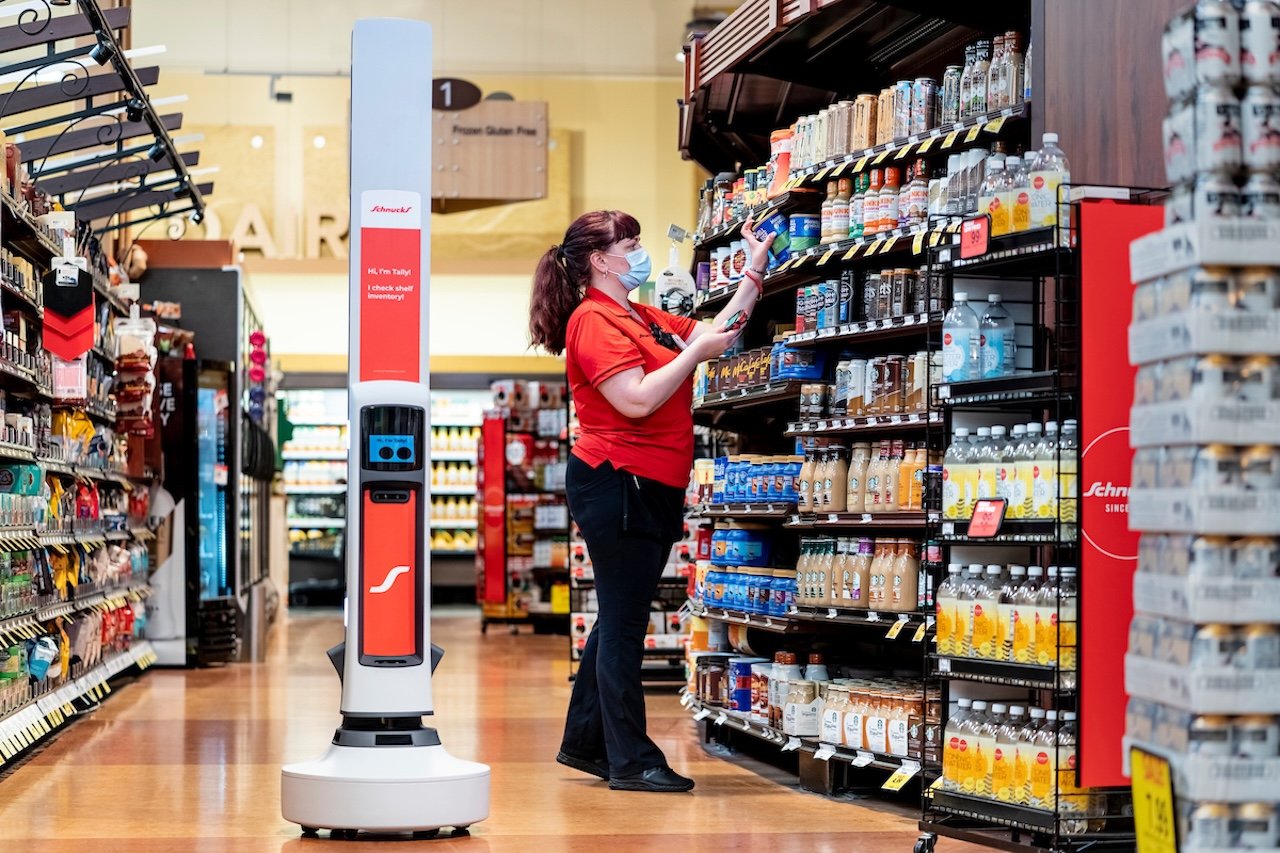
Yesterday, we reported that Tesco was trialling Simbe’s Tally in-store shelf scanning robot. Toby Pickard, Retail Futures Senior Partner at IGD, and a member of the judging panel for the 2026 RTIH Innovation Awards, went to check out Tally in action.
He noted that this trial isn't an isolated innovation. Over the last few weeks, Tesco has also: introduced autonomous cleaning robots across convenience and supermarket stores; announced a partnership with Hanshow to deploy electronic shelf edge labels in around 3,000 large format and convenience stores; it is also trialling an AI assistant across its workforce to help customers with meal planning and building shopping baskets.
Pickard commented: “Taken together, these announcements paint a much bigger picture. It feels like Tesco is building towards the hyper-connected store, where robotics, AI, computer vision, digital shelf infrastructure and connected operations work together to create smarter store execution, empower store colleagues, and ultimately deliver a better shopping experience.”
“Retail technology conversations often focus on individual innovations. The real transformation happens when these technologies begin to work as an integrated ecosystem. Tesco's recent moves suggest that's exactly the direction it's heading. The question now is: Which UK retailer will be next to accelerate its journey towards the hyper-connected store?”
It’s certainly fascinating to see all the pieces of the hyper-connected store puzzle finally coming together.
Various other UK retailers are also ramping up their efforts in this area. Asda, for instance, recently reported the launch of Natasha’s Law allergen and calorie information for bakery products on Vusion electronic shelf edge labels across 150+ of its Express stores.
Natasha’s Law, introduced in October 2021, is regulation focused on food allergen labelling in the UK. It is named after Natasha Ednan-Laperouse, who died aged 15 after eating a baguette containing sesame seeds to which she was allergic. Sesame wasn’t listed as an ingredient on the packaging. It requires all pre-packed foods for direct sale - food made on the premises and packaged for sale, such as sandwiches, salads and cakes - to display a full ingredients list with the top 14 allergens clearly highlighted.
In a LinkedIn post, Tom Clark, Wholesale and Convenience Service Manager at Asda, said: “This is a significant step forward in making food information clearer, more accessible, and compliant for our customers; helping them make informed and safe choices every day. What makes this launch especially impactful: Improved efficiency in how we manage and update product information; The ability to stay safe and legally compliant with timely updates and changes; Simple, clear display for both store colleagues and customers; Efficient way of working with little to no resource used in-store.”
He added: “I’m especially proud to have played a key role in bringing this to life; setting up the templates, ensuring all information is accurate and relevant, and working closely with food safety compliance teams to get everything reviewed and signed off. A fantastic team effort and a great example of how the right technology can enhance both safety and efficient operations. Continuing to utilise our great tech partners like Vusion to deliver greater operations in our stores. On to the next milestone!”
Elsewhere, there’s something quietly remarkable about a 140-year-old retailer such as Marks and Spencer behaving like a data company and adopting AI in a strategic way, argues retail technology veteran, Claudio B. Landsberg.
In its latest annual results, M&S reported sales above £17.4 billion, and included within its report was £140 million going into AI, e-commerce and supply chain automation, and a line about using AI “selectively, where it reduces cost or improves decisions” - pricing, waste, personalisation. Earlier this year it put AI tools in the hands of 11,000 colleagues, including every store manager.
Landsberg commented: "What strikes me isn’t that M&S is adopting AI. Everyone says they are. It’s how deliberately it’s doing it. A company selling clothes and food since 1884 has every excuse to treat technology as someone else’s game. Instead it’s quietly rebuilding the plumbing - supply chain, planning, pricing, the data underneath the decisions - rather than chasing the shiniest front-end trend. One of its own tech leads put it well recently: the experimentation phase is over; what matters now is what actually works."
He added: "That’s the part the AI conversation in retail tends to skip. The headline grabbing stuff is the customer facing magic. The durable advantage is far less glamorous - it’s whether the data running underneath the business is clean, connected and trusted enough to make a decision on. M&S seems to understand that the moat isn’t the feature you can see. It’s the infrastructure you can’t."
"A 140-year-old brand may turn out to be more “tech company” than half the brands that call themselves one - not because it moves fastest, but because it invests where it compounds."
Conclusion
Without doubt, something interesting is happening in retail technology right now. If the last few years were the years retailers talked about hyper-connected stores, 2026 is proving to be the year that various companies move from talking to really doing, and not only that, doing quickly and accurately.
We’ve all seen the pattern. A shiny new technology emerges, gets hyped to the heavens, suppliers promise it will revolutionise everything, and then reality hits hard. But robotics, AI, computer vision, digital shelf infrastructure etc coming together in stores? This feels different. The future’s bright, the future’s hyper-connected.


Comments (0)
No comments yet.