.png)
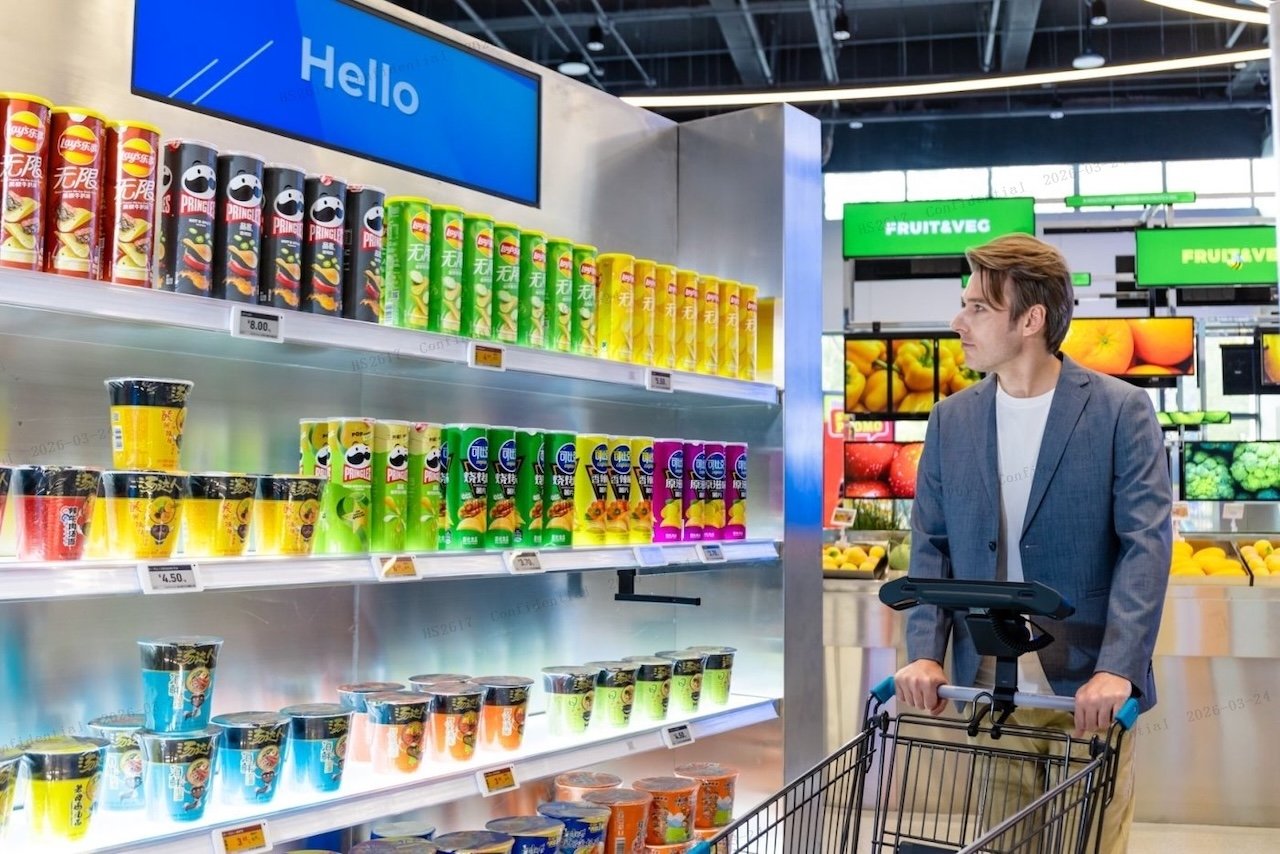
Turning hidden store realities into actionable insight to support performance driven growth and new opportunities across operations, experience, and sustainability.
For years, retail transformation has focused on strengthening supply chains and building omnichannel capabilities, while increasingly shifting towards proactive approaches to impact performance in real-time, right at the shelf.
Retailers know what should happen - but often lack clear visibility into what does happen on the shop floor. Out-of-stocks are detected too late. Planogram compliance relies on manual checks. Shopper behaviour is inferred, not observed. And energy - one of the largest cost drivers - remains largely unmanaged in real-time.
The store is still a blind spot. This is where the Store Digital Twin comes in. Not as a concept, but as an operational reality. By connecting real-time shelf data, shopper interactions, and store infrastructure into a unified intelligence layer, retailers can move from reactive execution to continuous, insight led operations.
Why the Store Digital Twin has become essential
Physical retail faces mounting competitive pressure that demands the highest operational standards and continuous adaptation. Only the strongest players survive and grow.
The modern store concentrates an extraordinary level of operational pressure into a limited physical space. Thousands of SKUs, frequent promotional changes, labour constraints, rising energy costs, and heightened shopper expectations must all be managed simultaneously. For retailers, the challenge is not complexity itself, but whether daily store activity can be translated into efficiency, effectiveness, and measurable return.
While store digitalisation has added tools such as electronic shelf labels, cameras, dashboards, and apps, many retailers still struggle to gain a clear view of what is truly happening inside their stores. Critical information about execution quality, promotion performance, asset health, and energy usage often remain fragmented, delayed, or disconnected from commercial outcomes.
Retailers don’t lack data - they lack the ability to translate data into actionable performance insights that drive measurable improvement. The Store Digital Twin represents the next step in this evolution. At its core, it is a digital replica of the physical store, continuously reflecting shelves, products, shopper movement, equipment, and the store environment through connected data. Rather than replacing existing systems, it links them, enabling a shift from inferred understanding to ground truth intelligence, anchored in real‑time shelf data as the primary source of truth.
Hanshow’s Store Digital Twin enables a 3D digital store map and digital twin rendering, helping teams better visualise analysis and execution in real-time. Powered by Hanshow’s omni‑scenario positioning capability, this visual layer connects shelf level reality across all store areas, turning data into an intuitive, shared view for stores, headquarters, and brand partners.
Through these capabilities, Hanshow's Store Digital Twin drives performance for every retailer, every store, and every shelf by optimising operating costs, accelerating sales, and unlocking new revenue streams.
To empower this vision, Hanshow established a strategic collaboration with Microsoft, focused on exploring the future framework of Store Digital Twin and how cloud‑based intelligence can support more connected, insight driven store operations.
Hanshow and Microsoft: connecting store reality to cloud intelligence
The collaboration between Hanshow and Microsoft is built on a shared understanding of what physical retail increasingly requires: accurate store level perception combined with scalable cloud intelligence.
Hanshow contributes deep expertise in store level digital infrastructure, including electronic shelf labels (ESLs), AI enabled vision, and a growing ecosystem of IoT touchpoints that enable granular sensing of shelves, products, and customer behaviour insights. Microsoft brings cloud‑based digital twin technologies, data platforms, and analytics capabilities powered by Microsoft Azure, to support scalable modelling, integration, and analysis of complex store environments.
The future of retail will not be built on more tools, but on connected intelligence.
Together, the two companies are exploring an open, interoperable foundation that allows retailers to align physical execution with digital strategy. Rather than creating another closed platform, the emphasis is on standardisation, integration, and long‑term scalability.
The message is clear: the evolution of retail technology is shaped by connected systems and shared intelligence, not isolated point solutions.
NexShelf: making the shelf the source of truth
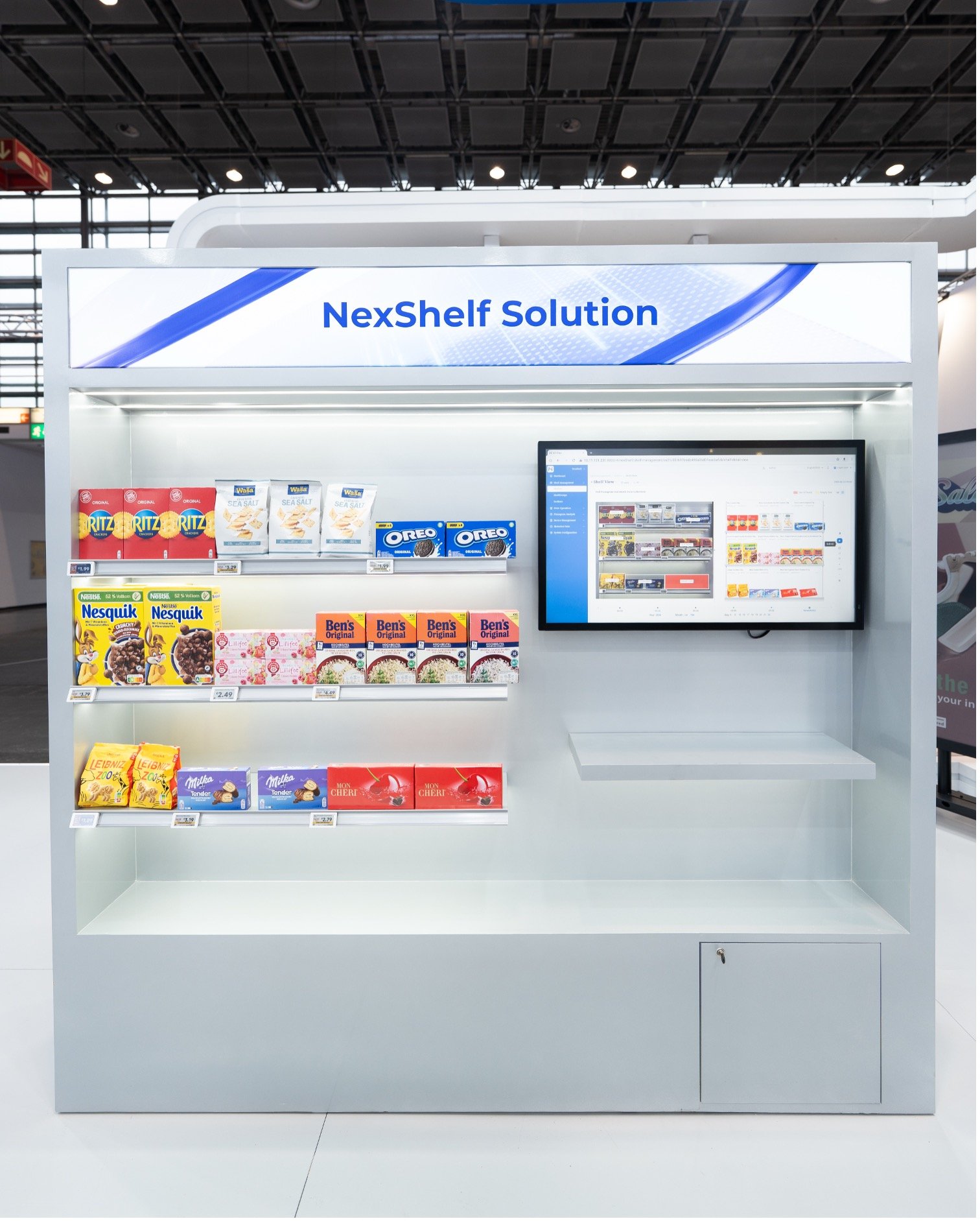
The value of a Store Digital Twin depends on access to contextual, reliable data that reflects real execution inside the store. In physical retail, that data begins at the shelf.
Yet the shelf has long been one of the least digitised - and least understood - areas of the store.
NexShelf transforms each shelf into a real-time data source. Powered by Hanshow’s Nebular Ultra ESLs, it enables centimetre level positioning, allowing execution to be continuously mapped and compared against plan.
The shelf is no longer just a display - it becomes the source of truth.
By using high-precision location data as its reference point, NexShelf helps surface misplacements, missing facings, and execution gaps, translating them into actionable insights and tasks for store teams. This supports faster response, more consistent execution, and improved labour efficiency.
Within the Store Digital Twin framework, NexShelf does more than improve compliance. It establishes a dependable representation of shelf reality - providing the foundation upon which higher‑level analysis and retail intelligence can be built.
Smart cart: connecting shopper to store digital twin
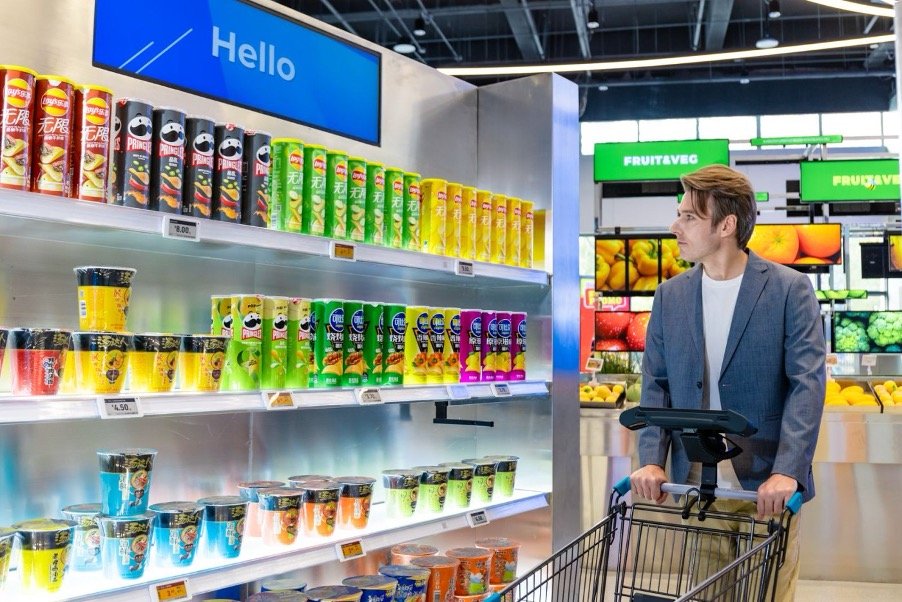
While NexShelf creates the digital twin of products and space, Smart Cart brings it to life by connecting the shopper.
By turning each cart into a connected, location aware touchpoint, retailers can move from inferred behaviour to observed, contextual insight. Shopper decisions can be understood in the context in which they happen.
This integration allows retailers to move beyond inferred shopper behaviour toward observed, contextual insight. Movement patterns, dwell time, and in‑aisle interactions can be analysed alongside real‑time shelf conditions, enabling closed loop learning and optimisation. Layouts, assortments, and promotions can be refined based on how shoppers actually navigate and engage in-store, rather than relying solely on assumptions or post‑transaction analysis.
For shoppers, this supports a more intuitive in-store experience, including guided item finding, real‑time pricing visibility, basket tracking, and self‑checkout options. These capabilities reduce friction and help shoppers make more informed decisions as they move through the store.
For retailers and brands, Hanshow Smart Cart unlocks both operational and commercial value. Operationally, it improves execution by linking shopper behaviour with shelf availability and promotion placement, helping identify where experience or conversion breaks down.
Commercially, by combining shopper location with live shelf data and ESLs, Hanshow Smart Cart enables location‑based promotions and in‑store retail media closer to the point of decision. As a unique media channel for each shopper, this creates new opportunities for brands to activate campaigns with clearer execution visibility and for retailers to drive incremental revenue while better measuring in‑store performance.
NexOptim: making intelligence sustainable

One of the least visible, but most impactful, dimensions of store performance is energy consumption.
Hanshow’s Digital Energy solution, NexOptim, constitutes the operational infrastructure of the Store Digital Twin. Instead of treating energy purely as a fixed cost, NexOptim integrates energy usage, equipment status, and operational patterns into the broader store data model.
By collecting and analysing data across devices and zones, retailers gain clearer insight into where energy is being consumed and where inefficiencies may exist. AI assisted monitoring helps identfify risks earlier and reduces reliance on manual inspections, supporting more proactive maintenance and operational planning.
Importantly, energy management is no longer isolated from other store decisions. Retailers can better understand how merchandising changes, traffic patterns, or layout adjustments influence energy usage, supporting more balanced decisions across cost, experience, and sustainability.
Within the Store Digital Twin, digital energy is not an add‑on - it is a key enabler of sustainable, scalable retail intelligence.
From reactive stores to intelligence led operations
What differentiates Hanshow’s Store Digital Twin approach is not any single component, but the way these layers work together:
· NexShelf improves execution accuracy and shelf visibility
· Smart Cart connects shopper behaviour with in‑store context
· Digital energy brings infrastructure and sustainability into view
· Cloud platforms and AI support integration, analysis, and insight generation
Individually, these tools improve operations. Together, they redefine how stores are managed. By combining real‑time sensing with AI assisted analysis, retailers can better identify execution gaps, operational patterns, and improvement opportunities - supporting more timely, performance driven decisions grounded in observed store reality.
This integrated approach also supports closer collaboration between retailers, brands, and technology partners, enabling alignment around shared data and clearer measures of execution.
The intelligent store as a competitive advantage
In today’s retail environment, limited visibility is no longer just an operational issue - it is a competitive disadvantage. As cost pressure intensifies and execution margins narrow, the ability to clearly understand and manage what is happening on the shopfloor has become essential.
Hanshow’s Store Digital Twin brings this shift into the present. By connecting people, products and spaces into a shared intelligence layer, it gives retailers and brands a more reliable basis for action inside the physical store. In a world where execution gaps directly impact growth and profitability.
The Store Digital Twin is not a future vision. It is becoming the operational foundation of modern retail.
To learn more about Hanshow’s Store Digital Twin, visit their website, and follow Hanshow on LinkedIn for the latest insights on retail technology.

Comments (0)
No comments yet.