The future store starts with connected intelligence, says Joe White, CEO at RTIH Hot 100 List star Everseen
Every minute, a store generates a stream of small signals. An item passes a checkout without a scan. A shelf empties while stock sits in the back room. A queue starts to build. Movement in a high risk aisle goes unnoticed. Each event can affect revenue, service or safety, but stores have often handled them separately and after the opportunity to act has passed.
Each decision involves a pull in three directions. Security asks the store to put stopping losses first. Customer experience asks it to avoid unnecessary delays or accusations. Operational efficiency asks it to involve colleagues only where they can add value. Improving one of these factors at the expense of the others can simply move the problem.
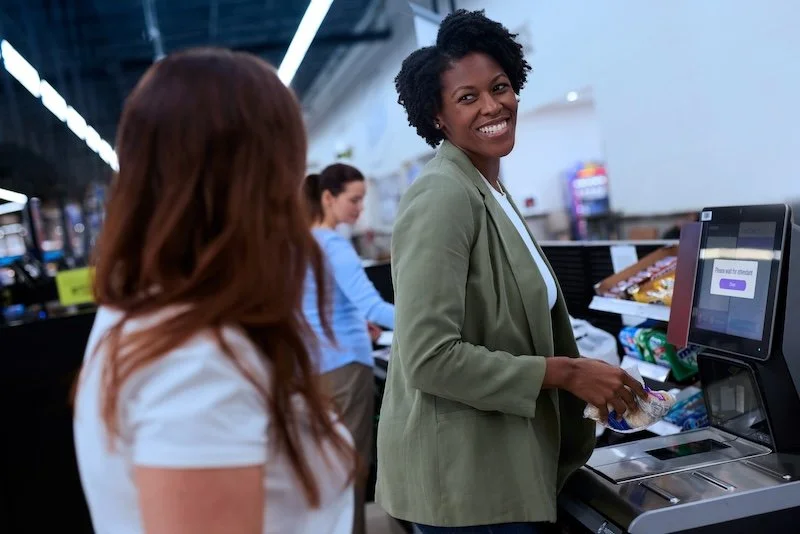
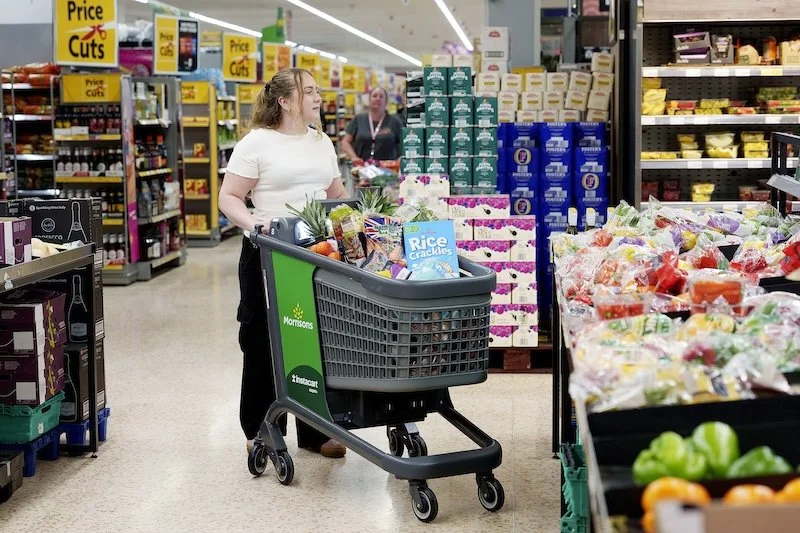
Self-checkout handles 54% of transactions where available. Yet industry estimates of malicious intent behind non-scans vary wildly, ranging from 6% to 80%.
The future store must balance these demands continuously in real-time. It needs to see physical events, understand their context, choose the proportionate responses and learn from the results. Checkout is a useful place to examine that model because the event and its financial impact can be connected clearly.
Checkout makes the trade-off visible
The latest ECR Retail Loss research found that self-checkout handles 54% of transactions where available. Yet industry estimates of malicious intent behind non-scans vary wildly, ranging from 6% to 80%. The same event may be a mistake, a technical failure, confusion or deliberate action.
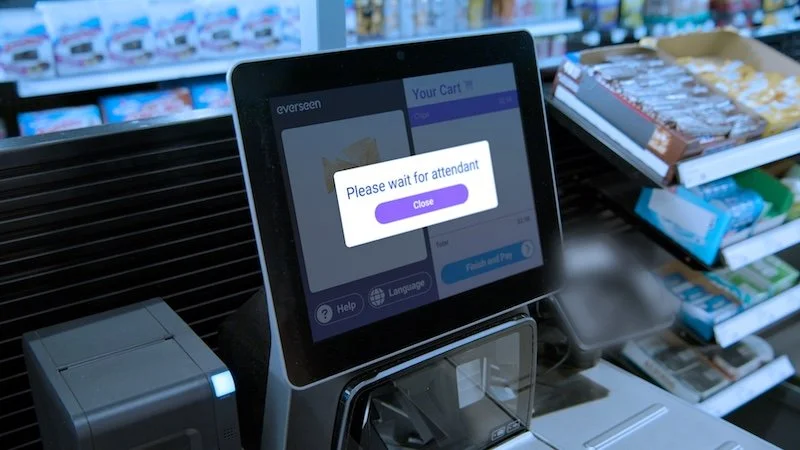
Evercheck, Everseen’s checkout revenue recovery solution, combines vision AI with transaction data to see and interpret what’s happening before the sale closes.
Consider a bottle of wine that passes the scanner unregistered, but which is spotted by cameras or other sensors. A hard stop might prevent a loss, but it can also frustrate an honest shopper and cause a queue. Ignoring the event protects shopper flow but allows the sale to be lost.
Calling a colleague every time puts staff under pressure and may provoke entirely unnecessary confrontations. Detection identifies the moment. Getting the call right on the response is an incident-by-incident decision that takes judgement.
The response matters as much as detection
Evercheck is Everseen's checkout revenue recovery solution. It combines vision AI with transaction data to see and interpret what’s happening before the sale closes. The system detects dozens of loss and error patterns across self-checkout and staffed lanes, including missed scans, product switching, abandoned transactions and items left in baskets or trolleys.
The operating sequence is simple: detect, nudge, then alert. When the system sees a likely missed scan, it can show the shopper an instant replay and invite a correction. If that resolves the issue, the transaction continues. A colleague is called only when help is still needed.
ECR Retail Loss found that alerts or nudges are generated in roughly 3% to 10% of self-checkout transactions, with shoppers self-correcting in about 80% to 97% of those cases. Most exceptions certainly don't need a confrontation. Revenue is recovered, the shopper avoids an unnecessary challenge, and colleagues can focus on the much smaller number of unresolved events.
That matters when the British Retail Consortium’s Crime Report 2026 records around 1,600 incidents of violence and abuse against shopworkers each day. The Crime and Policing Act 2026 the seriousness of the threat. Technology can't remove it, but it can reduce avoidable face-to-face challenges.

Everseen systems review more than 15 million transactions a day across 150,000 checkouts in 10,000 stores.
Scale turns events into learning
A pilot can prove that a piece of technology works in one controlled setting. The real retail test begins when it has to perform in the real world, across different formats, products, layouts and legacy systems.
Everseen systems review more than 15 million transactions a day across 150,000 checkouts in 10,000 stores. For retailers, that’s the difference between a promising demonstration and robust technology proven across multiple live estates.
That volume also makes learning more powerful. Products, promotions and loss patterns change but past experiences can inform future decisions if they are recorded and analysed. Models are refined through transaction data, behavioural analysis and feedback on how events were resolved. Evidence from across the chain exposes patterns that a single trial can't reproduce, while retailer specific feedback tunes the response to each environment.
The return can be proved. A 2024 study conducted by Forrester Consulting estimated an average 374% return on investment over three years and break-even in six months. The analytics layer in the software extends this proof to live systems. It lets retailers see their own results through live loss patterns, recovered revenue, colleague involvement and recurring process issues.
The operating model extends across the store
Checkout is only one part of the store where physical activity and historical operational systems fall out of step. An empty shelf may need inventory context. A growing queue may inform workforce decisions. Movement through a high risk aisle may need a security response. The details change, but the operating loop remains the same: observe, interpret, act, measure and learn.
Vision supplies information about what is happening in the physical store. Point of Sale, inventory and workforce systems add commercial and operational context. The intelligence layer turns that combination into a timely action. This approach works with the systems retailers have already built rather than asking them to replace everything before they can start.
Checkout provides a proven starting point for that model. The wider opportunity is a store that can respond to what is happening while the outcome can still be changed, then improve the next decision. Its intelligence will show up in fewer preventable losses, less unnecessary friction, better use of colleagues' time and returns that can be measured across the estate.
Follow us on LinkedIn or visit Everseen.com for more information.