Mastercard unveils Payeux Tapestry in London and agentic AI research predicting £370bn spend by 2030
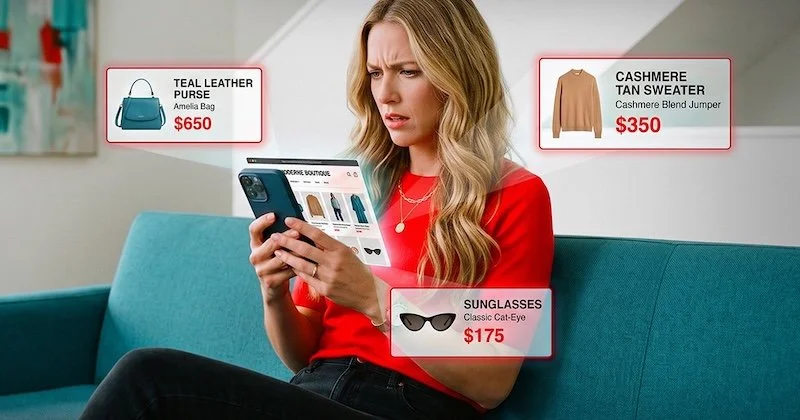
One in ten consumers will routinely use artificial intelligence to shop and pay by 2030, according to a report published by Mastercard that surveyed 26,000 people across Europe and canvassed the opinions of four futurologists. This was unveiled in London yesterday and forecasts AI driven consumer spending will hit £370 billion a year globally by the end of the decade.
Carried out in June and July this year in conjunction with Opinium who questioned 13,000 teens and 13,00 parents in pairs across 13 European nations from France and Germany to Italy, Spain, and the UK, the research showed 18% of teens already use an AI assistant, such as ChatGPT, Claude or Gemini, once a week to help them compare products before purchasing. This compares to 9% for the parental adults surveyed.
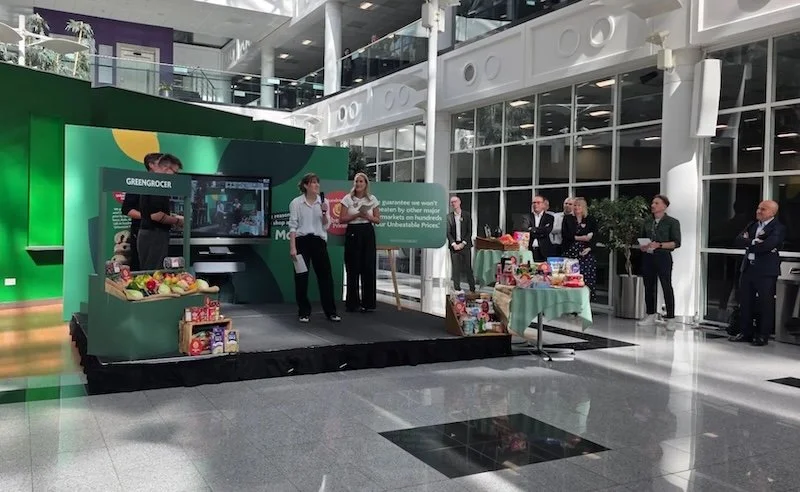
A third of the surveyed teens said they would happily hand over control to a fully AI run shopping assistant that chooses and pays for products. Speaking at a press event to launch the research, Agnes Woolrich, SVP MasterCard UK, commented: "AI has transformational potential."
"Businesses will have to think differently," she argued, in an exclusive chat with RTIH, who were in attendance at the event prior to the research’s wider general release on 8th September. Woolrich added: "Investments in retailers’ brand, loyalty programmes, and in machine readable digital estates will all be essential in the future, as agentic AI adoption advances."
“I expect the technology to follow the classic adoption curve with early adopters right through to laggards evident. This goes for consumers and merchants," she said, while also unveiling a new artwork commissioned to accompany the report that apes the famous Bayreux Tapestry.

But instead of horses, ships and an arrow in King Harold’s eye as William the Conqueror invaded England from Normandy, the new artwork that Mia Hansson made over three months, shows the story of payments over the last millennium, in the same style as its more famous near namesake.
For example, in 650-490 BCE the first silver coins are embroidered into the new modern Payeux Tapestry artwork, while at the far end there is a panel that shows machine-to-machine (M2M) payments and robotic autonomous commerce, as awaiting us in the future.
“As the Bayreux Tapestry artwork returns to the UK for the first time in almost a thousand years (it’s on display at the British Museum after a loan from its French home), we’ve recreated the story of payments in its inimitable style,” said Woolrich. Other fun embroidered panels in the modern reimagination show the invention and use of contactless cards, digital wallets, and an end-to-end agentic payment, as enacted by medieval looking peasants and nobles.
Futurologists make their predictions
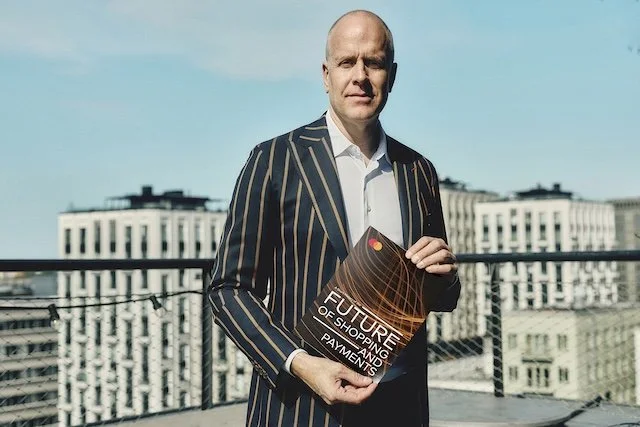
Also at the 7th September launch in London was Magnus Lindkvist (pictured below), one of four futurologists who contributed to the report providing their qualitative predictions for the future, alongside the quantitative ones made by the aforementioned survey.
Speaking exclusively to RTIH, Lindkvist said: “Ultimately, agentic AI commerce is a time saver. It is akin to the washing machine in the huge amounts of time it can save people from doing everyday utilitarian tasks.”
This frees them up for more creative tasks, although Lindkvist did caution that: “The vision of each major technological advancement is never its reality.”
In other words, agentic AI may yet unfold differently, but for now Lindkvist is predicting AI will “get things done” and increase automation on everyday chores in the commerce and transaction chain like subscriptions management. This will allow people to go on more ‘experiential’ physical shopping trips.
“AI is also in a ‘balloon era’, which means it will get reflated even if there is a crash, because it is not in an unjustified bubble,” added Lindkvist.
He thinks the technology is too powerful and useful - on applications in the services layer or on dynamic pricing end uses for instance - to be impeded, even if the stock market does fly too high initially during AI’s early adoption phases. “It’s akin to the dot.com era in that regard.”
The other futurologists involved in the Mastercard sponsored report were: Patrick Dixon; Katja Forbes; and Theodora Lau. Each contributed a chapter to the accompanying book, supported by various Mastercard senior professional’s advice to cardholders, retailers and financial institutions about what to do to be ready for this future.
Dixon looked at shopping and predicted slow websites will lose up to 80% of sales. Enhanced AI enabled search will also turn its results into sales as the agentic element of the technology advances. Plus adoption will be led by the US, UK, China and South Korea, he believes, with new cyber attack risks making some laggard consumers wary.
Forbes focused on retail impacts, such as AI agents networking together to negotiate at scale and therefore get better value for consumers. His future-gazing also foresees AI agents acting as verification tools in future and embedding themselves in wearables like glasses. Wearables will also drive a post-sales data feedback loop.
Lau examined agentic AI’s impact on payments, principally via the end of ‘top of wallet’ thinking and the rise of know your agent rather than customer compliance practices.
Five specific predictions highlighted in the book:
AI powered shopping becoming mainstream: More than 300 million online shoppers globally could routinely use AI agents to shop and pay by 2030, says the report.
Routine purchases will increasingly be delegated: Consumers will rely on AI agents for recurring and lower risk purchases in groceries and such-like, thereby saving time and reducing friction.
Retailers will need to serve both humans and AI agents: Product information, trust signals and digital experiences may become increasingly important as AI agents evaluate products and services. The ability to be machine readable will drive future sale interactions.
Trust will determine adoption: Security, transparency, accountability and consent are likely to become critical differentiators in an evermore agentic economy.
Payments will require new identity and authorisation models: Banks, FinTechs and payment providers will need new approaches to authentication, liability and consent as AI agents increasingly participate in modern 21st century commerce.
As AI agents participate in commerce: “Merchants will have to change how they operate,” said Woolrich. “For example, if a consumer buys an airline ticket at present there are clear liabilities and refundability options, during the booking phase. But what about if an agent buys a ticket on behalf of someone? Where's the accountability then?"
"Increasingly menial subscription-based services and automated payments will merge into the agentic AI world to save users time as well," she added, later alluding to how physical and aspirational shopping will become yet more differentiated.
By 2030 the report expects: Payment intent to become as valuable as the payment itself - i.e. consumer authorisation for an agent to purchase will be readable before a purchase is even made; At least three G20 regulators are expected to mandate formal AI agent registration and monitoring by 2030, although the report doesn’t state which three.
Woolrich concluded the event in London by sharing with RTIH that: “The 2030 future envisioned in the report is not that far off”, although she did caution the payments leg of the ecosystem is complex and therefore may be slower to full scale adoption. Those M2M payments may not be emanating from your fridge in an IoT enabled world just yet. But certainly, manufacturing and supply chain reordering is heading that way. The shopping and retail legs are already subject to AI enabled transformation, as detailed in the report. Strap in for the future.
"Mastercard wants to be an enabler in this evolving agentic AI shopping, merchant and payments world - the orchestration layer provider, if you like - that reassures users it is safe, secure, easy, frictionless, connected and worthwhile participating," said Woolrich.
In an accompanying press release, Simon Forbes, President of Mastercard UK & Ireland, had his say on the debate: “For 60 years, Mastercard has been helping people pay and get paid simply and securely. That purpose continues through what could be one of the most significant shifts in decades.”