Paper packaging alternatives: practical ways to reduce plastic in food and retail
In the food service, retail and e-commerce environments, packaging decisions are made quickly and repeated at scale. That makes material choice a high-impact operational lever.
Paper-based solutions have evolved to cover a host of functions traditionally handled by plastics, from protection and presentation to grease resistance and heat tolerance. The goal is no longer simple substitution, but the selection of materials which meet real performance requirements while fitting seamlessly into existing workflows and recycling systems.
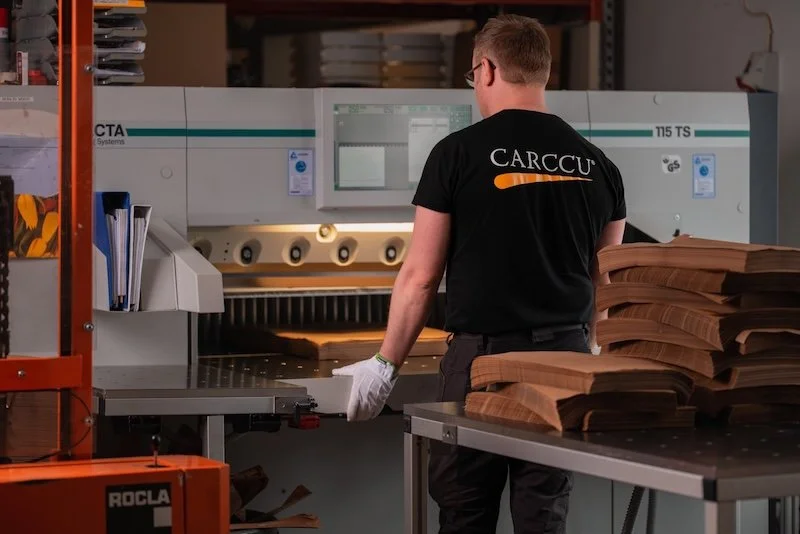
Examples from packaging manufacturers, including the Finnish Carccu® company, show how these approaches are already being applied in practice.
Below are ten practical approaches currently in use across food and retail operations.
Print directly onto paper
Flexographic printing enables branding to be applied directly onto kraft, sulfite and greaseproof papers. This eliminates the need for plastic labels, sleeves, or laminates and keeps packaging within a single material stream. Water-based inks suitable for food contact ensure consistent results across paper grades.Use fiber-based takeout wraps
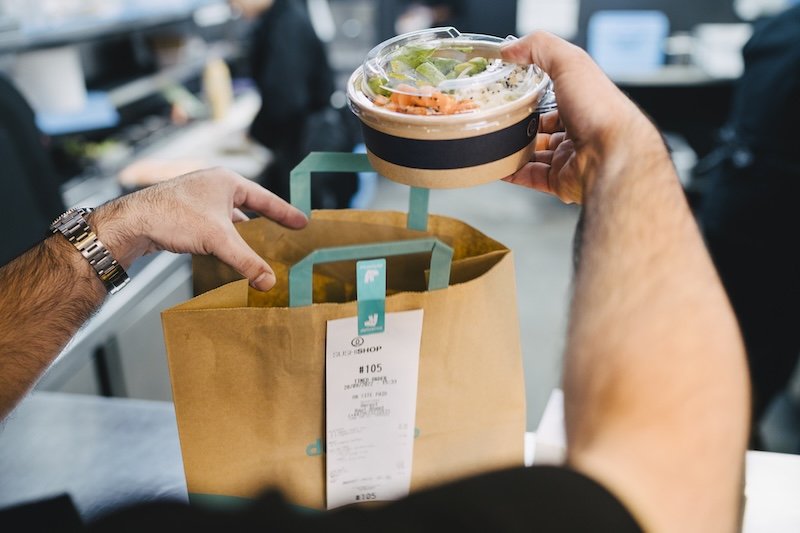
Paper wraps designed for grease resistance and structural stability can replace plastic formats in takeout use. They perform reliably under the effects of heat and moisture and integrate easily into fast-paced service environments without requiring workflow changes.Replace decorative plastics
In retail and floristry, plastic is often chosen for visual effect rather than function. Dyed and patterned papers provide comparable presentation while remaining fully fiber based. Seasonal designs can be applied with water-based printing, allowing variation without increasing material complexity.Match materials to low-grease use
Sulfite paper is well suited to dry and low-fat products. Its smooth surface supports clear printing, while different weights allow it to function as both an interleaving and a wrapping material. It integrates easily into standard paper recycling streams.Design packaging choices early on
Addressing material selection at the design stage helps avoid reliance on plastic by default. Choosing paper based on strength, grease resistance, or heat tolerance aligns packaging performance with real use conditions and simplifies decisions made later on.Replace plastic carrier bags
Paper carrier bags now offer strength and usability comparable to plastic alternatives. Made entirely from fiber-based materials, they avoid mixed-material recycling issues and can be reused, extending their lifecycle beyond a single use.Rethink void fill and protection
Kraft paper can replace bubble wrap and loose plastic fillers. It can be crumpled for cushioning, layered for protection, or used as a surface wrap. Different weights allow one material to serve multiple functions, thereby reducing material variety at packing stations.Use breathable paper bags
Paper bags allow airflow, helping to maintain product quality for fresh bread and baked goods by preventing condensation. Available in multiple sizes and formats, they easily fit into existing retail and food service operations.Use fiber-based grease barriers
Greaseproof and parchment-type papers keep grease contained using a fiber structure rather than coatings. They are effective for short-term food wrapping and takeout use, while remaining compatible with paper recycling systems.Replace plastic liners in baking
Silicone-coated baking papers withstand temperatures up to 446°F (230°C), providing reliable non-stick performance. PFAS-free options offer a practical alternative to plastic-lined or foil-based materials and can simplify disposal alongside food waste.
From Production to Practice: Traceable Materials and Controlled Processes
A consistent pattern across these applications is simplification. Fewer materials, fewer combinations, and clearer disposal pathways help streamline operations while reducing reliance on plastic. Many of these changes can be introduced incrementally without requiring major adjustments to existing processes.
From a production perspective, Carccu® provides one example of how this approach is implemented in practice. The company produces kraft, sulfite, greaseproof, and baking papers as well as wrapping papers and paper bags for food and retail use.
Raw material sourcing is documented through FSC® Chain of Custody and PEFC Chain of Custody systems, supporting traceability across the supply chain. Flexographic printing is carried out using water-based inks compliant with the Swiss Ordinance on food-contact materials, which enables branding directly on paper substrates without additional layers. PFAS-free baking and greaseproof papers illustrate how fiber-based materials can replace plastic-coated alternatives in demanding applications.
Production takes place under ISO 9001 and ISO 14001 management systems with structured control of processes and material side streams, including recycling and reuse.
From Material Choice to Operational Consistency
Reducing plastic in packaging is less about individual innovations and more about consistent, well-matched material choices. When traceable sourcing, compliant printing methods, and controlled production processes are aligned, fiber-based packaging can meet both functional and operational requirements without adding complexity.
Incremental adjustments applied across everyday operations can reshape packaging systems into solutions which are simpler, more efficient, and easier to integrate into existing recycling flows. This means that the transition away from plastic is not a single step, but the cumulative result of coordinated decisions made throughout the packaging lifecycle.