Seth Hurwitz built a music empire without Ticketmaster. Here's why the TICKET Act isn't enough
The bipartisan case against the American concert ticket market is no longer theoretical.
During the first week of the Live Nation antitrust trial in New York this March, internal Ticketmaster communications entered into evidence showed that employees had described turning a “blind eye as a matter of policy” to broker misbehaviour. The court record is now full of what fans already knew: the system is rigged, and it has been for years.
Into this moment walks the TICKET Act, the Transparency In Charges for Key Events Ticketing Act, which passed the House with overwhelming bipartisan support and now sits in committee in the Senate. By the standards of Capitol Hill, it’s genuinely good. It requires all-in pricing disclosure, mandates that resellers identify themselves as secondary sellers, and prohibits platforms from impersonating official venue ticketing. These are real protections. They are also nowhere near enough.
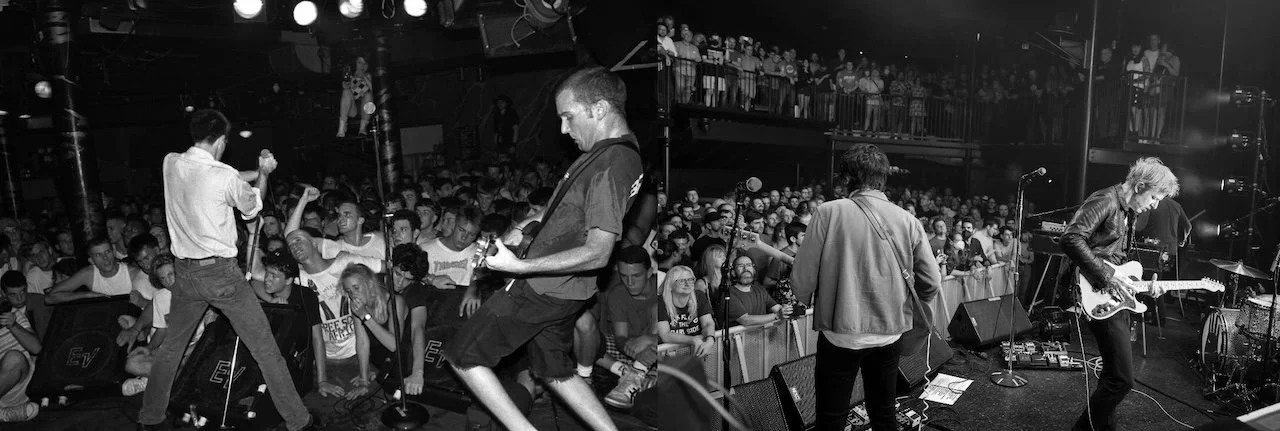
Few people in the country have watched this more closely than Seth Hurwitz, the founder and chairman of I.M.P. and co-owner of Washington, D.C.’s 9:30 Club. Over 46 years, Hurwitz has built the city’s dominant independent concert operation across five venues, including The Anthem and The Atlantis, while refusing acquisition offers and declining to expand beyond the D.C. market. He has testified before Congress against ticketing monopoly power. He knows exactly what the TICKET Act gets right, and exactly what it leaves out.
The problem the TICKET Act does not solve is the one doing the most direct damage to fans: unlimited resale markups and the phantom tickets that drive them.
In November 2025, the National Independent Venue Association documented what is now routine in the secondary market. A $10 general admission ticket to a Rachel Is Kozi show at The Howlin’ Wolf in New Orleans appeared on StubHub for $964 before a single ticket had sold through official channels.
Tickets to a Bonnie Raitt show in Jacksonville, Oregon, were listed for $453 two months before the presale was even scheduled to open. For a Benjamin Tod performance at a 450-seat Vermont venue, a speculative listing appeared at $964, complete with false scarcity messaging reading “Only 1% of tickets left,” 36 minutes after the presale began, when no member of the public could physically own a ticket. This is not a glitch in the marketplace. It is a business model with a name: speculative ticketing.
Speculative ticketing works like this: a broker lists seats they don’t possess, betting they can acquire them later at a lower price and keep the spread. The listings inflate the apparent scarcity of a show, drive up secondary market prices, and often force real fans to overpay for tickets that may not exist. It is, in plain terms, selling something you don’t have to someone who doesn’t know you don’t have it.
The TICKET Act’s current Senate version contains language permitting what it calls “Services Permitted” in the resale market. The Fix the Tix Coalition, a 30-plus organisation alliance led by NIVA and including the Recording Academy, SAG-AFTRA, and Eventbrite, argues that carve-out allows the “concierge” and “seat saver” schemes that speculative ticketing depends on to survive. Seth Hurwitz and I.M.P. are among the independent operators aligned with the coalition’s push.
In a letter sent to Senate Commerce Committee leaders in early March, the coalition called for three specific amendments: require itemised fee disclosure from the first click rather than at checkout, ban speculative listings without exception, and cap resale prices at the original total cost of the ticket with platform fees capped at 10 percent above that.
The economic argument for the resale cap is straightforward. Concert ticket prices rose nearly 44 percent between 2019 and 2024, from roughly $92 to $136 on average for top touring acts, almost double the rate of general inflation over that period.
Artists and venues bear most of the blame in public perception. But as Washington, D.C., artist KOKAYI testified before the D.C. City Council last year: “When resellers swoop in and buy up all the tickets, only to flip them for three, five, or ten times the price, it creates the illusion that the artists are the ones cashing in. But let me be really clear: We are not.”
The fix the coalition is asking for, face value as the resale ceiling, already exists in Maine, the first state to pass a hard cap. Washington, D.C., is considering the RESALE Act, which would cap tickets at 10% above face value. New York, California, and Vermont all have legislation in various stages.
The UK went further in November 2025, banning for-profit ticket resale outright. Platforms there are now required to monitor and enforce compliance. Australia committed to banning dynamic pricing on primary sales entirely. The United States has bipartisan consensus on the principle of reform but a bill that leaves the most profitable abuse intact.
There is a legitimate counterargument worth taking seriously: capping resale prices can backfire by pushing transactions to less regulated platforms, where fraud rates are higher. Ireland’s experience with a resale ban has been cited as evidence that price controls reduce consumer protection rather than improve it.
These concerns deserve a congressional hearing. What they don’t justify is leaving the current system unchanged, one in which a reseller can list 118 phantom tickets to a small-town show before public sales open, using false scarcity language, and face no legal consequence.
Seth Hurwitz, who has operated I.M.P. independently in Washington for 46 years, presented this as a matter of basic market integrity when he testified before Congress against the original Live Nation-Ticketmaster merger in 2009. His position hasn’t changed: “I think we should set a price and it should stay that way, and a ticket should not become a commodity that people trade.” At the time, the consolidation he warned about was still forming.
Today, the company he described as a threat controls roughly 80% of the primary ticketing market and is facing an antitrust trial brought by 36 state attorneys general who rejected the DOJ’s $280 million settlement as insufficient, a settlement NIVA called “a failure of the justice system” and the equivalent of four days of Live Nation’s annual revenue.
The TICKET Act represents a genuine congressional effort to address a genuine problem. Senators Ted Cruz and Maria Cantwell, along with Marsha Blackburn and John Hickenlooper, have a bill in committee that could matter. But transparency provisions without price controls are a half-measure in a market where the damage isn’t hidden fees: it’s phantom inventory, artificial scarcity, and markups of 96 times face value on tickets to shows that haven’t started selling yet.
Congress has the votes, the public attention, and now the trial record to act. The question, as Seth Hurwitz and independent operators across the country are watching, is whether the Senate will send back what arrived from the House, or fix the one thing the bill currently refuses to touch.