Virtual try-on, AI recommendations, and 100-day returns: how online eyewear got smarter than your local optician
The traditional optician model has operated on a straightforward premise for decades: you need expert help to buy glasses, and that expertise lives in a physical store. The eye test requires a professional. Frame selection benefits from in-person assessment. Fitting requires a trained dispenser.
Each of those propositions remains individually true. Collectively, they no longer add up to a reason to buy glasses exclusively from a physical retailer.
The technology stack behind leading online eyewear platforms has matured to the point where the information asymmetry that once protected traditional optical retail has significantly eroded. Consumers now arrive at online purchases as informed as - or more informed than - the average high-street consultation.
The technology reshaping the purchase journey
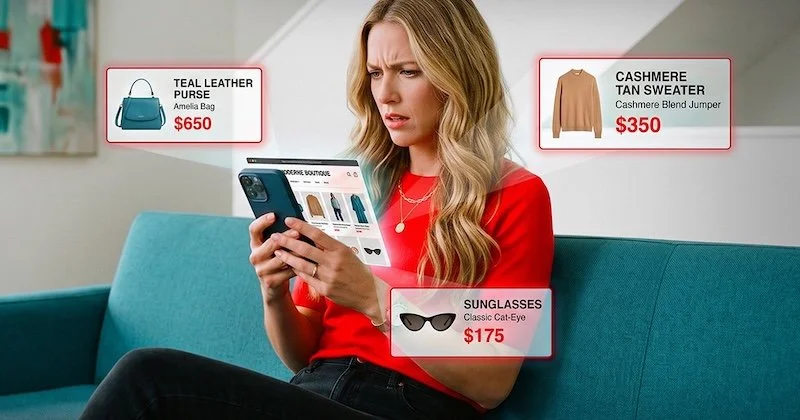
Virtual try-on, once a gimmick that mapped ill-fitting frame overlays onto static photos, has evolved into a genuinely useful decision-support tool. Current implementations use augmented reality to track facial geometry in real-time, placing frames on the user's face with reasonable accuracy for proportionality assessment. They don't replicate the weight or feel of a physical frame, but they're increasingly reliable for determining whether a particular shape works for a given face - historically the primary value of the in-store try-on.
AI powered recommendation engines add a layer of personalisation that in-store retail struggles to match at scale. By analysing face shape data, prescription type, and browsing behaviour, platforms can surface relevant options from catalogues containing hundreds of thousands of SKUs - a filtering task that would be impractical without algorithmic support.
SmartBuyGlasses as an operational benchmark
SmartBuyGlasses has developed these capabilities alongside one of the more customer-friendly post-purchase policies in the category: a 100-day return window. In the context of prescription eyewear - where the consumer's concern has historically been that a bad purchase would be irreversible - this is a meaningful structural change.
The platform currently serves customers across multiple continents, with a catalogue spanning over 180 brands. The operational challenge of combining prescription fulfilment accuracy with that return policy at global scale is non-trivial, and the execution has improved to the point where it functions as a genuine competitive differentiator.
What this signals for retail more broadly
The eyewear category is instructive precisely because it was considered genuinely resistant to online disruption. The expert-dependency argument was coherent. The product is wearable, highly personal, and medically functional. If technology and policy innovations in eyewear can address those friction points effectively, the implications for other high-consideration categories - hearing aids, dental appliances, custom orthotics - are significant.
The question for traditional optical retail isn't whether online competition will intensify. It will. The question is whether the genuine service components of in-store retail - the eye test, the professional fitting - are being positioned as distinct value propositions rather than bundled into a transaction that consumers are increasingly comfortable completing elsewhere.
The technology advantage has shifted. Retailers who recognise that early have the best chance of adapting around it.