Convenience channel’s historic advantages are being eroded: the retail technology week in numbers
Do you like numbers? Do you like retail tech news? Then this is the article for you. Including Hightouch, Rithum, Starship Technologies, Pattern, Debenhams Group, Pennies, Amazon Now, East of England Co-op, Snappy Shopper, Ikea China, HyperFinity, DoorDash, and Empire Company.
1…Ingka Group, the largest Ikea retailer, has opened its first small format store in eastern Beijing. The 1,500 m² location, offering more than 3,000 home furnishing products, welcomed thousands of visitors on its inauguration day at the recently opened Wangfujing WellTown shopping centre in Beijing’s Tongzhou District.
The new store - the company’s fifth in the Chinese capital - is tailored to findings about how people live in Beijing and what type of solutions could improve their life at home further. Visitors can also access one-on-one planning support from home furnishing experts, alongside a curated food offering.
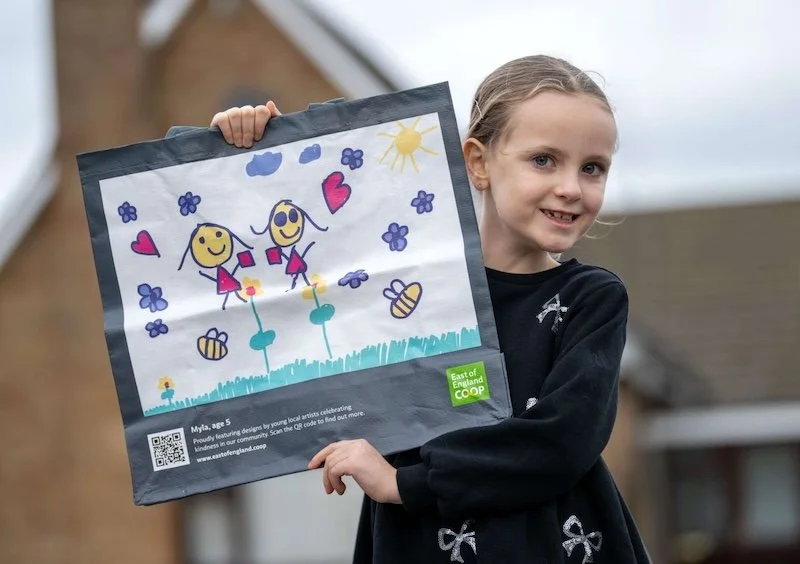
43...The East of England Co-op has expanded its Snappy Shopper on demand delivery service to 43 stores across the region. This builds on growth in January, when the offering increased from five to fifteen locations.
Orders placed through Snappy Shopper are fulfilled in partnership with Nash, which coordinates deliveries using courier partners including Uber Direct, Just Eat Go and Stuart. The move also introduces a more streamlined in-store setup, allowing colleagues to manage multiple delivery platforms through a single device.
Chief Commercial Officer, Simon Dryell, says: “We’re excited to expand Snappy Shopper to a further 28 stores, taking the total to 43 across our region. Convenience is a key focus for us, and this rollout means more customers can access quick, reliable grocery delivery from their local East of England Co-op Food store.”
“We’d like to thank our partners at Nash and Snappy Shopper for their continued support in helping us deliver a great service for our members and customers.”
$150 million and $2.75 billion...Hightouch, a specialist in data and AI for marketing, has announced a $150 million Series D financing led by Growth Equity at Goldman Sachs Alternatives and Bain Capital Ventures, valuing the company at $2.75 billion.
Additional investors and strategic partners also participated in the round, including Iconiq Capital, Sapphire Ventures, Amplify Partners, Y-Combinator, and TD7, the venture capital arm of The Trade Desk.
“Marketing is sorely in need of reinvention,” says Kashish Gupta, co-founder and co-CEO at Hightouch. “But most AI solutions haven’t actually changed how marketing works. Instead, they generate vast amounts of mediocre content that doesn’t really get used. We built Hightouch to rethink marketing end-to-end, so AI agents can operate directly on trusted data, find opportunities 24/7, and then generate and execute high-quality campaigns across channels.”
Companies including Domino's, PetSmart, DraftKings, Ramp and Whoop are working with Hightouch.
64%...Rithum has released research, based on a survey of 1,046 online shoppers across the US and UK, which finds that 64% of 18-to-27-year-olds have made a purchase based on an AI recommendation without verifying the information through other channels.
The findings suggest that for a growing share of younger consumers, who are among the earliest adopters and most prolific users of AI, these AI tools are both supporting product discovery and increasingly influencing final purchase decisions. Traditional verification behaviours are playing a limited role in the process, with 95% of shoppers admitting they don't check information LLMs provide against a brand website.
AI is also accelerating the pace of decision-making. 36% of shoppers say they make faster purchasing decisions when using AI tools. When shoppers do choose to verify AI generated recommendations, they are more likely to turn to search engines (28%), friends and family (17%), or their own prior experience (17%) than to brand or retailer websites.
10...Vusion, a specialist in AI powered digitalisation solutions for physical commerce, has been named to TIME’s Top 10 Most Influential Retail Companies of 2026 and the inaugural TIME100 Companies Industry Leaders list.
This highlights companies making an extraordinary impact across industries and serves as a precursor to the annual TIME100 Most Influential Companies list. The top ten also includes Back Market, Whatnot, DoorDash, Shopify, and Jellycat.
Vusion was recognised for its role in accelerating the digital transformation of physical commerce, helping retailers turn stores into connected, data driven and more efficient environments. It delivers an AI and IoT powered platform that integrates smart electronic shelf labels, computer vision, data analytics, and in-store retail media.
“We are honoured to be recognised by TIME as a company helping shape the future of retail,” says Philippe Bottine, Deputy CEO and EVP Americas at Vusion. “Retailers across America and around the world are rethinking the role of the physical store, not only as a place to sell, but as a connected, intelligent and data-powered platform. This recognition highlights the impact of our solutions in helping retailers improve store execution, empower associates, engage shoppers and unlock new value from their physical networks.”
To assemble the list, TIME solicited nominations across sectors and polled its global network of contributors and correspondents, as well as outside experts. Its editors then evaluated each company on key factors including impact, innovation, ambition and success.
$1 trillion...IGD (Institute of Grocery Distribution) forecasts that the global convenience channel will grow from around $900 billion in 2025 to over $1 trillion in sales by 2030, with the world’s top 20 operators accounting for over $80 billion.
However, it also predicts the channel will lose share in the grocery market as it faces rising competition from discounters, supermarkets, and rapid delivery services.
IGD’s report finds that while convenience will continue to grow at 3.5% CAGR to 2030, this will trail total grocery growth of 4.0% CAGR. As a result, it expects the channel’s share of grocery will fall from 10.7% in 2025 to 10.4% in 2030.
Sneha Haria, Insight Manager at IGD, says: “The headline growth masks a structural challenge: convenience risks becoming a bigger channel with a smaller role in grocery spending unless retailers and suppliers adapt. The channel’s historic advantages are being eroded, and without change, it will continue to lose share.”
$75 million...Avery Dennison has announced a $75 million minority investment in Wiliot, a specialist in physical AI for supply chains.
As part of this, Avery Dennison will serve as the preferred inlay design, manufacturing and commercial partner for Wiliot. According to a press release: “The two companies will significantly strengthen and expand their joint go-to-market efforts to accelerate the adoption of digital identities on physical items across key industries including retail, logistics and food.”
Avery Dennison will receive a seat on the board of directors for Wiliot, in addition to its existing board observer position.
€8 billion...C2C secondhand marketplace, Vinted, has completed a secondary share transaction of €880 million, at an equity valuation of €8 billion, with a mix of new and existing investors, led by EQT, Schroders Capital, and Teachers’ Venture Growth (TVG), the late stage venture investment platform of Ontario Teachers’ Pension Plan.
Thomas Plantenga, CEO at Vinted Group, says: “This transaction and valuation reflect the progress we’ve made building Vinted into what it is today - a proven marketplace embedded in an ecosystem of vertically integrated shipping and payments infrastructure, designed to make second-hand reliable, easy and affordable at scale.”
“This transaction recognises the value we have created and gives employees the opportunity to share in it. It also gives liquidity to long-standing investors, continuing an approach we have taken in every funding round since 2015."
"Online secondhand is growing faster than general e-commerce. We have built the fundamentals in Vinted Marketplace, Vinted Go and Vinted Pay so we are well positioned to capture and drive this growth. Our opportunity remains large: shifting global consumption toward second-hand while building a world leading business.”
Carolina Brochado, Partner, EQT, says: “Vinted has built a category leading technology business in Europe, combining strong growth with disciplined execution. We continue to be impressed by the team and are doubling down on our high conviction in their strategy and long-term potential.”
10 million...Starship Technologies reports that it has notched up 10 million autonomous deliveries.
Its fleet of more than 3,000 autonomous robots, operating across around 300+ locations in eight countries, has generated over 22 million kilometres of real-world operational data and approximately 200 million individual road crossings.
They now complete over 125,000 road crossings every day (roughly two per second) operating fully autonomously at Level 4 without active human supervision, in dense urban environments and across all weather conditions.
“10 million deliveries means we’ve moved beyond proving the technology - we’re now scaling it,” says Ahti Heinla, Co-founder and CEO at Starship Technologies. “It is becoming part of the infrastructure of modern logistics - deployed commercially across eight countries, integrated with the world’s leading delivery platforms, and delivering measurable value to customers at scale.”
Starship’s operations span multiple European markets (including the UK, Germany, Switzerland, Sweden, Finland, Estonia, and the Czech Republic) as well as the United States.
That’s according to a new Pattern report, based on a survey of 1,000 senior business leaders across the United States, United Kingdom, Germany, and the United Arab Emirates.
This flags several organisational barriers that are preventing brands from moving beyond experimentation into full scale AI deployment.
The most commonly cited obstacles include ethical or regulatory concerns (29%), legacy systems and outdated infrastructure (28%), and resistance to change within teams (27%).
Collectively, these constraints create significant friction in organisations’ ability to integrate AI technologies into complex ecommerce workflows - from customer service and merchandising to forecasting and supply chain optimisation. Addressing these barriers requires not just technical investment but a deeper focus on education and topdown advocacy, enabling businesses to shift AI from a perceived challenge to a genuine competitive advantage.
1,000 and 10...DoorDash reports one of its largest grocery expansions in Canada through a new partnership with Empire Company, bringing more than 1,000 stores across 10 provinces onto its marketplace.
The tie up involves 12 grocery banners from Empire’s family of brands, including Sobeys, Safeway, IGA, FreshCo, Farm Boy, and Longo’s, onto DoorDash. Convenience options like Needs, Boni-Soir, and Voisin are also available.
DoorDash now partners with four of the largest five grocery companies in Canada (based on reported sales figures).
“Home to over a dozen banners spanning coast to coast, Empire is one of the most trusted names in Canadian grocery and retail,” says Mike Goldblatt, Vice President of Enterprise Business Development and Partnerships at DoorDash.
“As Canadians increasingly face time pressure, DoorDash is proud to help give some time back through on-demand grocery delivery, whether it’s a full weekly shop or just for tonight’s dinner. Together, we’re making everyday shopping more convenient and accessible.”
One and four...New research from ASPR, a retail and hospitality technology PR agency, reveals a market ready yet sceptical about AI.
Its survey, conducted among attendees at Retail Technology Show 2026, which took place in London last week, found that one in four believe AI is either overhyped or actively creating confusion.
When it comes to differentiation, AI presents both an opportunity and a challenge. 34% say it helps them stand out, while 30% say it is raising expectations from buyers, making it harder to differentiate in practice. A further 18% believe AI is creating noise or making it harder to stand out.
48% of respondents describe AI as promising but still early, suggesting confidence in its direction but caution in adoption. A further 28% say it is already delivering measurable impact, indicating that real use cases are emerging.
Proving return on investment is the single biggest challenge facing retailers when it comes to technology, cited by 28% of respondents. This sits ahead of both integration complexity and budget pressures, each at 16%.
AI and vendor overload follow closely behind at 20% each, pointing to a market where there is no shortage of innovation or options, but limited clarity on what actually delivers results.
4...Amazon Now has launched a fourth site in London, building on go lives in Lewisham and Battersea and a debut during January of QLD1 - the service's first on demand delivery site in the UK.
This lets customers purchase thousands of everyday essentials, such as groceries and personal care items, that will be delivered within minutes. In India, it last year brought ten-minute delivery to Mumbai following launches in Bengaluru and Delhi, with 100+ micro-fulfilment centres operational.
In a LinkedIn post, Jay Kadu, Operational Specialist at Amazon, said: "Excited to be part of the launch of Amazon Quick Commerce’s new QLD4 London site. Joining as a Lead at this new site launch is truly a proud and prestigious moment for me. Grateful to be part of such a driven team and excited for the journey ahead with Amazon."
£260,000...Debenhams Group reports that it has raised over £260,000 with micro-donation charity Pennies, as it expands the partnership to other brands, including Karen Millen, boohooMAN and PrettyLittleThing.
Karen Millen customers can now donate to Breast Cancer Now. In addition, the brand will be donating bras to the charity, to support patients following operations.
boohooMAN will partner with Manchester Mind, allowing customers to donate to the work the charity does to provide mental health services in Manchester.
PrettyLittleThing customers will also be able to donate to the brand’s chosen charity over the coming weeks. Boohoo will continue to work with Women’s Aid, including donating samples to women supported by the charity’s work. Debenhams will also continue its partnership with the British Heart Foundation, building on the over £240,000 raised for the charity since March 2025.
The partnership with Pennies enables customers to round up their purchases to the nearest pound at checkout. To date, it has generated more than 850,000 individual micro-donations.
£7.6 million...YFM Equity Partners has invested £7.6 million from its Buyout Funds into Swanky, a Shopify Platinum agency headquartered in Exeter.
This is Swanky’s first funding round. Founded by Dan McIvor, it was appointed as one of Shopify’s first ‘Plus’ partners in EMEA in 2016. Since then, the business has delivered various projects, created an end-to-end service proposition, and built a presence across the UK, Europe and Australia.
Dan Partridge joined as CEO in 2021. Under his leadership, Swanky has expanded its team to around 70 employees, enhanced and professionalised its service capability and delivered growth. YFM’s investment will support said growth, including further investment in talent and service capability, as well as pursuing selective M&A opportunities.
As part of the transaction, Chris Hirst (formerly Global CEO at Havas Creative Group) joins Swanky as its chair. Elly Adams (formerly PWC and Oxygen House Group) joins the board as CFO, and Amy Dougan has been promoted to COO. Matt Giles remains an executive board member as co-founder and Chief Creative Officer.
65%...Dynamic pricing may be reshaping industries from travel to ticketing, but is not on the agenda for consumer goods - such as clothes and groceries - anytime soon, according to a new study from HyperFinity.
The retail loyalty company commissioned a survey of 2,000 UK consumers and says it found clear and decisive sentiment, with a third going as far to say that they ‘hate’ the idea.
Key findings:
65% of UK shoppers dislike dynamic pricing, (including 33% who ‘hate’ it)
Only 4% say they ‘love’ the idea
91% prioritise clear and transparent pricing - the highest-rated factor
88% say getting the best possible price is important
82% value fairness - ensuring everyone pays the same price
“Dynamic pricing is not coming to consumer goods or grocery for the foreseeable future,” says Thomas Hill, Co-founder at HyperFinity. “Supermarkets understand the risk of a backlash from implementing prices, which change by weather or other factors. Core staples such as bread, milk, cheese are tied to customer needs and not to demand elasticity. Any perception of exploiting that would be catastrophic for trust and loyalty.”