IPPR calls for launch of new public service social media platform to put people before profit
Social media platforms are prioritising influencers, adverts and brands over posts from friends and family, contributing to a more divisive and less social online experience, according to a new report from charity IPPR.
1,000 Brits participated in the research. Its analysis of Instagram, Facebook, X, Bluesky and TikTok finds that among the top four posts in users’ feeds, just 18% come from someone they actually know. In contrast, 35% are from influencers, public figures or recommended content, and 29% are from adverts and brands.
Just one in ten posts seen by users on TikTok and X were from friends and family, but one in seven posts were adverts. Those who voted Reform UK in the 2024 general election are the least likely to see content from someone they personally know, and the most likely to see content from brands and news organisations. Only 13% of Reform UK voters see content from someone they know, compared to 23% of Green Party voters.
Channels are no longer primarily connecting people to each other - instead, they are optimised to keep users scrolling, IPPR argues.
Its report describes this as “sticky” design: content is prioritised not because it is social, but because it holds attention. Influencers and celebrities are more likely to be promoted because users spend longer watching them, feel a sense of intimacy with them, and are more likely to spend money engaging with their content.
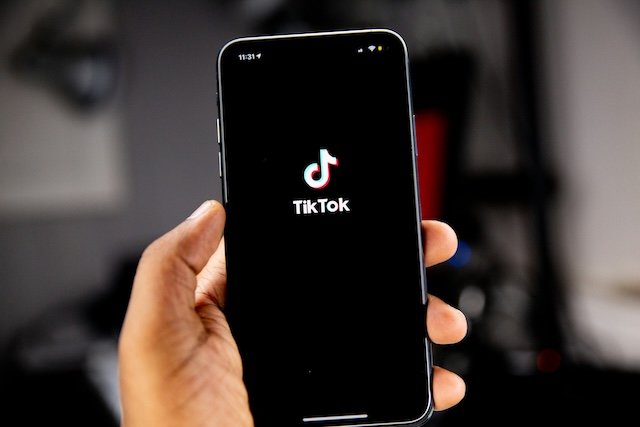
Photo credit: Unsplash.
But this comes at a cost. Users are not only seeing fewer people they know - they are also less likely to see what anyone else is seeing, due to the highly personalised nature of the algorithm. This is fragmenting society, making it harder to build common beliefs and politics, the report claims.
It warns that these trends are reshaping public life. As more people spend time online, work remotely, and lose access to physical community spaces, social media play an increasingly important role in how people relate to one another. Yet platforms that claim to connect us are, in practice, making us less visible to each other.
The authors argue that this is not accidental. Social media companies have a clear commercial incentive to maximise time spent on their platforms, and “stickier” content is more profitable, even if it is less social.
To address this, IPPR is calling for a new approach that both regulates existing platforms and creates alternatives designed around public value rather than profit. The report recommends:
Developing a new public service social media platform, led by the BBC and European public service broadcasters, to provide an alternative to for-profit platforms
Amending the Online Safety Act to tackle manipulative algorithmic design and give regulators stronger powers over platform architecture
Requiring platforms to promote public interest content, including from charities, community groups and public bodies
Dr Sofia Ropek-Hewson, Senior Research Fellow at IPPR, says: “Social media was once about connecting with friends and building communities. Now, it’s increasingly about watching strangers and being sold to. These platforms are not just reflecting society - they are shaping it. By prioritising content that keeps us hooked, they are making us less visible to each other and more isolated. If we want a healthier, more democratic online world, we need to take back control from algorithms designed purely for profit.”
2026 RTIH Innovation Awards
Social commerce will be a key focus area at the 2026 RTIH Innovation Awards.
The awards are now open for entries and celebrate global retail technology innovation in a fast moving omnichannel world.
Our winners will be revealed at the 2026 RTIH Innovation Awards Ceremony, taking place at The HAC in Central London on Wednesday, 4th November.
Check out our 2025 winners here.
Our 2025 hall of fame entrants were revealed during a sold out event which took place at The HAC on 16th October and consisted of a drinks reception, three course meal, and awards ceremony presided over by award winning comedian, actress and writer Tiff Stevenson.
In his welcome speech, Scott Thompson, Founder and Editor, RTIH, said: “This is the awards’ fifth year as a physical event. We started off with just 30 people at the South Place Hotel not far from here, then moved to London Bridge Hotel, then The Barbican, and last year RIBA’s HQ in the West End.”
“But I’m conscious of the fact that, to quote the legend that is Taylor Swift, You’re only as hot as your last hit, baby. So, this year we’ve moved to our biggest venue yet, and also pulled in our largest number of entries to date and broken attendance records.”
He added: “This year’s submissions have without doubt been our best yet. To quote one of the judges: The examples of innovative developments across both traditional and digital retail spaces were truly remarkable.”
Congratulations to our winners, and a big thank you to our sponsors, judging panel, the legend that is Tiff Stevenson, and all those who attended our 2025 gathering.