Smart automation in consumer goods: benefits and challenges
Warehouses where robots cover the night shift. Supply chains that catch a demand spike before anyone calls a Monday meeting about it. Consumer goods automation isn't a future scenario anymore - it's a deployment problem, not a research one. The companies still treating it as optional are now discovering that catching up is far more expensive than starting early.
Why This Is Getting Urgent
Post-pandemic supply chain chaos hit CPG companies in a way that exposed how fragile the old model was. Labour shortages in warehousing. Shoppers who'd permanently shifted their delivery expectations. Margins that had nowhere left to go. The "add another shift" answer stopped working, and it stopped working fast.
So the conversation moved to automation. Not theoretical automation - actual robots handling actual boxes, actual AI repricing actual SKUs at 3am. For anyone navigating this, understanding the current technology trends in consumer goods industry isn't a nice-to-have. A practical overview of what modern solutions look like across the full value chain is available at https://dxc.com/industries/consumer-goods-retail.
The results, where things have gone well, are concrete. Northeast Grocery's transformation with DXC delivered $40 million in operational savings. Not a forecast - money already accounted for.
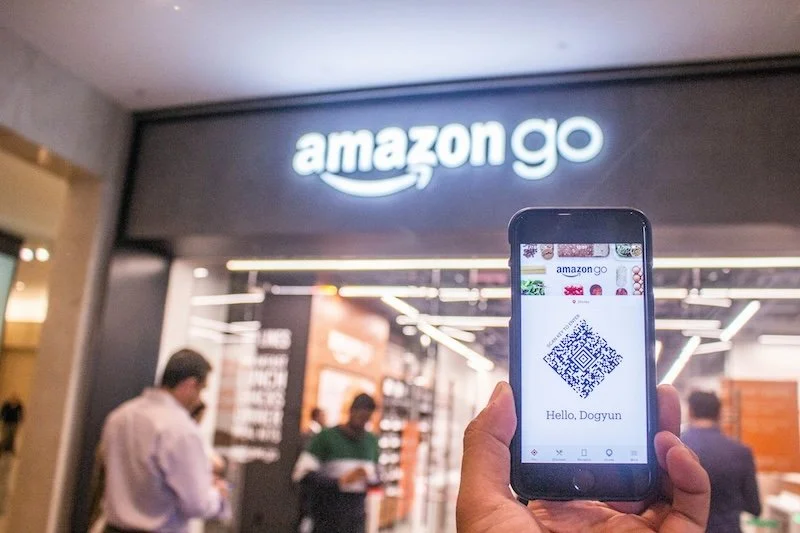
Photo credit: Unsplash.
What's Actually Happening Out There
It's Not a Demo Anymore
"Smart factory" spent years as conference booth material. Polished reels, controlled environments, nothing that looked like a real production line at 11pm on a Tuesday. That era is mostly over. Technology trends in consumer goods industry now show deployment at real scale - real factories, real SKUs, real throughput.
Amazon Robotics (the old Kiva platform, acquired in 2012) was the first proof this could work at volume. But the interesting shift recently is that it's no longer Amazon-scale exclusive. Boston Dynamics' Stretch robot - the one built for actual warehouse box-moving, not research demos - started commercial shipments in 2022. ABB and FANUC, the two names that essentially define industrial robotics, have reported strong demand from food, beverage, and household goods manufacturers. The order books tell the story.
What's Being Tested Right Now
Below full deployment, there's a lot of interesting activity:
● Autonomous shelf-scanning - Simbe Robotics' Tally robot scans for stockouts and misplacements at Schnucks and SpartanNash locations. The consistent finding: shelf accuracy problems were more widespread than anyone suspected before the robots started counting.
● Digital twins - Nvidia Omniverse has become a standard platform for building virtual store replicas. A major global retailer used digital twin simulation to test queue management and shelf arrangements before touching a single real store. Test virtually, deploy confidently.
● Cashierless checkout - Amazon's Just Walk Out gets the attention, but Standard Cognition, Trigo, and Zippin are all deploying comparable systems for grocery chains that need the capability without a multi-year build.
● AI demand sensing - Unilever, Nestlé, and P&G have moved from static historical forecasting to ML models pulling in weather data, social signals, and promotional schedules simultaneously. The observed pattern: earlier signals mean smaller corrections, not frantic emergency orders.
The Boring Part Nobody Talks About
A lot of automation projects fail not because the robots break - but because the data infrastructure underneath them was never ready. Legacy ERP on outdated architecture can't feed real-time signals to edge devices that need them immediately.
SAP S/4HANA migrations have become one of the highest priority IT investments in CPG for exactly this reason. When Jollibee Foods ran its digital transformation across the Philippines and EMEA, ERP modernisation was central to it, not a follow-up task. Get the data backbone right and everything else scales. Don't, and you end up with expensive automation waiting hours for data that should have arrived in seconds.
The Technology Itself
Robots on the Floor
The range of systems now runs from simple pick-and-place arms to cobots working directly beside humans on the same line. A few that show up constantly in practice:
● FANUC LR Mate series - standard in food packaging for small-part handling
● Universal Robots UR-series cobots - popular because reprogramming takes hours, not days. On CPG lines cycling through dozens of SKU configurations a week, that flexibility matters more than raw speed.
● Geek+ AMRs - originally dominant in Asian warehouses, now expanding into European and North American operations
● Dematic and Swisslog AS/RS systems - the backbone of large grocery distribution centres
The cobot trend is worth noting specifically. Traditional industrial robots need cages, dedicated space, and specialists. Cobots don't. A trained technician can set one up for a new task same-day. For FMCG lines that switch configurations constantly, that's a real operational advantage.
AI That Actually Makes Decisions
Consumer goods automation built on AI isn't just about trimming costs. It changes how operational calls get made, and in some cases who makes them.
Dynamic pricing and markdown optimisation: AI models watching stock levels, expiry dates, and competitor pricing simultaneously, adjusting in near real-time. For perishables, this is the difference between a small early markdown and a panic discount at closing time. Demand sensing pulls in live external signals - foot traffic, weather APIs, social listening - rather than working purely from last year's numbers. The practical outcome observed across deployments: earlier signals, fewer emergency replenishments.
Vision-based quality control deserves its own mention. Convolutional neural networks running on camera feeds catch defects at line speeds that human inspection physically can't match. Both Nestlé and Unilever use automated vision QC on confectionery and personal care lines. At this point it's a standard option, not an experiment.
IoT and the Edge
A modern factory floor generates data constantly - sensors on machinery, RFID tags on pallets, environmental monitors, filling lines, cold storage. The problem was never data volume. It was making that data actionable fast enough to be useful.
Edge computing solved a big part of this. Processing data locally rather than routing everything to a central cloud removes latency and bandwidth costs. AWS Greengrass and Azure IoT Edge are the dominant platforms. DXC's SPARK for CPG, built on AWS, targets exactly this architecture for manufacturers who want the capability without years of custom infrastructure work.
In practice this means: predictive maintenance that spots a likely motor failure before the line goes down; cold chain monitoring with automatic compliance documentation; RFID inventory tracking that consistently reveals accuracy was worse than anyone thought - which turns out to be a common first finding.
What It Actually Delivers
When consumer goods automation is deployed well, a few patterns show up reliably. Warehouse operations with automated picking and sorting show meaningful labour cost reductions - though in practice this more often looks like staff redeployment to judgment intensive tasks than straightforward headcount cuts. AI demand sensing reduces emergency replenishment orders, which are expensive well beyond their face value. Automated QC catches defect rates that manual inspection was missing - often higher than companies expected before measurement started.
None of these outcomes come automatically. They belong to deployments where data infrastructure was solid beforehand and workforce change management was handled seriously. Automation bolted onto a broken foundation produces very different results.
Where Things Go Wrong
Integration Is the Actual Hard Part
The technology rarely fails on its own terms. The integration does.
Most CPG manufacturers are running a patchwork - legacy ERP, separate WMS and MES systems from the 1990s that nobody wants to touch, and a layer of SaaS tools added whenever a problem got urgent enough. Connecting a modern AI forecasting platform into that environment is genuinely hard. Costs and timelines get underestimated at planning and overrun in delivery.
The failure modes repeat: ML models trained on bad data produce bad predictions, and errors compound. Automation tools that warehouse staff don't trust get worked around rather than used - more failed deployments come down to this than vendors tend to admit. And OT network security remains an open problem; factory equipment wasn't designed to be connected to corporate IT, and the resulting vulnerabilities are real.
Skills, and Patience
Running an automated facility requires capabilities that most traditional operations teams don't have. Demand for robotics technicians, data engineers, and ML ops specialists in consumer goods has been outpacing supply for years. Companies that can't build these capabilities end up with expensive investments that sit underused.
The time horizon problem is just as real. Full warehouse automation requires multi-year commitment in an environment that rewards quarterly results. Payback periods are long. Projects mid-deployment are the first to get deprioritised when leadership changes - and the business case doesn't always survive the handover.
What to Watch
The broader picture of technology trends in consumer goods industry points toward convergence - AI, robotics, IoT, and data infrastructure becoming one system rather than separate investments. A few specific things worth tracking:
● Agentic AI - the step beyond recommendation. These systems adjust replenishment orders, reroute shipments, and modify production schedules without waiting for human sign-off. Early deployments are in narrow domains, but the scope is expanding.
● Multimodal quality control - vision combined with spectroscopy and tactile sensors to catch defects cameras miss. Relevant for produce and fresh proteins where visual inspection has hard limits.
● Shelf-level inventory visibility - computer vision, RFID, and weight sensors working together to maintain real-time accuracy at the shelf, not just at the DC.
Consumer goods automation keeps expanding - and that's not the question anymore. The question is whether the data infrastructure is actually ready to support it - and whether the change management is real or just a line in a project plan.