Five components of a successful patch management strategy for enterprises managing distributed systems

Photo credit: Pixabay.
Enterprises rarely run from a single location anymore. Servers, laptops, Point of Sale systems, and edge devices are scattered across stores, offices, and the cloud.
That sprawl makes updates harder to track and easier to miss, which is exactly what attackers count on. Building a sound patch management strategy for enterprises is now a core part of staying secure across a distributed estate.
The stakes are rising. Exploited vulnerabilities reached 20% of breaches in 2025, up 34% in a single year, nearly matching stolen credentials as the top way in.
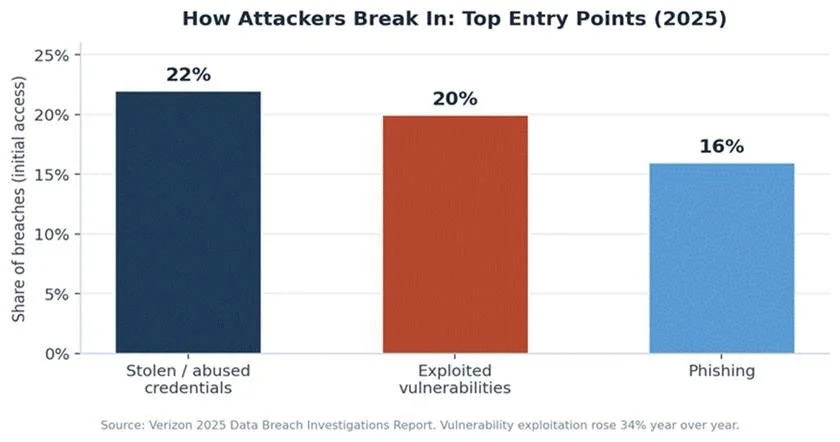
Most of those flaws already had fixes available. Here are five components that turn patching from a scramble into a reliable, repeatable process.
1. Complete Asset Visibility
You cannot patch what you cannot see. The first step is a live inventory of every device, operating system, and application across all locations.
In a distributed setup, forgotten machines are common and dangerous. Automated discovery keeps the inventory current, so nothing slips through unnoticed, much like avoiding the gaps that come with misordered technology deployments.
2. Risk-Based Prioritisation
Not every patch is equally urgent, and no team can fix everything at once. Prioritise by severity and, above all, by what attackers are actively exploiting.
Scoring systems help rank flaws, and the catalog of actively exploited flaws published by national cyber agencies is a practical guide to what to fix first. This is the heart of how teams rank and manage vulnerabilities at scale.
3. Testing Before Deployment
A patch that breaks a critical application can cause as much disruption as the threat it fixes. Test updates in a staging environment before rolling them out.
This matters most for the systems that keep revenue flowing, where unplanned downtime is costly. A quick test pass catches conflicts before they reach production.
A controlled rollback plan is the safety net. If a patch behaves unexpectedly in the field, the ability to reverse it fast keeps a minor hiccup from becoming an outage.
4. Automation and CentraliSed Rollout
Patching hundreds or thousands of endpoints by hand is neither fast nor reliable. Centralised, automated deployment is what makes distributed patching realistic.
Automation handles scheduling, staggered rollouts, and rollback if something goes wrong. It also shrinks the exposure window, which still averages around a month for many edge and remote systems.
5. Monitoring, Reporting, and Compliance
Deploying a patch is not the same as confirming it landed. Continuous monitoring verifies that updates actually applied across every site.
Clear reporting also supports audits and standards such as PCI DSS, while tracking metrics like time-to-patch keeps the program honest. It is one more way to manage the growing operational complexity that distributed enterprises face, a theme that runs through wider digital transformation challenges too.
The Bottom Line
Patch management is not glamorous, but it closes one of the most exploited doors into an enterprise. With breaches still averaging around $4.4 million worldwide, the math favours getting it right.
Combine visibility, prioritisation, testing, automation, and monitoring, and patching becomes a steady routine rather than a fire drill, even across a sprawling, distributed environment.
References
1. Verizon. "2025 Data Breach Investigations Report (DBIR)," 2025. https://www.verizon.com/business/resources/reports/dbir/
2. Cybersecurity and Infrastructure Security Agency (CISA). "Known Exploited Vulnerabilities (KEV) Catalog" and Binding Operational Directive 22-01. https://www.cisa.gov/known-exploited-vulnerabilities-catalog
3. National Institute of Standards and Technology. "National Vulnerability Database" (CVE volume: about 40,000 in 2024, up from 28,000 in 2023). https://nvd.nist.gov/
4. IBM. "Cost of a Data Breach Report 2025" (global average breach cost of 4.44 million dollars), 2025. https://www.ibm.com/reports/data-breach
5. "What Is Vulnerability Management? A Complete Guide," CyberGlossary reference. https://www.fortinet.com/resources/cyberglossary/vulnerability-management