How VPS infrastructure helps retail websites run faster and support omnichannel sales
A modern retail website is no longer just a product catalogue with a shopping cart. It connects inventory, CRM, payment systems, delivery services, loyalty programs, mobile apps, and physical stores into one working ecosystem, where high load VPS hosting high load VPS hosting plays an important role in helping pages respond faster, process requests more smoothly, and stay reliable during peak traffic periods.

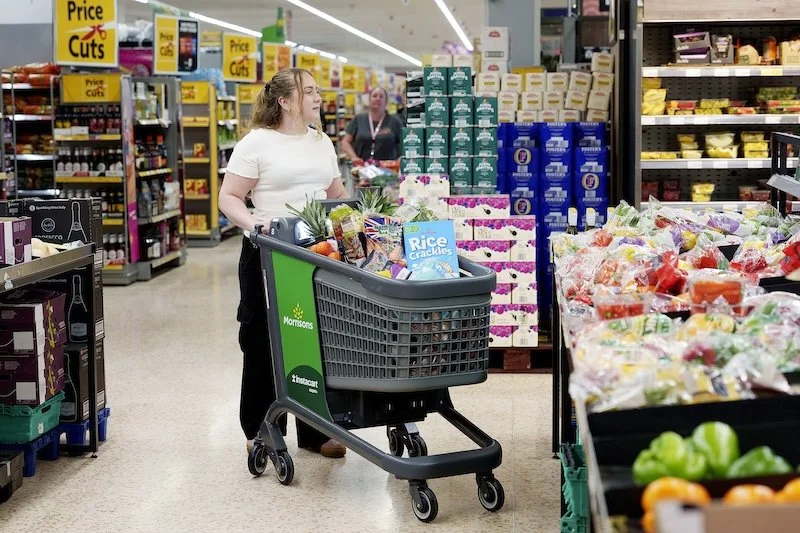
Photo credit: Magnific.
Why speed is so important for retail
For an online store, speed is directly related to sales. If a product page opens slowly, filters freeze, and the shopping cart takes a long time to calculate the total, users quickly lose interest. This is especially noticeable during promotions, seasonal sales, and advertising campaigns.
Speed is most often affected by:
● server performance;
● database optimisation;
● caching quality;
● image size;
● number of external scripts.
The buyer doesn't think about the technical aspects. For them, everything is simple: the website either works conveniently or it's annoying. Therefore, the infrastructure becomes part of the customer experience, even if it remains invisible.
What does a VPS offer a retail website?
A VPS allows you to dedicate dedicated server resources to a project and flexibly configure the environment to suit its needs. This is essential for retail, where the workload fluctuates throughout the day: users browse products in the morning, traffic from ads arrives during the day, and the number of orders increases in the evening.
More stable operation under load
A VPS makes it easier to monitor website performance. You can configure the web server, database, caching, and background processes so they don't interfere with the core functionality: searching for products, adding to cart, and placing an order.
Flexibility for a specific store
Different stores have different technical weaknesses. One project has a large catalog with thousands of products, another has multiple integrations with delivery and warehouses, and a third places a heavy load on personal accounts and the bonus system.
VPS can be configured to suit the project's specific needs: optimise the database, enable cache, move heavy operations to the background, and distribute the load between services.
How VPS speeds up your website
The speed of an online store depends on many factors. The server must quickly return pages, process database queries, calculate discounts, check inventory, and transmit data to external services.
Caching and fast response
One of the main ways to speed up a website is to properly configure caching. Frequently requested pages, menu items, categories, popular product cards, and individual blocks can be served faster without recalculating them each time.
The most commonly cached items are:
● category pages;
● cards of popular products;
● menu and navigation;
● recommendation blocks;
● static files and images.
This reduces the load on the server and database. As a result, the site responds faster to users, and the infrastructure can more easily handle increased traffic.
Database optimization
A retail project's database stores products, prices, inventory, orders, users, discounts, and transaction history. As the catalogue grows and orders increase, the database can become a bottleneck.
With a VPS, you can fine-tune your database's performance: optimise queries, add indexes, monitor load, and track slow operations. This is especially important for search, filters, availability checks, and order processing.
VPS and omnichannel operations
Omnichannel means a customer can begin their journey in one channel and end it in another. For example, they can view a product on the website, check availability at a nearby store, arrange pickup through the app, and receive a notification when their order is ready.
Synchronization of balances and orders
One of the common problems in retail is inventory discrepancies. An item is listed as in stock on the website, a customer places an order, and then discovers that the item has already been sold out in the physical store or hasn't been updated after delivery.
VPS infrastructure helps maintain more stable data exchange between the website, warehouse system, CRM, PoS systems, and delivery services. APIs, background tasks, and data processing queues are often used for this purpose.
Separation of user and internal processes
In omnichannel retail, a website serves more than just customers. It can also handle product imports, price updates, exchanges with marketplaces, notifications, and order transfers to a CRM.
To prevent the site from lagging, the following are usually moved to the background:
● mass catalog update;
● synchronization with marketplaces;
● sending email and SMS;
● report generation;
● transfer of orders to internal systems.
This approach helps maintain normal website speed even when multiple technical processes are running simultaneously within the business.
Preparing for peak periods
Peak traffic is commonplace in retail. Black Friday, New Year's, back to school season, holiday promotions, and local sales can all dramatically increase website traffic.
Before these periods, it's important to check not only the main page but also key purchase stages: search, filters, product cards, shopping cart, promo codes, payment, and order creation.
VPS is convenient because resources can be scaled and pre-configured to accommodate expected load increases. In some cases, it's enough to increase server capacity for the duration of a promotion. For more complex projects, individual functions are deployed to separate servers.
Safety and reliability
A retail website handles orders, personal data, payment information, and internal business processes. Therefore, the infrastructure must be not only fast but also reliable.
VPS can be configured with secure access, a firewall, backups, monitoring, and separate testing environments. This reduces the risk of update failures and helps speed recovery if a problem does arise.
Regular backups are especially important. For a store, the loss of order or customer data can be a serious operational problem. It's important not only to create backups, but also to periodically verify that they can be restored.
Monitoring as part of normal operation
Maintaining a fast website is impossible without a clear understanding of the server and application. You need metrics that show the state of your server and application: CPU load, memory usage, response time, errors, slow database queries, and the status of background tasks.
Monitoring helps spot problems before they become widespread. For example, if your database response slows down after a catalogue update, this can be addressed before the evening peak of orders.
Result
VPS infrastructure helps retail websites run faster, handle loads more reliably, and support omnichannel processes. It impacts not only page speed but also inventory synchronisation, order processing, integrations, and the quality of customer experience.
For the customer, the result is simple: the website opens quickly, the product is displayed correctly, the order is processed smoothly, and the status is updated promptly. Behind this simplicity lies a technical foundation that connects the online store, warehouse, physical locations, delivery, and service into a single working system.