.png)
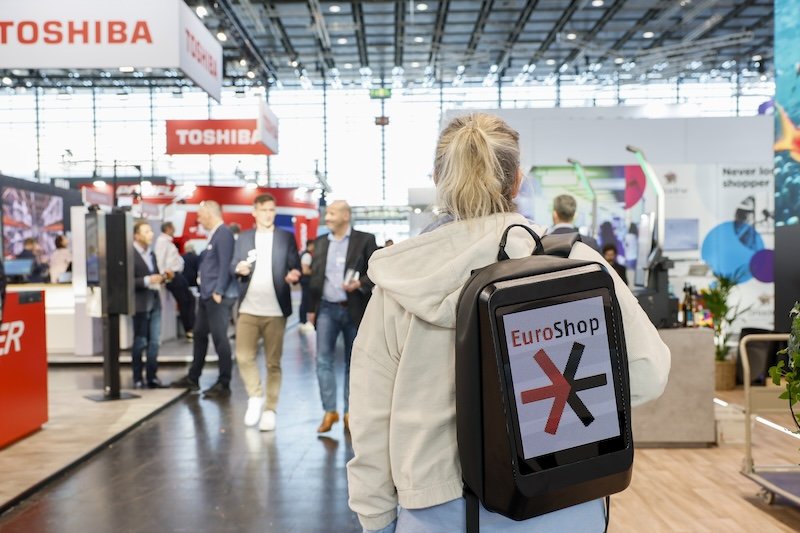
EuroShop has always been more than a trade show. It’s a moment where retail steps back, takes stock, and decides what happens next, observes James Pepper, CEO, Vista Technology Support. The 2026 edition feels especially significant, marking 60 years since the first EuroShop was held in Düsseldorf in 1966, and arriving at a time when the industry is balancing transformation with pragmatism.
Running from 22nd–26th February, EuroShop once again brought the global retail community together at Messe Düsseldorf, reinforcing its position as the world’s leading retail trade fair.
A Measured Start, but Serious Scale
Sunday began more quietly than some previous editions, but the scale of the event quickly puts that into perspective. Over the course of the week, organisers expect more than 80,000 trade visitors from across the globe, representing retailers, hospitality operators, designers, technologists and solution providers.
On the exhibition side, EuroShop 2026 is operating at full strength. Around 1,900 exhibitors from over 50 countries are spread across 14 exhibition halls, covering more than 100,000 square metres of exhibition space. That breadth alone explains why EuroShop remains such a critical fixture in the retail calendar.
One of EuroShop’s greatest strengths is its ability to present retail as a connected ecosystem rather than a series of silos. This year’s show genuinely covered every major aspect of retail and hospitality, from customer facing experience through to infrastructure and operations.
Across the halls, the full estate is represented:
Retail technology: payments, AI, data, smart stores and operational platforms.
Lighting and AV: increasingly integrated into experience design rather than treated as standalone disciplines.
Shopfitting and fit-out: materials, modular systems and scalable store design.
Foodservice and commercial kitchens: reflecting the continued convergence of retail and hospitality.
Refrigeration, energy and recycling: where cost control, regulation and sustainability intersect.
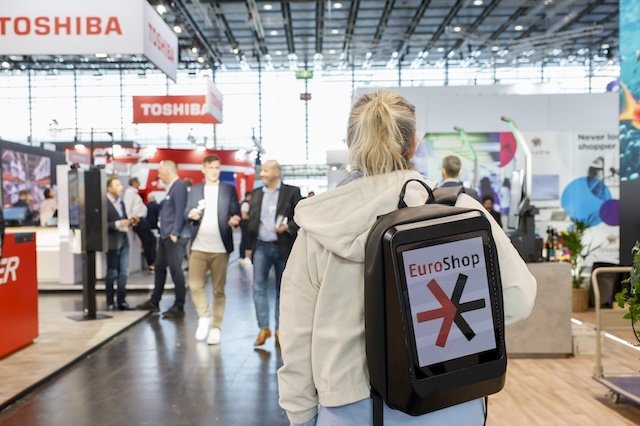
Sustainability Takes Physical Space
Perhaps the most telling signal from EuroShop 2026 is how sustainability has moved from conversation to commitment.
This year, the event dedicated an entire exhibition hall to environmental and energy focused technologies, underlining just how central these systems have become to modern retail operations. This is no longer a fringe topic or a future ambition; it’s core infrastructure.
Within this space, there is a strong and visible focus on Deposit Return Scheme (DRS) technologies. Reverse vending machines, automated recycling solutions and data driven circular economy platforms are presented at scale, reflecting the rapid rollout of DRS across European markets.
If I could call out three themes that I took away from my visit to Euroshop this year these would be:
• Practical innovation over spectacle
• Sustainability as an operational system
• Smarter stores, not more complex ones
Themes Emerging from the Show
In addition to sustainability, a number of further themes have captured attention at EuroShop 2026. Digital transformation remains a central discussion point, with exhibitors presenting sophisticated in-store analytics, artificial intelligence driven customer engagement tools, and seamless checkout technologies.
For example, there are interactive shelf displays that tailor content according to customer profiles, and mobile applications that smoothly connect shoppers with personalised offers and loyalty schemes.
Hanshow set out a clear view of how physical stores can evolve when shelves themselves become intelligent, connected assets rather than static fixtures. Through its NexShelf solution, traditional shelving is turned into a live digital layer, providing continuous visibility of where products are, how shelves are performing and what is happening in real-time across the aisle. This shelf level intelligence then feeds into a broader store wide model, enabling decisions to be driven by current conditions rather than periodic checks.
Complementing this, Hansow’s Smart Cart demonstrated how shoppers can be connected directly to live store data as they move through the shop, with prices, offers and recommendations adapting dynamically to context. Together, these technologies illustrated the art of the possible: a store where shelves, products and customers are digitally linked, allowing more responsive operations and more personalised in‑store experiences based on real‑time insight rather than static assumptions.
There is also a notable emphasis on experiential retail. Numerous brands are leveraging immersive technologies such as augmented reality (AR) and virtual reality (VR) to create engaging environments. For instance, AR enabled fitting rooms and VR product showcases have created a lasting impression, offering shoppers a more interactive and memorable experience.
Finally, data security and privacy have taken centre stage, with exhibitors unveiling advanced data protection measures and cybersecurity solutions tailored for retail. The growing focus on protecting customer data and ensuring compliance with evolving regulations has emerged as a consistent message across multiple presentations.

Final Thoughts
EuroShop 2026 feels less about bold predictions and more about grounded progress. It’s confident without being flashy, ambitious without being abstract, and focused on solutions that retailers can realistically deploy.
If the early days are anything to go by, this anniversary edition won’t be remembered for its age, but for the clarity it brings to where retail is heading next.
EuroShop 2026 stands out not for headline grabbing forecasts, but for its tangible, practical advancements. The event demonstrates a quiet confidence, favoring actionable solutions and real-world impact over spectacle or abstraction. The technologies and strategies showcased are designed for immediate implementation, making clear that retail’s future is being shaped by progress retailers can achieve today.
This anniversary edition will be remembered not for marking a milestone, but for offering a clear, focused vision of the evolving retail landscape one defined by sustainability, digital transformation, immersive experiences, and robust data security. EuroShop 2026 clarifies the path forward, spotlighting the innovations and strategies that are set to redefine retail in the years ahead.
Comments (0)
No comments yet.