.png)
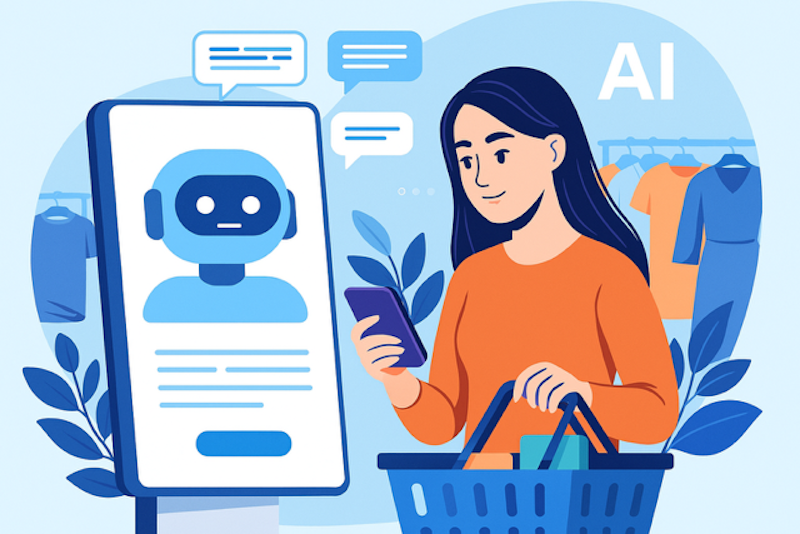
We're living through a moment that feels equal parts exhilarating and exhausting. Artificial intelligence has stormed into workplaces, homes, and creative spaces with promises of unprecedented efficiency.
It can write your emails, generate reports, create presentations, analyse data, and handle tasks that used to eat up hours of your day. The productivity gains are undeniable. People are accomplishing in minutes what used to take hours. Businesses are scaling faster. Creative professionals are producing more content than ever before.
But here's what the breathless headlines about AI productivity often skip over: the human cost. Because while AI tools are making certain tasks faster, they're also fundamentally changing how we work, how much we're expected to produce, and how we relate to our own output. The result is a strange paradox where we're simultaneously more productive and more burned out than ever.
The promise was that AI would free us up to focus on higher-level thinking, creativity, and strategy. The reality for many people is that it's just raised the bar for what counts as "enough." When you can generate a first draft in seconds, suddenly you're expected to produce five drafts instead of one. When you can analyse data faster, you're given more data to analyse. The goalposts keep moving, and the finish line never seems to get any closer.
And the physical toll shows up quickly. People are sleeping worse, feeling more wired at night, struggling to wind down after days of constant digital stimulation. Many are discovering that supporting better rest has become essential, turning to options like CBD sleep gummies from Joy Organics to help their bodies transition from the high alert state that constant AIassisted productivity demands. When you're operating at this pace, the body's need for quality recovery becomes more critical, not less.
The Acceleration Trap
There's something almost intoxicating about working with AI tools when you first start using them. You input a prompt, and boom, you've got a starting point that would have taken you an hour to create from scratch. It feels like a superpower. You start finding more and more ways to integrate these tools into your workflow. Before long, you're using AI for research, writing, coding, design, scheduling, and a dozen other tasks.
The acceleration is real, and for a while, it feels fantastic. You're checking things off your to-do list faster than ever. You're impressing colleagues with your turnaround times. You might even be taking on additional projects because, hey, you've got AI helping you now.
But acceleration has a dark side. When everything moves faster, the pace of expectation accelerates too. Clients want faster turnarounds. Managers assign more projects. The volume of work increases to fill the newly available time. What started as a tool to make your life easier becomes a mechanism that makes your life fuller, busier, and more demanding.
This isn't just theoretical. Talk to people actually using AI in their daily work, and you'll hear versions of the same story. A marketing professional who used to manage three campaigns at once is now handling seven. A software developer who could previously focus on one major feature at a time is now expected to ship multiple features in parallel. A content creator who used to publish twice a week is now on a daily schedule.
The work is getting done, sure. But the humans doing it are running on fumes.
The Cognitive Load Nobody Talks About
Here's something that doesn't get enough attention in discussions about AI productivity: the mental overhead of managing these tools. Yes, ChatGPT can write a draft for you, but you still need to prompt it correctly, review the output, fact-check it, revise it, and make sure it actually sounds like you. Yes, AI can help you analyse spreadsheets, but you need to know what questions to ask and how to interpret the results.
Every AI tool you add to your workflow is another thing to learn, another interface to navigate, another set of capabilities and limitations to remember. You're constantly making decisions about when to use AI and when to do something yourself. You're evaluating outputs, catching errors that AI makes, and filling in the gaps where it falls short.
This meta-work is exhausting in its own way. You're not just doing your job anymore. You're also managing a suite of AI assistants, each with its own quirks and blind spots. You're becoming a manager of machines, and that's a role most people never signed up for.
And here's the kicker: this cognitive overhead is largely invisible. It doesn't show up in productivity metrics. Nobody's tracking the mental energy you spend crafting the perfect prompt or the time you waste when an AI tool gives you garbage output that you have to redo from scratch. From the outside, it just looks like you're getting more done. From the inside, it often feels like you're working harder than ever.
The Creativity Paradox
One of the great promises of AI was that it would handle the boring, repetitive stuff so humans could focus on creative work. But something strange is happening instead. For many people, AI is actually making creative work feel less creative.
When you can generate a dozen ideas with a single prompt, the act of ideation starts to feel mechanical. When AI can produce a competent first draft of almost anything, the challenge shifts from creation to curation. You're no longer asking "What should I make?" but rather "Which of these AI-generated options is least bad?"
There's a flatness to a lot of AI assisted creative work. It's competent but generic. Professional but soulless. And when you're churning out high volumes of this kind of content, it's hard not to feel like you're becoming a quality control inspector rather than a creator.
Some people are finding ways to use AI as a genuine creative partner, bouncing ideas back and forth, using it to explore directions they wouldn't have thought of on their own. But for every person using AI that way, there are ten others who are just using it to produce more content faster, and the experience is leaving them feeling creatively drained rather than energised.
The other issue is that when everyone has access to the same AI tools, differentiation becomes harder. The bar for "good enough" rises, but the ceiling for excellence feels lower. Everything starts to blend together. Standing out requires more effort, not less, because you're competing in an environment where everyone can produce competent work at scale.
The Always On Culture Gets Worse
AI tools don't sleep. They don't take weekends off. They're available 24/7, ready to help you crank out work at any hour of the day or night. This is positioned as a benefit, and in some ways it is. Need to finish something at 11 PM? AI's got your back. Working across time zones? AI doesn't care what time it is where you are.
But this constant availability has a shadow side. It makes it harder to truly disconnect. When you know you could knock out a task in ten minutes with AI's help, the mental barrier to working during off-hours gets lower. That email that can wait until Monday? Well, you could just have AI draft a response real quick. That project you were going to start next week? AI could help you get a head start tonight.
The boundaries between work and rest were already eroding before AI came along, but AI accelerates this erosion. It removes friction from the process of working, and in doing so, it removes one of the natural limiting factors that used to help people stop.
There's also a competitive pressure element. If your colleagues are using AI to work faster and produce more, you feel pressure to do the same or risk falling behind. If other companies in your industry are leveraging AI to operate at a higher velocity, your company needs to match that pace. It becomes an arms race where everyone's moving faster but nobody's necessarily better off.
Some people are finding that establishing firm boundaries helps. They designate AI free times or days. They create rules for themselves about when they will and won't use these tools. They're trying to preserve space for slower, more deliberate work and for genuine rest.
But these individual solutions only go so far in the face of systemic pressure to always be producing, always be available, always be maximising productivity.
The Physical Toll
Burnout isn't just mental and emotional. It manifests physically too. The AI productivity boom means more hours looking at screens. More time sitting. More repetitive stress from constant typing and clicking. More eye strain. More tension headaches. More disrupted sleep patterns from the blue light exposure and the mental stimulation of constant work.
When people are pushing themselves to take advantage of their newfound AI-enhanced productivity, they're often neglecting the physical fundamentals that keep them healthy. They skip meals or eat at their desks. They don't move enough. They don't get outside. They sacrifice sleep to fit in just one more task.
The body keeps score, even when the mind is telling you that you can keep going. Chronic stress from overwork leads to elevated cortisol, which affects everything from your immune system to your digestion to your cardiovascular health. The productivity gains you're getting from AI start to feel less impressive when you're dealing with frequent illness, persistent fatigue, or stress related health issues.
Many people are recognising that they need to be more intentional about their evening routines and recovery practices. The challenge is that wellness practices should be supplementary, not band-aids covering over fundamentally unsustainable work patterns. Taking steps to support better rest is helpful, but it's not a substitute for actually working reasonable hours and giving yourself genuine downtime.
The Meaning Crisis
There's a deeper, more philosophical dimension to AI related burnout that doesn't get discussed enough. For many people, work isn't just about productivity. It's about purpose, mastery, and identity. It's where they develop skills, solve interesting problems, and feel competent and valued.
When AI takes over more and more of what used to be skilled work, it can create a sense of purposelessness. If a machine can do in seconds what took you years to learn, what's the value of your expertise? If your main job is reviewing and tweaking AI outputs rather than creating from scratch, are you really practicing your craft?
This isn't just about ego. It's about the fundamental human need to feel like what you do matters. When work becomes primarily about managing AI tools and hitting higher volume targets, the intrinsic satisfaction that used to come from the work itself can evaporate.
Some people are experiencing a kind of existential exhaustion. They're productive on paper, but they feel empty. They're accomplishing things, but nothing feels meaningful. They're moving fast, but they don't know where they're going or why it matters.
This meaning crisis compounds the other forms of burnout. It's one thing to be tired from working hard on something you care about. It's another thing entirely to be exhausted from working hard on things that feel hollow.
When More Becomes Less
There's an economic principle called diminishing marginal returns. At a certain point, adding more input yields less and less output. We're seeing this play out with AI enhanced productivity at the human level.
Yes, you can use AI to produce more. But can you produce more good work? Can you maintain quality standards when you're operating at twice your previous volume? Can you give adequate attention to each project when you're juggling more projects than ever?
For many people, the answer is no. They're producing more, but each individual piece of work is getting less attention, less care, and less of their best thinking. They're spreading themselves thinner and thinner, and the quality shows.
There's also the issue of decision fatigue. When you're producing high volumes of work, you're making more decisions. More decisions mean more opportunities for poor choices, more mental exhaustion, and a greater chance of significant errors.
Some organizations are starting to realize that max velocity isn't the same as optimal velocity. They're discovering that giving people space to think, to rest, to work at a more human pace actually produces better outcomes than running everyone at maximum capacity all the time.
But these organisations are still in the minority. The prevailing mentality in most workplaces is still "more, faster, now."
Finding a Sustainable Path
So what does a healthier relationship with AI productivity look like? It starts with being honest about what AI is actually for. The goal shouldn't be to maximise how much you can produce. It should be to free up time and mental energy for the work that actually matters, that requires human judgment, creativity, and care.
This means being selective about what you use AI for. Maybe AI handles your first drafts, but you spend real time refining and adding your voice. Maybe AI helps with research and data analysis, but you reserve strategic decision-making for yourself. Maybe AI takes care of routine communications, but you personally handle anything that requires nuance or relationship building.
It also means setting boundaries that protect your well-being. Just because you can work faster doesn't mean you should work more. The time AI saves you should translate into space for rest, reflection, and recharging, not just more tasks.
Organisations have a responsibility here too. Companies need to resist the temptation to simply pile on more work because AI makes it possible. They need to think carefully about what increased productivity should actually enable: better quality work, more innovation, healthier employees, and more sustainable operations.
This requires rethinking how success is measured. If the only metric is volume and speed, AI will inevitably lead to burnout. But if success includes factors like employee well-being, work quality, innovation, and sustainability, then AI becomes a tool for achieving those broader goals rather than an engine for extraction.
The Human Element Matters More Than Ever
Here's the ironic truth: in an age of AI, the distinctly human elements of work become more valuable, not less. Judgment, empathy, creativity, strategic thinking, relationship building, ethical reasoning – these are the things that AI can't replicate, at least not well.
The people and organisations that will thrive aren't the ones that use AI to work themselves into the ground. They're the ones that use AI strategically to handle what it does well, freeing up humans to do what they do well.
This means investing in rest and recovery. It means creating space for deep thinking rather than just rapid execution. It means valuing quality over quantity. It means recognising that humans aren't machines, and trying to run them like machines will only break them.
Many people are discovering that supporting their body's natural rhythms becomes crucial during periods of increased demands. Whether that means being more deliberate about evening wind-down routines, spending time in nature, practicing mindfulness, or incorporating wellness products into their routines, the key is recognising that taking care of yourself isn't optional when you're navigating heightened productivity expectations.
Options like Joy Organics have become part of how some people approach maintaining balance, particularly when it comes to supporting their body's need for quality rest after mentally demanding days.
Moving Forward
The AI productivity boom is real, and it's not going away. These tools will continue to get better, more capable, and more integrated into how we work. The question isn't whether to use them. For most people, that's not a choice. The question is how to use them in ways that enhance human flourishing rather than undermining it.
This will require intentionality. It will require resisting the pressure to simply do more because you can. It will require organisations to rethink their expectations and their metrics for success. It will require individuals to set boundaries and advocate for sustainable workloads.

Comments (0)
No comments yet.