.png)

“Before you build anything get close to the customer,” said Fabrice Khullar, Director of Product, UX & CVR Optimisation at Boots, as he encouraged those gathered at Retail Technology Show 2026 in London this week to get user experience (UX) experts involved earlier in innovation and roll-out projects.
Particularly in an era where agentic artificial intelligence (AI) bots are aiding consumer choice and new platforms are emerging all the time that will contest brand loyalty and battle for traffic at retailers’ own websites, it is more important than ever to grab the attention of consumers. Great products, campaigns and thought processes do this, but only if you test their assumptions first before building anything.
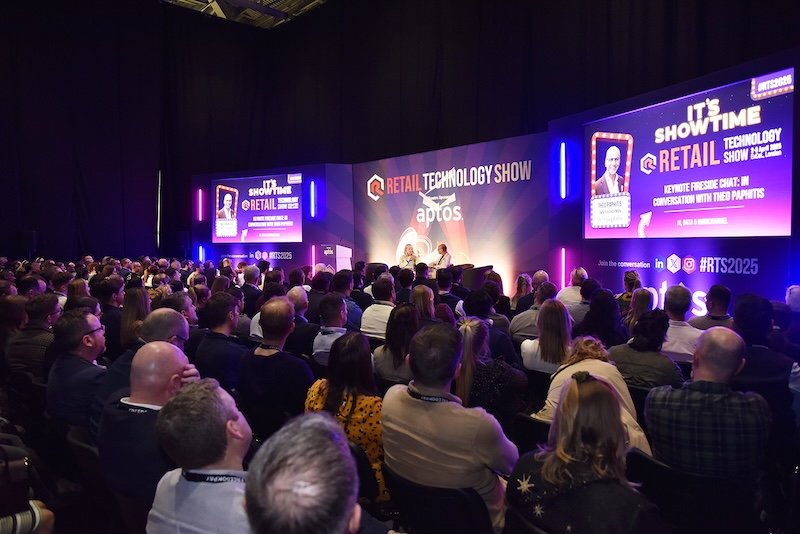
Khullar told the audience at the Pulse stage on the opening day of RTS 2026: “You need your product to be discoverable on platforms that aren’t yours. That requires a rethink,” advocating for UX to be used earlier in all types of development projects in future.
Boots in learning mode
Any new products at Boots are tested and tested again to check that the assumptions of product designers, marketeers and other ‘experts’ are actually correct before anything is actually built. This is to ensure that anything launched is what the consumer wants, explained Khullar.
He cited an old example of a loyalty proposition at a luxury retailer, where marcomms were ready to go, but when it was finally tested it didn’t get good customer feedback. Once it was tested the assumptions were wrong, requiring a redesign. Earlier testing and UX involvement would have prevented this issue from arising.
“Customers saw that particular campaign as merely a data capture exercise,” explained Khullar, so they weren’t interested in participating, necessitating the rethink.”
“Roadmaps and transformation plans are OK, but the customer won’t wait …and reaching them is messy,” continued Khullar. They don’t necessarily want to be segmented into retailers’ neat categories either.
Learning from music, TV and other sectors
“Look at Spotify who have ‘won’ because customers’ loyalty was to the streaming platform, not the record label or store,” stated Khullar, who used to work in that world himself. He also worked on consumer tech products before transferring to the retail world with Boots, the large UK pharmacist, cosmetics maker and retailer.
“Music’s old gatekeepers and experts in distribution, A&R and elsewhere were displaced during my time when MySpace came along. Then Facebook arose disrupting promotion, before the major streamers arrived.”
“It was the same at Sky TV where I also previously used to work,” said Khullar. “When they launched their Now TV streaming platform, which I was involved in, it was an acknowledgement that dishes and contracts were on their way out. Netflix and other TV content streamers were on the horizon.”
“Sky’s product and UX teams were combined in their Now TV streaming roll-out (that uses Sky content in a new way –Ed). I’ve carried the knowledge I’ve gained in these sectors into retail. I believe the same combination of UX knowledge deployed earlier in product development cycles is needed in retail.”
Customers typically follow four steps, said Khullar, citing their tendency to scroll; search, including among friends or with AI assistants; and to investigate streaming options [disrupting the distribution and so forth] before they finally shop. This is why he advocates a flexible approach that requires retailers, such as his present employer at Boots, to:
· Build rough
· Test, test, test
· And only then build. Once all the learnings have been accommodated.
“Bringing UX into the problem (solving) stage, not the build stage is key,” he said. This is backwards to how product development has traditionally been done. But a new agentic AI powered future awaits where hyperconnectivity and customer promiscuity is the new norm, so traditional approaches won’t necessarily cut it in the future. New approaches are required. Separate disciplines collaborating together to ensure better outcomes is a good response.
RTIH at RTS 2026
Retail Technology Innovation Hub was out in force at RTS 2026.
Visitors could find us on stand B45, and were able to pick up a free copy of the latest bumper issue of RTIH magazine.
Further information on our activity at RTS 2026 👉 here

Comments (0)
No comments yet.