How retailers use global logistics planning to balance speed and cost
Online retail runs on a tension that does not resolve cleanly. Customers want fast delivery. Retailers want margins that hold. Shaving time off transit adds cost somewhere in the chain, and that cost multiplies across thousands of daily orders. Warehousing location, carrier contracts, automation investment and returns handling all carry a price that scales with volume and urgency.
The retailers that manage this well are not simply spending more on logistics. They are making better decisions about where to hold stock, which carriers to use for which order types, and where technology investment changes the equation rather than just adding to it.
Why Delivery Speed and Cost Create Competing Priorities
Next-day and same-day delivery are now common expectations across many retail categories. Holding inventory close to buyers, often across several locations, is what meeting those expectations requires. That distributed stock model adds warehousing cost before a single parcel moves.
Carriers that offer guaranteed windows and real-time tracking cost more. That is the trade-off. High-volume or late-arriving orders add further labour costs through overtime and evening shifts. Each decision to improve speed carries a specific cost attached to it.
The pressure concentrates during peak trading periods. Black Friday deals, Christmas and major sale events compress timelines while demand surges. Retailers without stock already positioned or carrier slots arranged in advance can face difficult choices between missed delivery expectations and extra costs that reduce the value of those sales.
How Inventory Positioning Affects Both Speed and Expense
Stock location determines delivery time and shipping cost simultaneously. A centralised warehouse can simplify management and reduce space costs but creates longer last-mile routes and higher per-parcel carrier fees. Distributed stock closer to customers can address both problems, when the volumes make it viable.
Urban-focused retailers use micro-fulfilment sites or dark stores to serve dense city areas. These suit high-frequency, low-SKU ranges where demand patterns are stable enough to predict. Regional hubs handle broader product ranges at lower cost than a full micro-fulfilment footprint, trimming last-mile distances without the overhead of city-centre sites.
A central warehouse supported by well-positioned regional hubs can shorten delivery routes for many UK shoppers when order density justifies the model. That structure can reduce carrier fees compared to single-site fulfilment, particularly where load consolidation across shorter routes replaces long individual deliveries from a central point.
Carrier Selection and Service-Level Decisions
Courier choice is one of the most direct levers retailers have over fulfilment costs. Premium express carriers usually cost more per parcel than economy options. The difference is significant at scale, and paying for express delivery on every order regardless of value or urgency is where many retailers find unnecessary spend.
Multi-carrier setups route shipments based on order profile rather than defaulting to one carrier for everything. Urgent, high-value orders go via express services with guaranteed windows. Regular orders travel through economy options. The saving on lower-value parcels compounds across a full month of trading without any visible change to the customer experience on orders that needed speed.
Setting up this kind of arrangement requires integration between the order management platform and the carrier network, and analysis of order profiles to define the routing rules. For retailers building complex multi-carrier networks, a global logistics provider can help compare carrier contracts, volume commitments and route data before the rules are locked into the operation.
Consolidation and Route Optimisation
Dispatching small, partial loads is where fulfilment costs leak quietly. Grouping local orders into consolidated runs can bring down per-unit transport fees without affecting delivery windows. Route optimisation software makes this practical at scale in a way that manual dispatch planning cannot.
For example, an apparel retailer using automated routing might group evening orders for next-morning collection rather than sending multiple small trips. Carrier charges can fall when fewer routes cover the same order volume. Emissions data may improve too, depending on load density and vehicle choice.
Getting consolidation right during peak periods requires rules that account for volume surges rather than being set once and left. Retailers that treat route optimisation as a live operational tool rather than a configuration task tend to maintain the gains through the periods when they matter most.
Technology Investments That Shift the Cost-Speed Equation
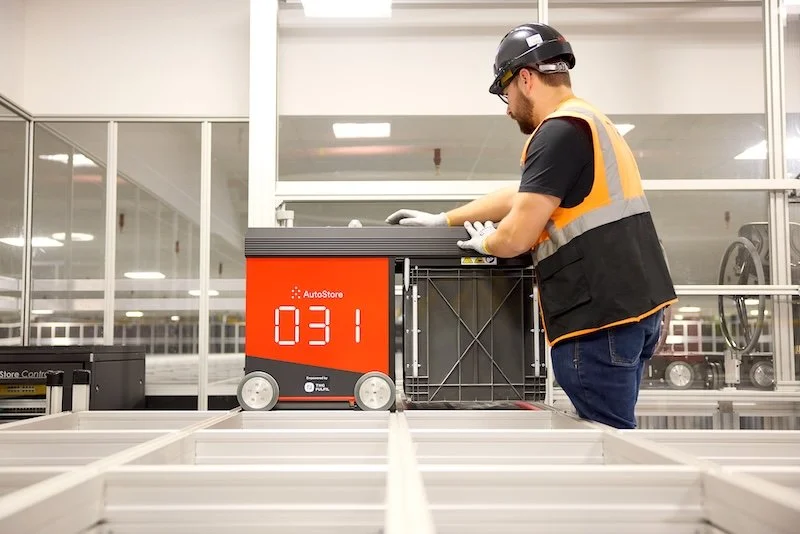
Warehouse automation gets significant attention for fulfilment performance. Robotics and automated sorters can reduce labour spend and increase order processing rates compared to manual operations. The upfront investment is substantial and payback periods vary widely depending on order volume, product mix and wage costs. For high-volume retailers, the return may materialise over several years. For lower volumes, the case is harder to make.
Order management systems that assign each order to the best fulfilment location based on availability, delivery promise and total cost add a different kind of value. The decision happens automatically at order level rather than being made by a dispatcher working through a queue. That consistency across thousands of daily orders adds up.
Predictive analytics takes the inventory positioning question further. Moving stock closer to where future demand is likely, based on trend data and market signals, can reduce both delivery times and carrier costs without additional courier spend. The accuracy of the prediction determines the value. Well-implemented demand forecasting reduces the frequency of expensive last-minute fulfilment decisions.
Making the Balance Work in Practice
No single approach resolves the speed-cost tension permanently. The retailers that manage it best tend to treat it as an ongoing optimisation problem rather than a configuration decision made once. Carrier contracts get reviewed as volume changes. Inventory positioning gets adjusted as demand patterns shift. Technology investments get evaluated against actual order flow rather than projected volumes.
The practical starting point for most retailers is the data they already hold. Order profiles, carrier performance records and fulfilment cost by channel and region can show where the biggest gaps between speed and cost sit before any new investment is required. Routing inefficiencies are usually the quickest win. Carrier contracts follow where volume gives negotiating room. Automation comes after, evaluated against actual economics rather than projected ones.
Start with the orders that cost the most to fulfil. That is where the gap between speed and margin tends to be most visible, and where fixing it produces the clearest return.