
How 3D scanning saves retailers time and money
Retail is a fast-paced environment where efficiency matters just as much as customer experience. Store owners constantly juggle inventory tracking, merchandising, store layout planning, and loss prevention.
Each of these tasks takes time, and time directly affects operating costs. In other words, retailers are under constant pressure to move faster, waste less, and deliver better service – all without ballooning their budgets.
One technology quietly transforming how they achieve this is 3D scanning. It relies on a laser scanner to capture precise measurements of the store environment. The scanner emits laser light that bounces off surfaces. Far from being a niche tool reserved for engineering labs or film studios, it has found a very practical home in retail.
To understand its real impact, it is helpful to examine how this 3D solution saves both time and money.

Photo credit: Pexels.
Reducing Time Spent on Store Measurements
Retail spaces rarely stay the same for long. New product displays appear, seasonal sections shift, and promotional stands rotate throughout the year. Documenting these changes traditionally requires physically measuring aisles, shelves, and fixtures. Staff members often walk the store with tape measures, notebooks, and cameras to manually record dimensions. The process can take hours and still leave room for small measurement errors that later affect planning.
3D laser scanning simplifies this entire task. A single scan session can capture the full environment with remarkable precision. The data collected forms a detailed point cloud, digitally mapping the positions of walls, shelves, and other physical objects inside the store.
Instead of documenting each fixture individually, retailers receive a virtual replica of the store. Managers and designers can review the layout remotely whenever they need to. Teams can revisit the scan repeatedly without returning to the site. For businesses managing multiple locations or frequent layout updates, this efficiency alone can save significant labor time.
But this level of precision and efficiency is only possible when you invest in the right technology from a reputable company like 3D Engineering Solutions. It’s best to check that the provider has proven experience, high quality equipment, and a track record of delivering reliable systems tailored to retail environments.
Improving Inventory and Shelf Management
Retail performance often depends on how smoothly products move from the stockroom to the sales floor. Disorganised shelves, misplaced items, or poorly spaced displays can slow restocking and frustrate employees. Workers may spend unnecessary time rearranging products or searching for items that should be easy to locate.
With a 3D scanning tool, retailers gain a clearer understanding of how shelf space is actually used. From the scan data, teams can generate precise floor plans that show the layout of aisles, shelves, and display zones. When connected with inventory systems, this information helps managers track how merchandise occupies available shelf space. The added visibility makes it easier to plan restocking schedules and maintain consistent merchandising standards across multiple stores.
Better shelf insights also reduce the risk of overcrowded displays or underutilised sections. Managers can evaluate which areas receive the most attention and adjust product placement accordingly.
Streamlining Store Layout Planning
Designing or remodeling a retail store usually involves several groups working together, including designers, contractors, and corporate planners. Without reliable spatial references, these teams often depend on repeated site visits, sketches, and rough estimates. That approach slows the planning process and increases the chances of costly revisions during construction.
3D scanning supports the creation of digital twins, which are highly accurate representations of real retail spaces. Designers can import the scan directly into planning software and build layout proposals within the virtual environment. Walls, shelves, displays, and walkways appear exactly as they exist in the real store. Because of this accuracy, teams can test layout ideas before any physical changes take place.
Working within a virtual environment also makes collaboration easier. Teams can experiment with different product zones, promotional areas, or aisle arrangements without interrupting store operations. When potential issues are identified early, retailers avoid expensive redesigns and shorten renovation timelines.
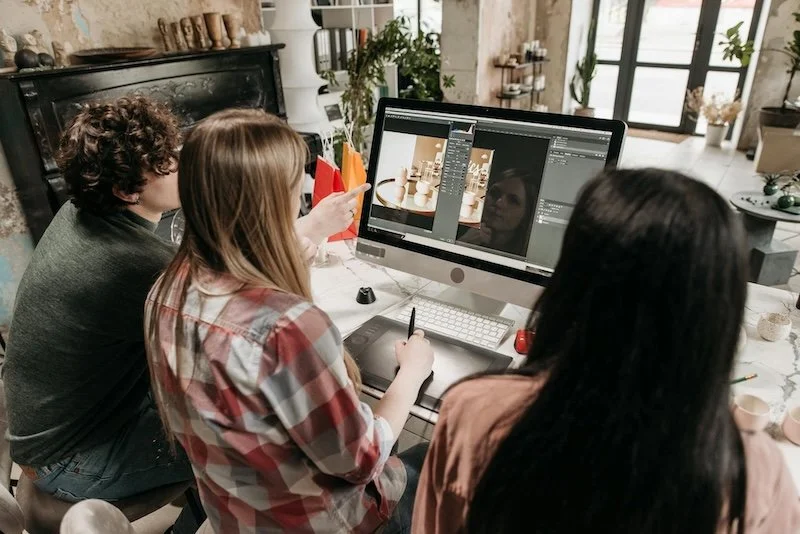
Photo credit: Pexels.
Supporting Faster Store Replication Across Locations
Retail chains often expand by opening new locations designed to match a successful store concept. Maintaining consistent branding and layout standards can be difficult when each building has different dimensions. Traditional planning methods require new measurements and adjustments for every location.
Innovative 3D scanning technology speeds up this process by generating accurate models of each new site. Designers can compare these scans with existing store designs and quickly evaluate how well the standard layout fits the available space. The scan data can also support reverse engineering, allowing teams to recreate store fixtures or display components digitally and even 3D print replacements or prototypes when needed.
This approach accelerates the roll-out of new locations while reducing travel expenses and design delays. When expansion projects move forward faster, retailers reach new markets sooner and generate revenue earlier.
Lowering Operational Costs Through Better Data
Many retail decisions still rely heavily on observation and experience. While that knowledge remains valuable, detailed spatial data offers another layer of insight that helps operations run more efficiently.
Modern scanning workflows can convert captured geometry into optimised 3D surfaces, including waterproof meshes that represent the environment as continuous digital models. Managers gain access to accurate measurements and visual references that support better planning.
Cleaning schedules, restocking routes, and display maintenance tasks become easier to organise when teams understand the physical space more clearly. Over time, these operational improvements help retailers manage resources effectively, reducing labor costs and avoiding unnecessary waste.
Conclusion
3D scanning is becoming a valuable tool for retailers that want to operate more efficiently. By turning physical spaces into accurate digital environments, businesses gain a clearer view of how their stores function. This insight helps teams make faster decisions and reduce manual work. It also lowers the risk of costly mistakes during planning or store updates.
Over time, even small improvements can lead to noticeable savings in both time and operational costs. Retailers that adopt technologies like 3D scanning place themselves in a stronger position to adapt and grow.













Continue reading…