.png)

As UK retail continues to accelerate its digital transformation, email remains one of the most critical communication channels across marketing, customer service, logistics, and payments. However, it is also one of the most exploited vectors for impersonation attacks, particularly during peak trading periods such as Black Friday and the Christmas season.
Retailers are increasingly finding that email trust is not just a cybersecurity concern but a direct driver of revenue protection and customer experience. A single spoofed message can undermine brand credibility, disrupt transactions, and lead to significant financial losses.
When retail brands need to protect customer facing email channels during high volume trading periods, tools like Suped consolidate DMARC reporting across the marketing, transactional and supplier email estate.
Why Email Impersonation Is Growing in Retail
Retailers operate some of the most complex email ecosystems in any industry. A single brand may use dozens of third-party platforms for marketing automation, order tracking, customer support, and payment confirmations.
This complexity creates opportunities for attackers to impersonate trusted retail brands and exploit consumer trust.
Common impersonation tactics include:
● Fake order confirmation emails
● Fraudulent refund notifications
● Delivery update scams
● Loyalty programme phishing campaigns
● Fake supplier invoice requests
These messages are often difficult for consumers to distinguish from legitimate communication, particularly during busy shopping periods.
Recent reporting from the BBC highlights how cybercriminals increasingly rely on realistic branding and timing-based manipulation to trick consumers into acting quickly without verification.
The Role of Email Visibility in Retail Security
Retail security teams are now prioritising visibility into every system that sends email on behalf of their brand. This includes internal platforms, third-party vendors, and cloud-based SaaS tools.
Without centralised visibility, retailers face challenges such as:
● Unknown systems sending emails using corporate domains
● Expired vendor integrations still active in email flows
● Marketing tools bypassing authentication controls
● Fragmented reporting across multiple platforms
This lack of oversight increases the risk of both external impersonation and internal misconfiguration, especially during high traffic sales events.
DMARC as a Retail Protection Layer
DMARC (Domain-based Message Authentication, Reporting and Conformance) has become a foundational control for retail email security strategies. It allows organisations to verify whether incoming emails are legitimately authorised to use their domain.
More importantly, DMARC reporting provides ongoing visibility into email activity across the entire ecosystem.
Retailers use DMARC insights to:
● Identify unauthorised senders
● Monitor third-party email usage
● Detect phishing attempts in real-time
● Strengthen domain reputation
● Improve deliverability of legitimate campaigns
As retail email volumes scale during peak periods, this visibility becomes essential for maintaining both security and customer trust.
Why Retailers Are Treating Email Security as a Revenue Issue
Email impersonation is no longer viewed solely as a cybersecurity threat. It is increasingly recognised as a revenue protection issue.
A single successful spoofing campaign can lead to:
● Failed transactions due to customer distrust
● Increased support call volumes
● Refund fraud and chargebacks
● Brand reputation damage
● Loss of repeat customers
According to analysis published by Forbes, brand trust is now one of the most valuable competitive differentiators in digital commerce, with even minor trust disruptions impacting customer lifetime value.
Retailers that fail to secure email channels risk losing far more than just data - they risk losing customer loyalty.
Peak Trading Periods Increase Exposure
High demand retail events significantly amplify email-related risks. During peak trading periods, both legitimate and malicious email volumes surge, making detection more difficult.
Key challenges include:
Increased Email Volume
Retailers may send millions of transactional and promotional emails within days, increasing monitoring complexity.
Faster Customer Behaviour Cycles
Customers expect near instant updates on orders, which reduces the time available to verify suspicious messages.
Attacker Opportunism
Cybercriminals deliberately time phishing campaigns to coincide with peak retail activity.
Expanded Vendor Activity
Temporary tools and campaign platforms are often activated for seasonal promotions, increasing the attack surface.
Mapping the Retail Email Ecosystem
Retailers typically rely on a wide range of systems that contribute to email delivery. These include:
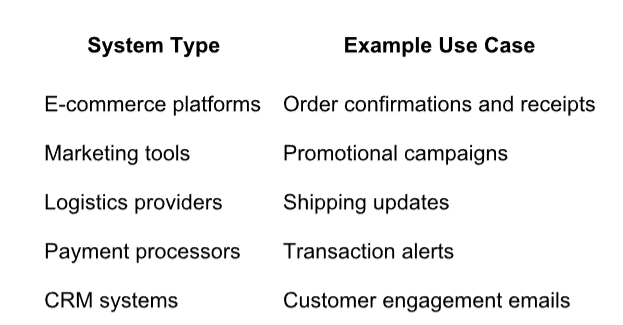
Each system must be properly authenticated and monitored to ensure that only legitimate messages are delivered under the retail brand domain.
Without proper governance, attackers can exploit weak links in this ecosystem to send convincing spoofed emails.
Customer Trust and Digital Experience
Email security is increasingly tied to customer experience. A single phishing email impersonating a retail brand can damage consumer confidence and reduce engagement with legitimate communications.
Customers expect:
● Accurate order tracking
● Secure payment communications
● Consistent brand messaging
● Fast resolution of delivery issues
If these expectations are disrupted by fraudulent emails, trust erodes quickly and may not easily recover.
Research shared by the New York Times has shown that consumers are becoming more cautious about digital communications, particularly when financial transactions are involved. This growing scepticism places additional pressure on retailers to ensure authenticity across all messaging channels.
Strengthening Retail Email Governance
To reduce impersonation risk, retailers are adopting more structured email governance frameworks that combine technology, process, and oversight.
Key strategies include:
● Centralising visibility across all email-sending systems
● Enforcing strict domain authentication policies
● Regularly auditing third-party email providers
● Monitoring DMARC reports continuously
● Educating internal teams about phishing risks
These measures help ensure that every email sent under a retail brand is properly authorised and traceable.
The Future of Email Trust in Retail
As retail continues to evolve into a fully digital first ecosystem, email trust will become an increasingly important competitive factor. Brands that can ensure authenticity at scale will be better positioned to protect revenue, maintain customer loyalty, and reduce operational risk.
Email impersonation will not disappear, but its impact can be significantly reduced through stronger governance, better visibility, and more proactive monitoring of email ecosystems across the retail value chain.

Comments (0)
No comments yet.