.png)
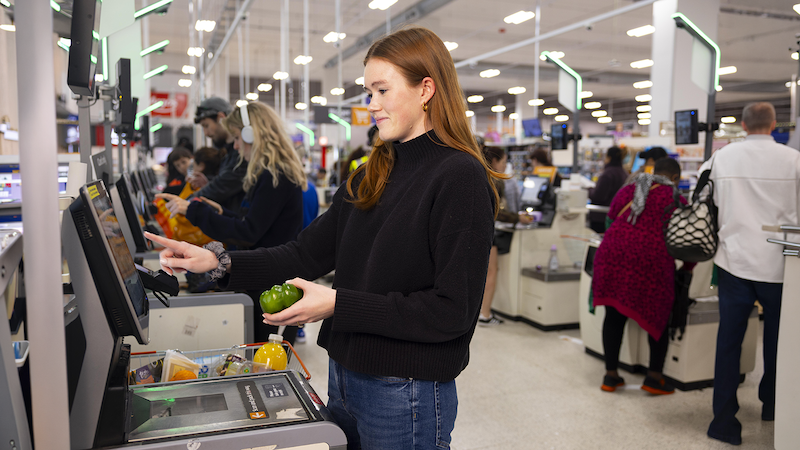
Retailers are moving beyond static reporting, investing in real-time tools that enable faster decisions across inventory, fulfilment, store operations, and customer service.
Why Retail Is Moving Toward Real-Time Decision Tools
Retailers are increasingly adopting systems that help them act in the moment rather than review what has already happened. Across stores, ecommerce, and supply chains, there is growing demand for tools that turn live data into immediate action on inventory, fulfilment, pricing, and day-to-day operations including identifying stock shortages, reallocating inventory, responding to fulfilment delays, managing staffing levels and resolving pricing discrepancies.
This transition is largely driven by evolving customer expectations for things like a website having accurate stock information, reliable delivery options, and consistent service across channels, which indeed requires teams to detect and resolve issues before they affect sales or service, and this is especially important for ecommerce sites who are battling for traffic within the new era of AI search.
As a result, retail is moving beyond static dashboards toward platforms that flag changes, prioritise actions, and support faster decision-making through alerts, automation, and AI-driven recommendations while conditions are still evolving.
Where Latency Has a Direct Commercial Impact
When a customer orders the last available item online, a retailer may have only moments to determine whether that stock is actually available and where it should be shipped from. Similar pressures exist across fulfilment, replenishment, pricing, and fraud prevention, where delays can quickly translate into lost revenue or operational inefficiencies.
The value of acting on live information is not unique to retail. In financial markets, spread betting platforms depend on real-time pricing and rapid execution to help users respond to changing conditions as they happen. While the environments differ, both rely on timely data to support faster and more informed decision-making.
Store operations present similar challenges. Managers increasingly need live signals on shelf gaps, queue build-up, Click and Collect demand, or task backlogs so they can allocate resources where they are needed most. Even small delays can affect customer satisfaction and store productivity.
AI, Automation, and Human Oversight
Retail teams are increasingly using AI to reduce the time between identifying a problem and acting on it. Whether highlighting potential stock shortages, recommending fulfilment routes, forecasting demand fluctuations, or prioritising store tasks, AI is becoming a practical tool for operational decision-making rather than a purely analytical one. And, in fact organizations incorporate a level of AI management with the aim of improving speed and consistency, without opting for full automation. AI can help surface priorities, reduce manual monitoring, and provide clearer guidance when teams are managing large volumes of information.
That said, not every retail decision that can be automated, should be automated. While systems can identify opportunities and recommend the next best action, retailers still need confidence that changes align with the business. Human oversight, and judgment remains particularly important for high impact decisions such as pricing, promotions and supplier negotiations.
Cloud, Edge, and the Connected Store Stack
Technology alone is not enough, though, since retailers also need infrastructure capable of supporting fast decision-making across increasingly complex environments.
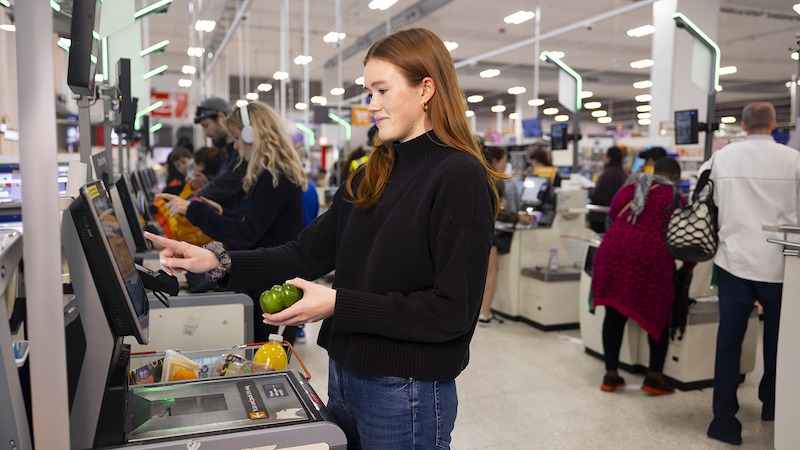
Cloud modernisation provides broader access to shared data across e-commerce, stores, distribution networks, and customer platforms. At the same time, edge computing enables lower latency processing inside stores and fulfilment centres, which is particularly valuable for things like shelf analytics, automated checkout, video-based store intelligence, and local inventory decisions where response times matter.
Integration Remains the Main Constraint
Despite strong interest, adoption is rarely straightforward. Many retailers continue to operate across fragmented PoS, ERP, WMS, ecommerce, loyalty, and media environments where inconsistent data and batch-based processes limit what real-time systems can achieve.
In many cases, the challenge is not generating insights but acting on them. A real-time alert offers little value if inventory records are inaccurate, store teams lack the necessary tools, or operational processes prevent a timely response. All of this explains why implementation begins with focused use cases rather than large scale transformation programs. Common starting points include reducing stockouts, improving order routing, strengthening fulfilment exception management, and aligning associate tasks with live store conditions.
How Retailers Are Measuring Value
The commercial case is increasingly tied to operational outcomes rather than abstract analytics benefits. Retailers typically look for fewer stockouts, faster response times, lower manual effort, improved on-shelf availability, better fulfilment decisions, and stronger service levels across channels.
A queue building unexpectedly during a busy trading period or a click-and-collect surge ahead of a bank holiday can quickly test store resources. Access to timely information helps teams respond more effectively, improving both productivity and customer experience.
Tecnology buyers and industry observers view the direction as becoming increasingly clear: Demand is moving towards platforms that combine visibility, decision support, and workflow activation, particularly in inventory, fulfilment, and store operations where even small delays can have a measurable commercial impact.
Real-Time Retail Decisioning Gains Ground
Most organisations already have access to vast amounts of information across stores, e-commerce platforms, supply chains, and customer touchpoints. The real differentiator is how quickly that information can be translated into action. As retail operations become more connected and customer expectations continue to rise, the ability to make informed decisions in the moment is likely to become a competitive advantage rather than a technological aspiration.
Retailers that can shorten the gap between insight and execution will be better positioned to improve customer experiences, strengthen operational efficiency, and respond more effectively to changing market conditions.



Comments (0)
No comments yet.