The storefront is back in the budget conversation. So where's the signage line?
Harvard Business School lecturers Frank Cespedes and Pietro Satriano made the case in April that the physical store is no longer a legacy asset but a demand driver in its own right, one that builds brand equity while digital acquisition costs continue to climb.
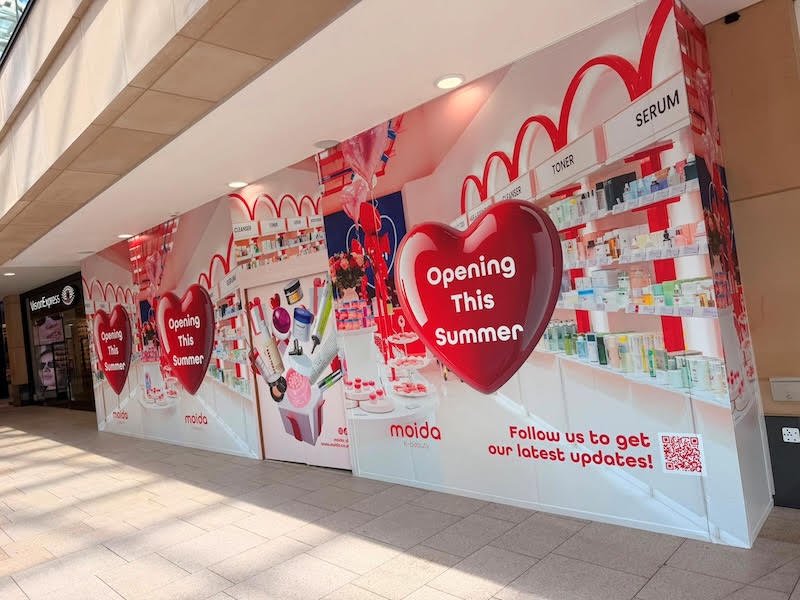
Retailers heard them. Store opening announcements have filled trade coverage all year, from perfume houses taking their first standalone sites to toy chains expanding into major shopping centres.
Here's the odd part. The same retailers signing leases and commissioning fit-outs often treat the sign above the door as a line item to squeeze. The tech stack gets six figures. The fascia gets whatever's left. That maths is backward, and the data has been telling us so for years.
What the Walk-In Numbers Actually Say
FedEx Office ran a consumer survey that remains the most cited piece of research in the signage industry, and for good reason. It found that 76% of American consumers entered a store they'd never visited before because of its signs, and 68% went on to buy something because a sign caught their eye.
Read those figures against what retailers currently pay per acquired customer online. Paid social CPCs have roughly doubled since 2021 in most retail categories. A storefront sign, amortised over a decade, acquires foot traffic at a cost per visit that no digital channel can touch.
The survey cuts the other way too. Just over half of respondents said they were less willing to enter a store with misspelled or poorly made signs. So the sign isn't neutral when it's bad. It actively repels the customer you paid rent to reach.
One stat from that research stays with me more than the headline numbers: 68% of consumers believe a store's signage reflects the quality of its products. Before anyone touches a product or meets a staff member, the sign has already set their expectation of what the brand is worth. That's positioning work, done in steel and acrylic, running 24 hours a day.
Fabrication Quality Is the Part Nobody Sees Until It Fails
Retail tech buyers are comfortable evaluating software vendors. Fewer know how to evaluate a sign fabricator, which is a problem, because the difference between a sign that looks sharp in year eight and one that's peeling in year two comes down to decisions made at the manufacturing stage.
Material selection matters most. Channel letters in aluminium versus cheaper composites, LED modules rated for the actual ambient temperatures of the site, polycarbonate faces that hold colour under UV exposure. None of this shows up in the initial render the fabricator sends over. It shows up three winters later.
This is where working with an established fabricator of custom business signs pays off in ways the procurement spreadsheet won't capture. A shop that manufactures its own letters and logos controls tolerances end to end, can match brand colours precisely across dimensional letters, lightboxes and interior pieces, and will still be around when a facade refresh needs the original spec files. The gap between that and a brokered order from the cheapest bidder is rarely visible on day one. It's very visible on day 800.
There's a caveat worth stating: not every location justifies premium fabrication. A pop-up with a nine-month lease has a different calculus than a flagship. But retailers keep applying pop-up logic to ten-year sites, and that's the expensive mistake.
Store Design Teams Already Treat Identity as Infrastructure
The design world figured this out ahead of the budget holders. When Dalziel & Pow worked with accessories brand Islander on its first store outside of Scotland, the physical brand expression wasn't an afterthought bolted onto the fit-out. It was the fit-out. Exterior identity, interior graphics and material choices worked as one system.
Compare that with the retailer who commissions a beautiful interior and then hangs a vinyl banner outside while the "real" sign sits in a procurement queue. Customers form their judgement at the pavement. They don't grade on a curve because the inside is lovely.
The lesson from studio-led projects is that signage decisions belong in the design phase, alongside lighting and layout, not in a separate purchasing track that starts after the concept is locked. Retrofitting a sign to a finished facade always costs more and looks like what it is.
New Openings Are Where the Discipline Shows
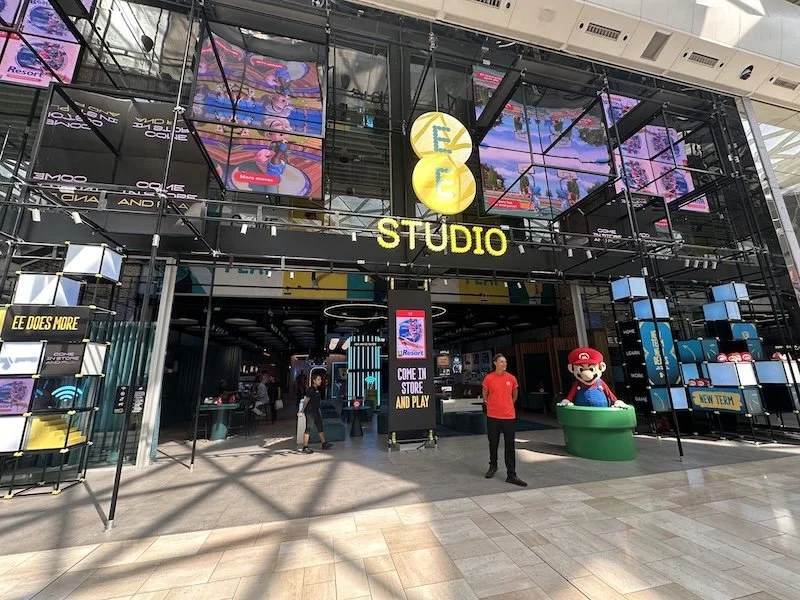
Expansion pipelines make this concrete. When The Entertainer prepared its new store at Manchester's Trafford Centre, it was opening into one of the most visually competitive environments in UK retail. A shopping centre corridor is a wall of competing fascias. The brands that win the glance are the ones whose signage was engineered for that specific sightline, viewing distance and lighting condition.
Landlord sign criteria add another layer. Most major centres and business districts impose strict specs on illumination, projection and mounting. Fabricators who deal with these approvals weekly will flag a non-compliant design before it's built. Ones who don't will build it, fail inspection, and hand you the delay.
Multiply this across a ten-store opening programme and signage stops being a facilities detail. It becomes a roll-out capability, same as your POS deployment or your staffing playbook.
The Cheapest Brand Media You'll Ever Buy
Retail media networks sell impressions by the thousand. A storefront sign on a decent high street delivers hundreds of thousands of impressions a year for the cost of electricity, and every one of them lands within walking distance of the till.
Physical stores earned their way back into strategy decks. The sign deserves its seat at the same table, specified early, fabricated properly, and treated as the always-on brand channel it has been since before any of us had a tech stack to worry about.