How technology is redefining retail safety and loss prevention
Retailers are adopting technology enabled security solutions to address evolving safety risks and operational challenges in stores. Enhanced surveillance, smarter access controls, and integrated data systems are improving how retail businesses protect people, inventory, and assets. With the growing importance of digital transformation, security strategies are shifting towards comprehensive, data-driven approaches within retail environments.
In today’s retail sector, security services extend beyond safeguarding goods or preventing isolated theft. Modern challenges such as organised retail crime, cyber incidents, and operational interruptions require more advanced and coordinated measures.
As retailers respond to these evolving risks, technology has a central role, providing improved monitoring and actionable insights. Understanding the impact of these innovations on safety practices is important for those involved in managing and operating retail environments.
Proactive safety strategies powered by advanced analytics
Traditional security methods often focused on reacting to incidents after they occurred, with personnel responding only once an alarm was triggered or a loss was reported. Today, there is a shift towards prevention, where advanced monitoring tools can help identify and address threats before they escalate. Data-driven systems are enabling retailers to move from passive surveillance to active risk management, reducing incidents and improving continuity.
AI-driven analytics and real-time data collection provide deeper visibility into store activity. By processing transactions, movement patterns, and risk signals together, stores can anticipate issues such as unusual customer behaviour or coordinated theft attempts. The outcome is more efficient resource allocation and quicker intervention, helping to reduce losses and operational disruption.
Predictive modelling is becoming increasingly valuable in retail environments, where historical data patterns can inform future security decisions. By analysing trends across different times of day, seasonal variations, and specific store locations, retailers can optimise staffing levels and position security resources where they are most needed.
This approach not only improves loss prevention outcomes but also enhances the overall customer experience by maintaining a safe and well monitored shopping environment. Machine learning algorithms continue to refine these predictions over time, adapting to changing patterns and emerging threats with minimal manual intervention required from security teams.
Enhancing surveillance capabilities with computer vision
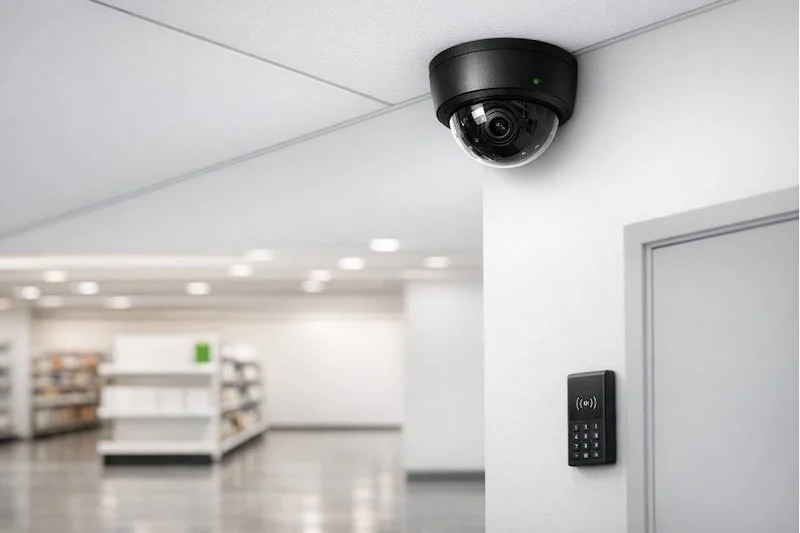
Computer vision and smart surveillance technologies have significantly improved incident detection and loss prevention. Modern camera systems can distinguish between genuine threats and harmless activity, reducing unnecessary alerts that may interrupt store operations. For staff, this advancement can increase awareness without the need to constantly review irrelevant footage.
Networked cameras integrated with analytics platforms allow for rapid identification of theft, suspicious behaviour, or slip and fall risks. When visual monitoring is combined with data from environmental sensors, retailers gain a more comprehensive understanding of in-store activity. This integration helps reduce false positives and supports a more focused, effective response to verified threats.
Streamlining access with digital credential solutions
Managing physical access points in retail has changed with the introduction of technology-enabled security solutions. Keyless entry systems and mobile credentials reduce the reliance on physical keys, improving both operational efficiency and security levels. Role-based permissions enable customised access, so that employees, suppliers, and visitors only enter authorised areas.
Centralised platforms allow monitoring of who enters or exits restricted zones, providing greater transparency and accountability. In addition, security services can integrate access controls with scheduling and inventory software, supporting deliveries or maintenance without compromising safety. By reducing the need for manual key handling, retailers help decrease the risks associated with lost keys or unauthorised duplication, addressing potential sources of internal shrink and security gaps.
Integration, governance, and practical implementation factors
Technology enabled security solutions achieve the greatest impact when integrated with key retail operations. Linking with Point of Sale exceptions, footfall analytics, and inventory management delivers broader insights for risk intelligence. Centralised dashboards make it possible for retailers to track incidents, performance indicators, and compliance requirements across multiple sites.
With increased access to data comes the responsibility to protect customer and employee privacy. Retailers are responding by using data minimisation, setting retention limits, and implementing transparent policies to support regulatory compliance. Ongoing staff training also contributes to effective adoption, ensuring teams gain the benefits of automation while maintaining proper oversight.