.png)
An early preview of Pop Mart’s SkullPanda Petals in Four Acts at Harrods reveals a more curated, art led retail experience ahead of its public opening in London.
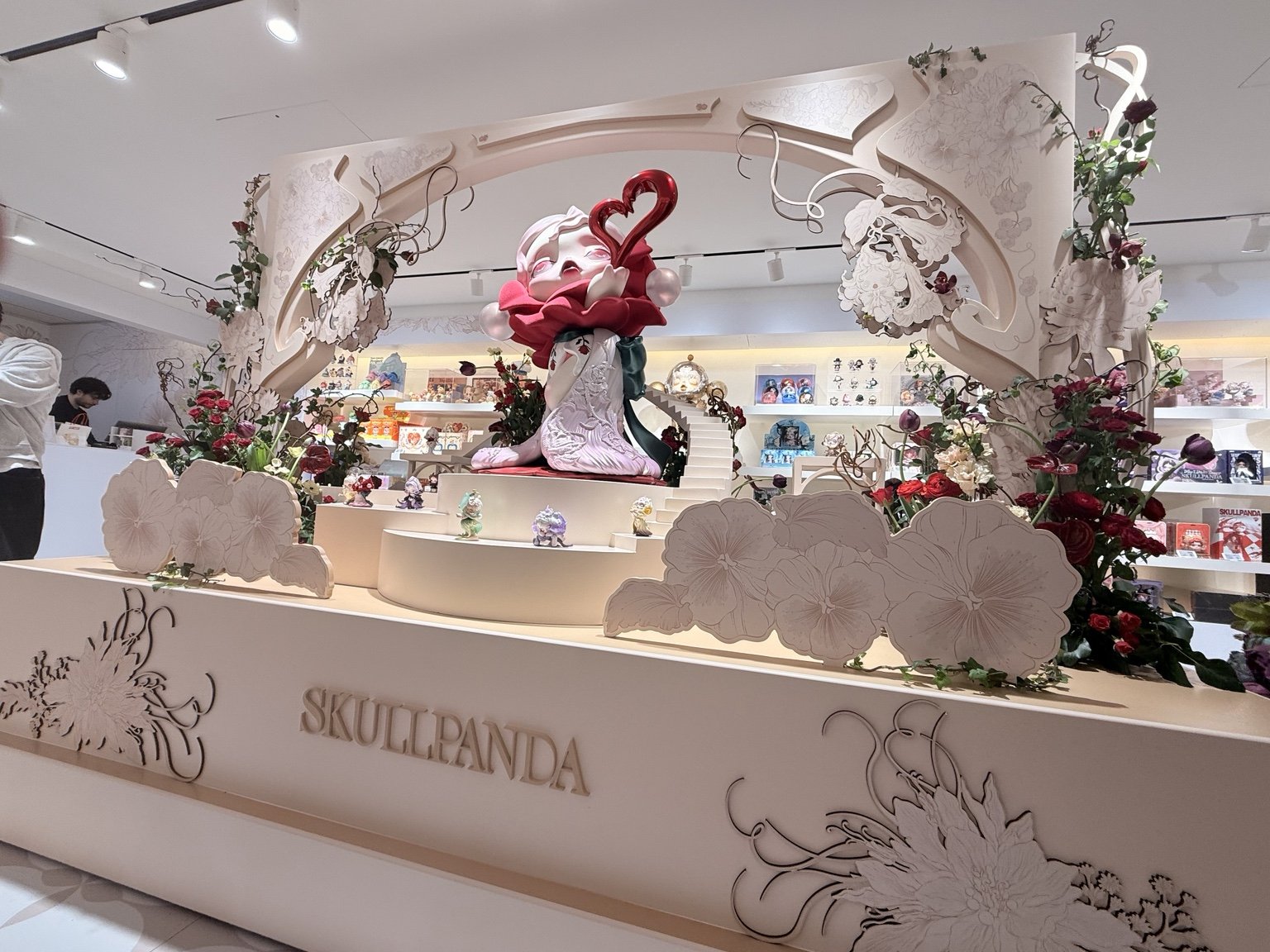
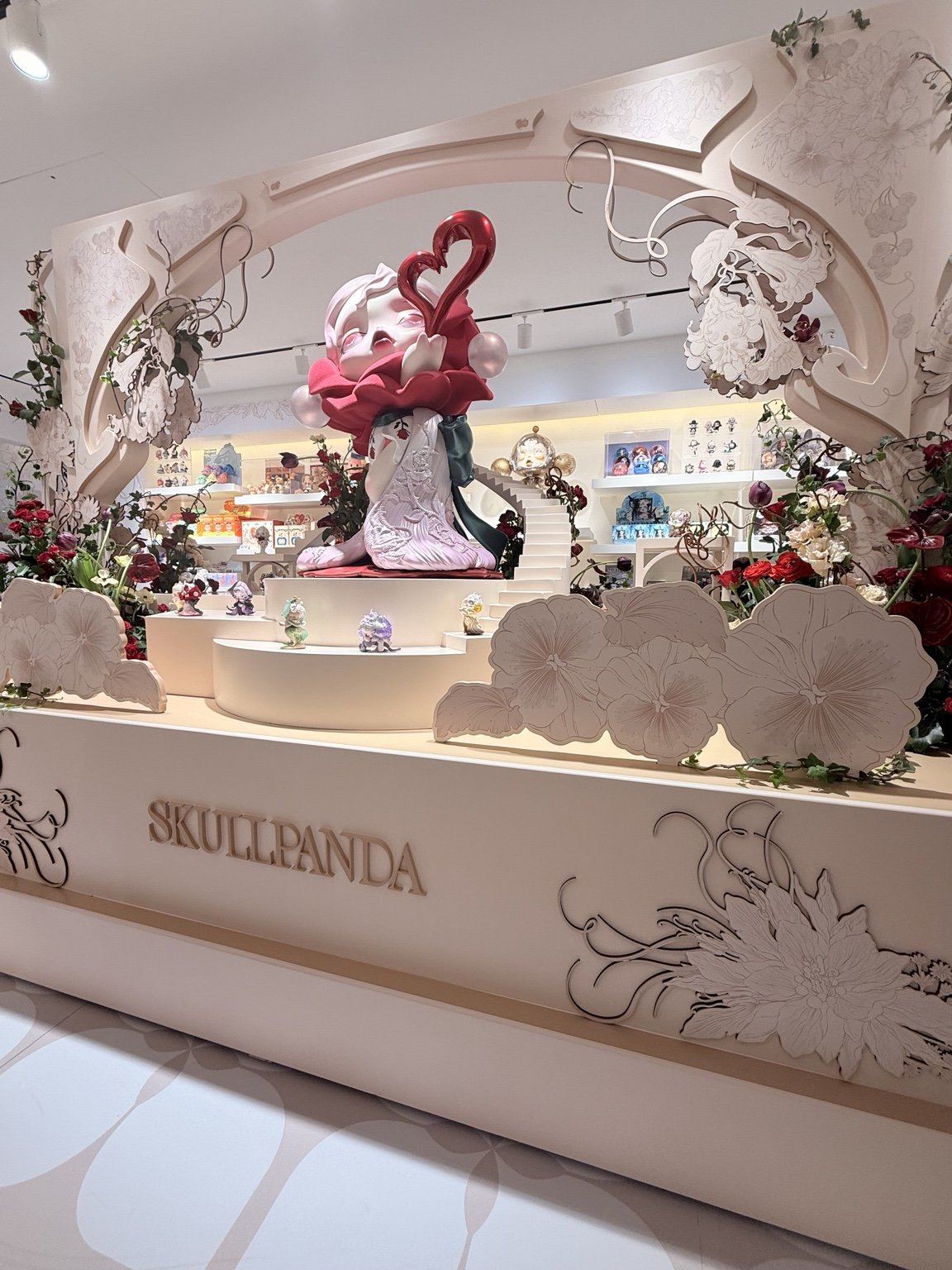
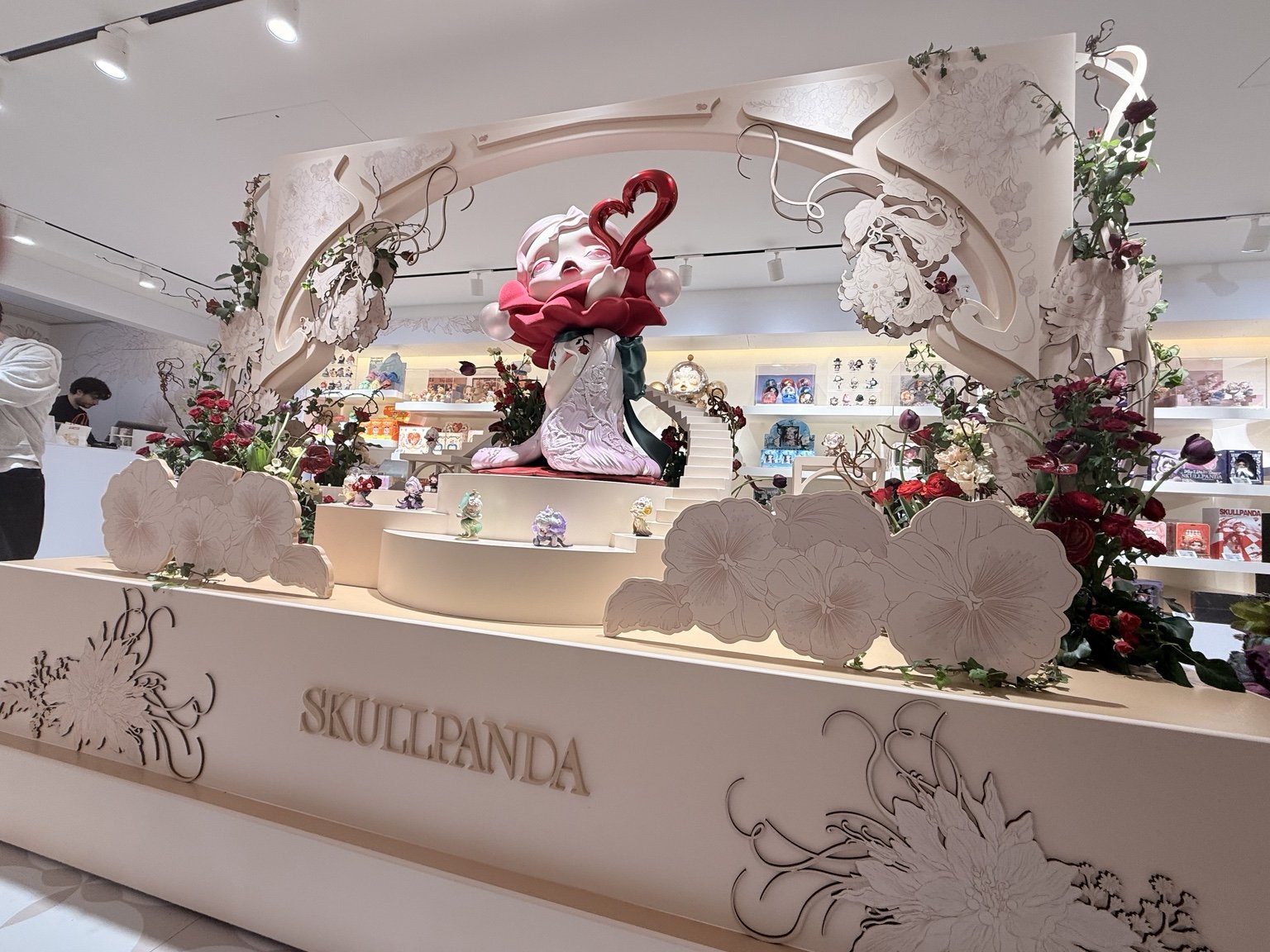
RTIH was invited to an early preview of SkullPanda’s latest exhibition, Petals in Four Acts, ahead of its public opening at the Pop Mart concession on the fourth floor of Harrods’ toy department. This was not a casual drop-in. It was a curated experience built around a single collection, with a clear narrative running through it.
Following our recent visit to Pop Mart’s flagship, where scale, speed, and product volume define the experience, this visit to Harrods had a very different starting point.
That distinction matters because Pop Mart does not operate on a single retail model. Alongside its larger destination stores, the brand is increasingly present through smaller concessions and automated ‘roboshops’, including at Selfridges. Each format serves a different purpose. Flagships drive scale and discovery. Robo shops capture convenience and impulse. Concessions allow for something more controlled.
A different side of POP MART in London
Arriving via a walk through St James’s Park, the setting almost unintentionally set the tone. Moving from open green space into one of London’s most recognisable retail environments mirrored the transition the exhibition itself was trying to create, from nature into narrative.
The space is small. That is the first thing to understand. This is not an extension of the flagship experience, and it is not trying to be. Instead, it has been deliberately stripped back and rebuilt around a single idea.
That idea is Petals in Four Acts.
However, it is not a fully closed or single-brand environment. Around the central SkullPanda exhibition, Pop Mart still offers a selection of its broader range, including smaller displays of its most popular IPs such as DIMOO and LABUBU. These sit at the edges of the space, reinforcing that this is still a retail environment, just one with a clear focal point.
The result is a hybrid. At its core, a themed, narrative led exhibition. Around it, a more familiar retail layer that keeps the experience accessible.
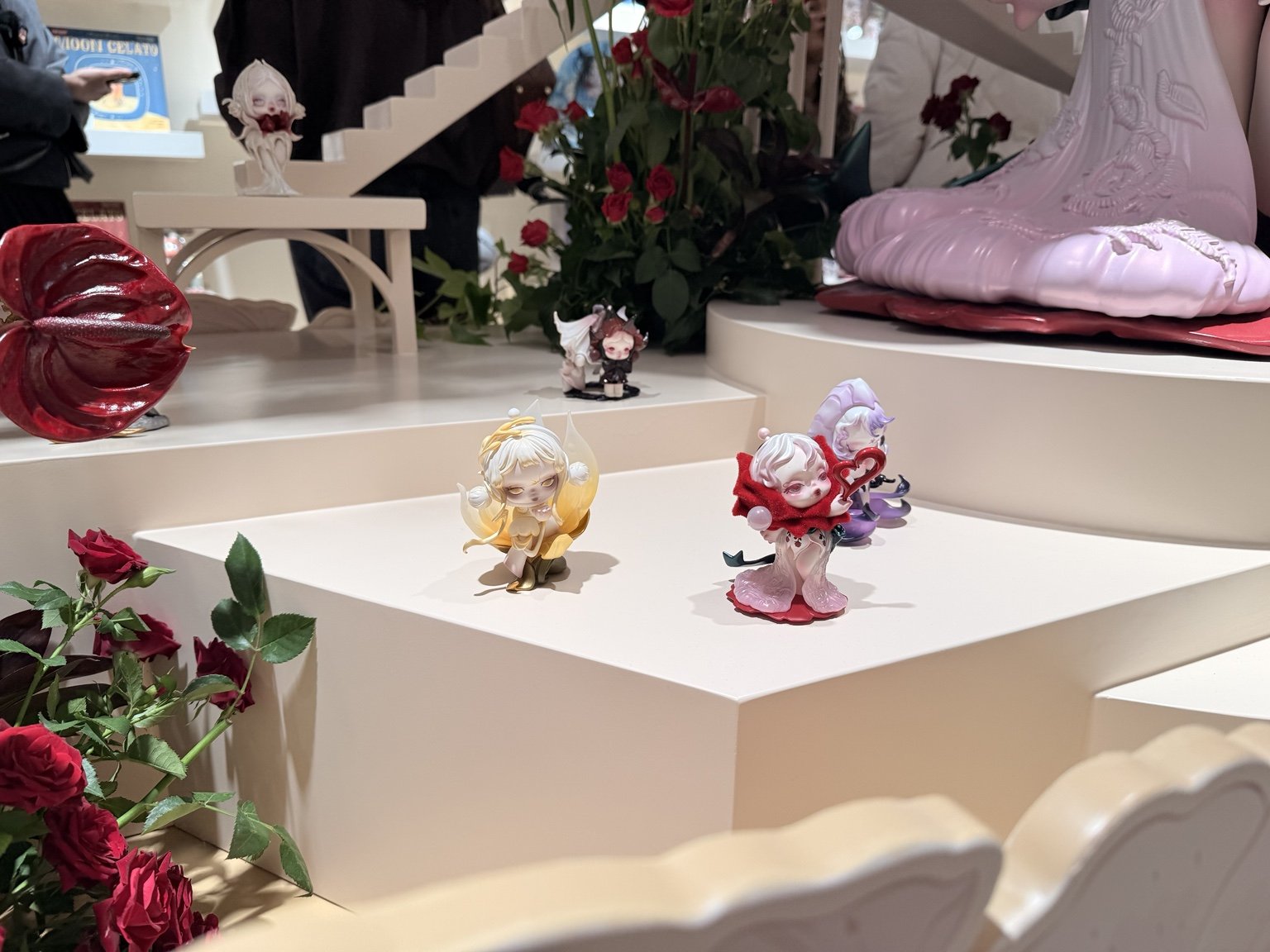
SkullPanda, created by artist Xiong Miao, has become one of Pop Mart’s most recognisable ranges, but also one of its most layered. Each figure sits within a wider conceptual framework, often exploring identity, emotion, and transformation. This exhibition leans fully into that positioning.
Flowers are not simply decorative here. They carry meaning. Across the collection, there are clear literary references, drawing on Shakespearean works and themes of love, fate, innocence, ambition, and loss. Whether every visitor picks up on each reference is almost secondary. What matters is that the depth exists, and it changes how the figures are perceived.
From the moment we arrived, the experience felt structured rather than transactional. As part of the exhibition, two performers dressed in line with the theme remained in character throughout, helping to set the tone and guide the narrative of the space. They will not be a permanent feature, but as an opening touchpoint, it worked.
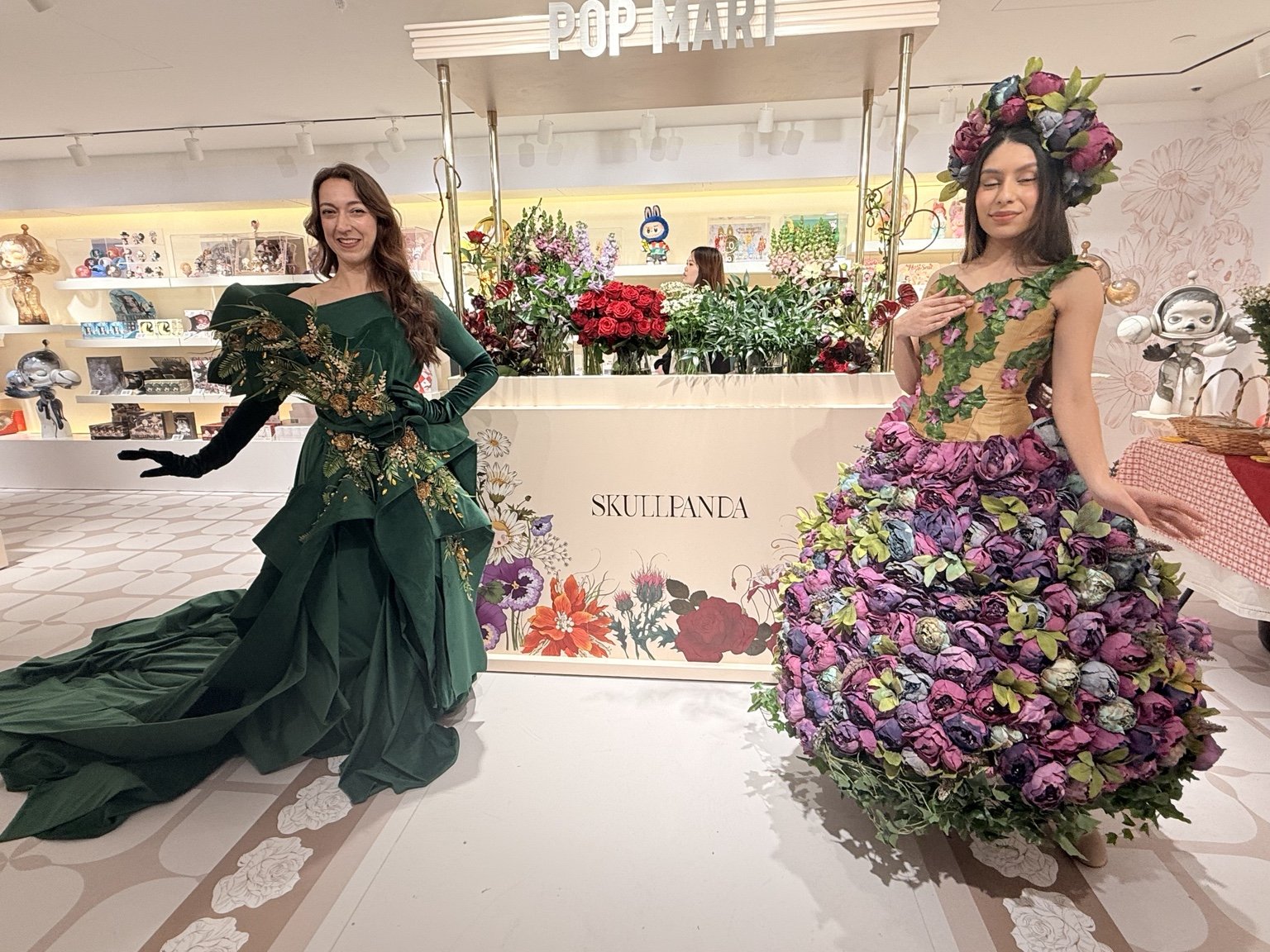
Alongside this, Pop Mart’s retail staff were present and actively supporting the experience, managing purchases and assisting customers. The two roles sat clearly side by side.
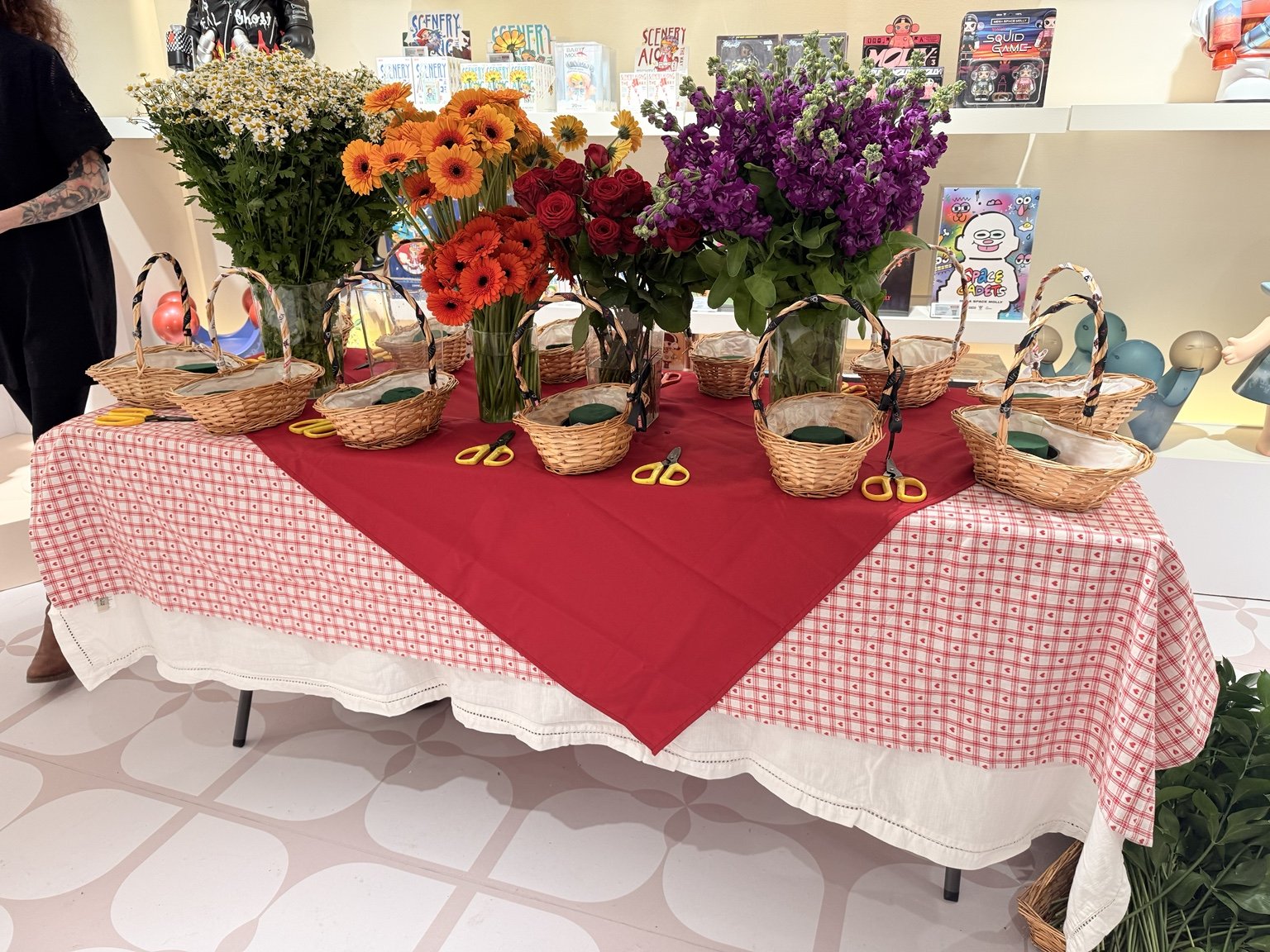
In many retail environments, this kind of theatrical layer risks feeling forced. Here, it didn’t. It worked because it was consistent with everything else in the space. There were small but effective interactive elements. Guests were invited to take part in basket weaving with fresh flowers, in line with the exhibition’s theme, adding a tactile layer to the experience without overcomplicating it.
How the story shapes the experience
What stood out most was how people engaged with the collection. People I spoke with discussed storylines, symbolism, and emotional connection. The narrative layer was doing the work.
This is where SkullPanda really starts to stand out. There is something for the more casual shopper who just wants to pick up a blind box and enjoy the moment, but there is also a more collectable end of the range where pieces are genuinely seen as small works of art.
That balance is what makes it interesting. You can dip in without overthinking it, or you can go much deeper and start building a collection that feels more considered. This exhibition leans into that nicely, showing both sides without making it feel complicated.
For us, that shift happened pretty quickly. We went in planning to have a look and take it all in, and within minutes we had our first SkullPanda blind box from the You Found Me series. We pulled Sneaky Chestnut, which we are slightly obsessed with already.
It is that familiar blind box thrill, but in this setting it feels a bit different. You are not just picking something up on impulse, you feel more connected to it because of everything going on around you.
A space that suits the concept
Being in Harrods also adds something. The setting makes the whole thing feel more considered, more elevated, and it fits with what SkullPanda is trying to do as a range.
It is worth knowing what you are walking into, though. This is a small, curated concession. You are not going to find the scale or range of the flagship, and it is not trying to compete with that. If anything, the smaller space helps the concept land more clearly.
For us, it worked. It is less about browsing everything and more about stepping into a moment.

Comments (0)
No comments yet.