.png)
A study covering the UK’s FMCG industry has identified which brands are revitalising this space and how they are doing it.
The Challenger 50 FMCG 2025 report, launched by media agency MNC, has found that independent companies are turning the sector upside down and outperforming established players and supermarket own label products.
The research combines data and analysis from MNC, Tracksuit, NielsenIQ and Beauhurst with FMCG challenger brands being defined as having less than £100 million in retail sales value (RSV) in the UK and at least 20% growth year-on-year for at least two years in a row.
Those that matched these criteria were then rated according to performance across sales value, percentage growth over a two-year period, weighted distribution, the year founded, and prompted awareness.
They were ranked by points against each metric, with the highest receiving 50 points and the lowest scoring one point. These scores were added together then aggregated to provide a final overall index ranking.
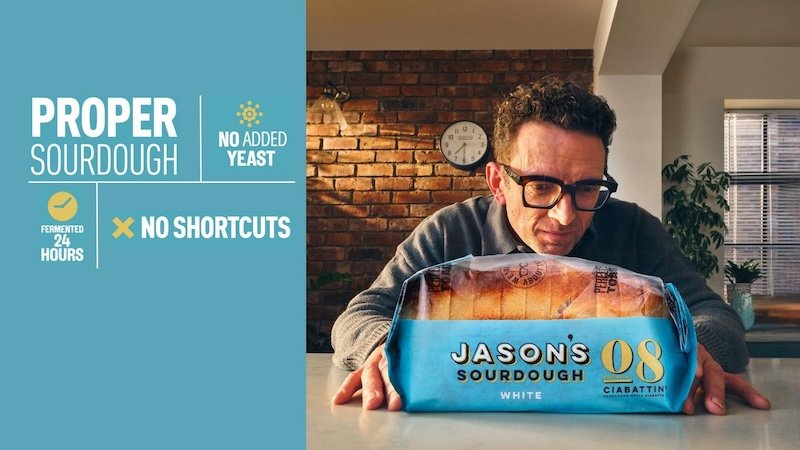
The top performing brand with the highest index score across all metrics was British vodka venture Au Vodka founded by school friends Charlie Morgan and Jackson Quinn from Swansea in Wales, followed by Jason’s Sourdough, a family business founded by Jason Geary which has shown stellar YoY sales growth. Ranked third was Biotiful Gut Health, a Kefir yogurt and milk brand founded by Natasha Bowes .

Challenger 50 FMCG 2025 brands demonstrated a rate of growth far in excess of the rest of the industry with an average YoY sales growth rate of 48.9%, compared to just 3.4% in the rest of the industry combined.
The study found that entrepreneurial ambition is critical to FMCG innovation and business growth with 54% of the top 50 being independent companies, compared to 30% which are owned by large enterprises, 12% backed by private equity, and 4% owned by publicly traded companies. However, 95% of the top 50 brands were formerly independent, having been started by entrepreneurs before acquisition - three of them Biotiful, Shaken Udder and Merchant Gourmet in the last 12 months.
The research also suggests that these new brands are winning over consumers by ‘premiumising’ and improving existing FMCG categories or by creating entirely new sub-categories. The study found:
24% of the businesses are B Corp
38% have at least one female founder (vs 19% of companies nationally)
76% are British (66% English, 6%, N Irish, 4% Welsh)
88% of the brands would be considered ‘clean label’ or non-UPF
92% are food and beverage products, 4% pet-related and 4% household products
MNC Director and former FMCG brand founder, Joe Benn, says: “Innovative independent FMCG companies are grabbing our attention like never before and they have become the drivers of growth within an industry that is increasingly significant to the wider economy.”
“We’ve pulled together multiple, transparent sources of data and analysis from Tracksuit, NielsenIQ and Beauhurst to understand how and why, making the Challenger 50 FMCG 2025 from MNC, the most comprehensive study into which FMCG brands are succeeding in the UK."
“Our study indicates that despite the cost-of-living crisis, consumers are looking for micro moments of pleasure and are voting for innovation with their wallets. All of the brands in the top 50 offer genuine differentiation or improvement on what’s gone before. You can also see that the best legacy businesses are acquiring and cultivating challenger brands as a means to drive growth.”
Other notable performers
The brand with the strongest sales growth (one of the five key metrics of success) is BuzzBallz, a US-based canned cocktail brand, one of the four US-origin challengers in the top 50. The brand with the best B Corp score is Cook, the Kent-based company founded in 1997 by Edward Perry and Dale Penfold.
Meanwhile, the brand with the best brand metrics is Filippo Berio, an Italian olive oil company which is one of the oldest brands categorised as a challenger. The brand that was ranked the tastiest is Vadasz Deli and Challenger 50 FMCG ranked the most premium was Daylesford Organics.
The top disruptor brands such as Heck Foods, Dash Water and TRIP Drinks grew their equity quickly through distinctive branding, as well as simple and memorable propositions such as wonky fruit and no sugar.
Tracksuit’s Head of Insights, Leanne Tomasevic, says: “Early presence in high signal spaces, combined with the ability to turn commoditised categories into lifestyle choices, has allowed these brands to create distinctive brand worlds that truly stand apart.”
The study found brands that are disrupting existing large household staple categories for example Jason’s Sourdough, St Ewe, Merchant Gourmet have huge headroom for growth by taking more and more share from the incumbents. Meanwhile, others are growing categories from scratch, for example Moju, Biotiful Gut Health and Vita Coco.
Comments (0)
No comments yet.