.png)
It's Friday, the weekend is almost upon us, so let’s kick back and reflect on another eventful week for the retail tech space. Here's your briefing on the most important stories from the past few days, including Sainsbury's SmartShop, VenHub Global, John Lewis, Walmart, Ocado, Mondra, NorgesGruppen, StrongPoint, Amazon, and Waitrose.
1. Sainsbury's SmartShop scan and go solution turns ten following ten store launch in 2016
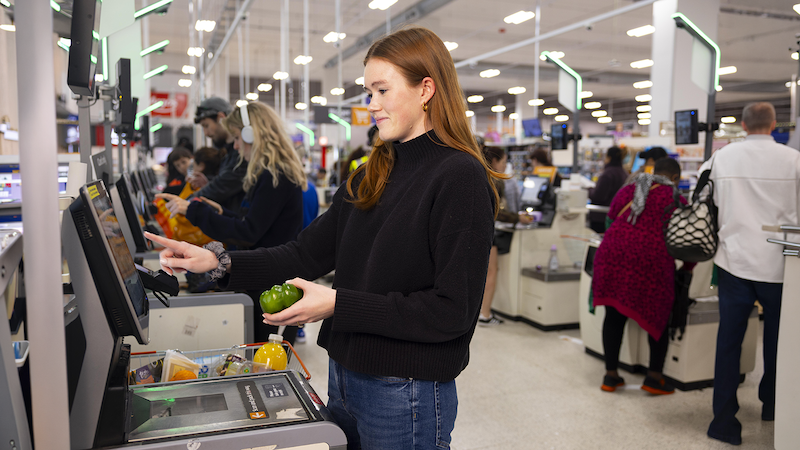
Sainsbury's SmartShop solution notched up a milestone this week. The in-store shopping handset and mobile app, which lets customers scan as they go, meaning they can skip checkout queues, turned ten.
In a LinkedIn post, Shona McGuire, Head of Product (Connected Store) at Sainsbury’s Digital, Tech and Data, said: “This week our team is celebrating 10 years of SmartShop. I’m taking a moment to reflect and thank everyone who has played a part in this leading scan and go proposition over the past 10+ years. So many talented people have defined the product it is today, and the one we continue to build for tomorrow.
She added: “On a personal note, this milestone means a lot. I was fortunate to work on the initial implementation of SmartShop into 10 stores back in 2016, and it’s amazing how it’s grown to be a core shopping experience for many Sainsbury’s customers today. Here’s to the passion, innovation and teamwork that will continue to shape this in-store shopping companion of the future.”
2. VenHub bags deals for six new autonomous Smart Stores across Las Vegas metro area
VenHub Global reports that it has agreements with multiple independent operators for the deployment of six new Smart Store locations across the Las Vegas metropolitan area. These will be installed throughout the year.
The stores operate 24 hours a day without on-site staff and combine robotics, AI driven inventory management, and mobile first checkout. The upcoming Las Vegas deployments will be located in high traffic, easily accessible environments and will feature a curated mix of everyday essentials, snacks, beverages, and travel friendly products tailored to local demand.
“Retail is undergoing one of the most significant transformations in its history,” says Shahan Ohanessian, Founder and Chief Executive Officer at VenHub. “Consumers expect convenience, speed, and access at all hours. Unlike traditional retail infrastructure which has never been able to address this demand, our stores are built to solve this problem.”
“Our Smart Stores deliver a new kind of retail platform that operates continuously, adapts to demand, and removes many of the operational constraints that have limited traditional retail for decades.”
Ohanessian adds: “Las Vegas is the perfect environment to showcase the benefits autonomous retail can deliver to operators and consumers. It is a city that operates around the clock and serves millions of travellers every year. Expanding in Las Vegas will allow us to continue demonstrating how our Smart Stores are meeting real-world demand while providing operators with a reliable, modern retail platform.”
3. UK retailer John Lewis taps TikTok Shop and AI platforms like Google Gemini and ChatGPT
John Lewis is investing in AI powered shopping and says it wants to become one of the first UK retailers to fully adopt and integrate the technology.
The move will see its products served to customers looking for inspiration on AI platforms like Google Gemini and ChatGPT, starting later this year. John Lewis has extended its partnership with commercetools, a digital commerce platform, to utilise its new AI capabilities.
It has also launched on TikTok Shop. Initially a 90-day pilot timed to help with Mother’s Day gifting, the trial focuses on a curated edit of beauty and gifting items, instantly shoppable through the platform. This includes a final drop of its Mother’s Day Beauty Box, featuring a collection of beauty products from brands including Jo Malone London, Augustinus Bader and Estee Lauder.
4. United Food and Commercial Workers International Union slams Walmart's big ESLs move
The United Food and Commercial Workers International Union (UFCW) has hit out at Walmart’s plans to deploy digital shelf labels chainwide and called on US lawmakers to bring in legislation banning the technology.
“Walmart’s move to accelerate its roll-out of electronic shelf labels coincides with Congress and states considering legislation that would ban this technology and the predatory pricing practices that go along with it,” says Ademola Oyefeso, VP at UFCW International, which represents 1.2 million workers in the grocery, meatpacking, food-processing, health care, cannabis and retail industries, among others, in the United States, Canada and Puerto Rico.
“No retailer should beat lawmakers to the punch and get to escape accountability for the harms these technologies will cause consumers and workers.”
After rolling out digital shelf labels to approximately 2,300 US locations, Walmart is set to deploy the technology estate wide within the next year.
In an online post, the retailer said: "Walmart stores carry tens of thousands of items, and every single one needs to have a clear, accurate shelf price. Between new inventory, Rollbacks and markdowns, pricing updates stack up fast and can take hours, if not days, to complete."
"Before DSLs, that meant walking up and down aisles swapping out paper tags by hand. Now, associates manage planned price changes through a centralised Walmart system, making it easier to keep shelf prices accurate and aligned with what customers see at checkout."
"Price updates are still people led and support Walmart’s Everyday Low Price (EDLP) promise. Associates review and push approved changes through a secure system, typically outside of shopping hours, so prices remain stable and consistent during the day. That means customers see clear, consistent prices at the shelf that match what they are charged at the register. This builds customer trust."
However, according to Oyefeso, major retailers like Walmart see electronic shelf labels as “the next opportunity to squeeze consumers for every dime they have…With this technology, retailers will be able to hike prices in the shopping rush before a snowstorm or after school lets out. The concept of a fair price no longer exists with electronic shelf labels. And it is not only consumers who will suffer. Workers could see their hours cut or could have to explain price changes to confused shoppers.”
Legislation targeting ESLs has been introduced in some states and at the federal level.
5. Ocado notches up a sustainable first as it taps Mondra carbon accounting and management platform
Mondra, an AI powered platform delivering product level intelligence for food supply chains, reports that Ocado has become its first customer to fully integrate its product lifecycle management system, Click-PLM, with the Mondra carbon accounting and management platform.
The integration enables automated, product level Scope 3 emissions accounting across Ocado’s food retail operations, connecting live product and volume data directly into its carbon reporting processes.
It can now track changes in its product portfolio dynamically and use carbon data to support sustainability decision-making more efficiently.
Laura Fernandez, Senior Sustainability Manager at Ocado, comments, “Integrating our product lifecycle data with Mondra allows us to automate key elements of our Scope 3 emissions accounting and better understand how changes in our product portfolio affect our carbon footprint. This supports more informed decision-making as we continue to develop our sustainability approach.”
6. 2026 RTIH Innovation Awards winners to be announced at event in London on 4th November
The eighth edition of the RTIH Innovation Awards is now open for entries.
The awards celebrate global tech innovation in a fast moving omnichannel world. Our latest winners will be revealed at the 2026 RTIH Innovation Awards Ceremony, taking place at The HAC in Central London on Wednesday, 4th November.
FAQs 👉 here.
Categories and entry forms 👉 here.
Key dates for 2026
Friday, 20th February: Awards open for entries
Friday, 2nd October: Awards entry deadline
Tuesday, 6th October: 2026 finalists revealed
Wednesday, 7th October - 20th October: Judging days
Wednesday, 4th November: Winners announced at the 2026 RTIH Innovation Awards Ceremony, taking place at The HAC in Central London
7. Norwegian retailer NorgesGruppen inks deal with StrongPoint for CashGuard solutions
StrongPoint has announced an agreement with Norwegian grocery retailer NorgesGruppen involving its proprietary cash management solution CashGuard. The value of the deal is approximately NOK 120 million. Roll-out starts in 2026 and is expected to end in 2028.
NorgesGruppen is Norway’s largest grocery retailer by market share and runs approximately 2,000 stores across multiple brands throughout the country.
The agreement covers product replacements in some of its stores where the existing CashGuard units have reached the end of their life, while many other locations continue to use the same solutions that are still within their life cycle.
“This agreement highlights that grocery retail is a highly resilient industry that continues to invest in technology,” says Jacob Tveraabak, CEO at StrongPoint.
”It also demonstrates that even in markets such as Norway, where cash usage is among the lowest in Europe, grocery retailers still see clear operational benefits from cash automation as part of their store operations. We are particularly proud to continue supporting NorgesGruppen, one of our most long standing customers.”
8. Amazon stumps up AU$750 million for new 150,000 sq m robotics fulfillment centre in Australia
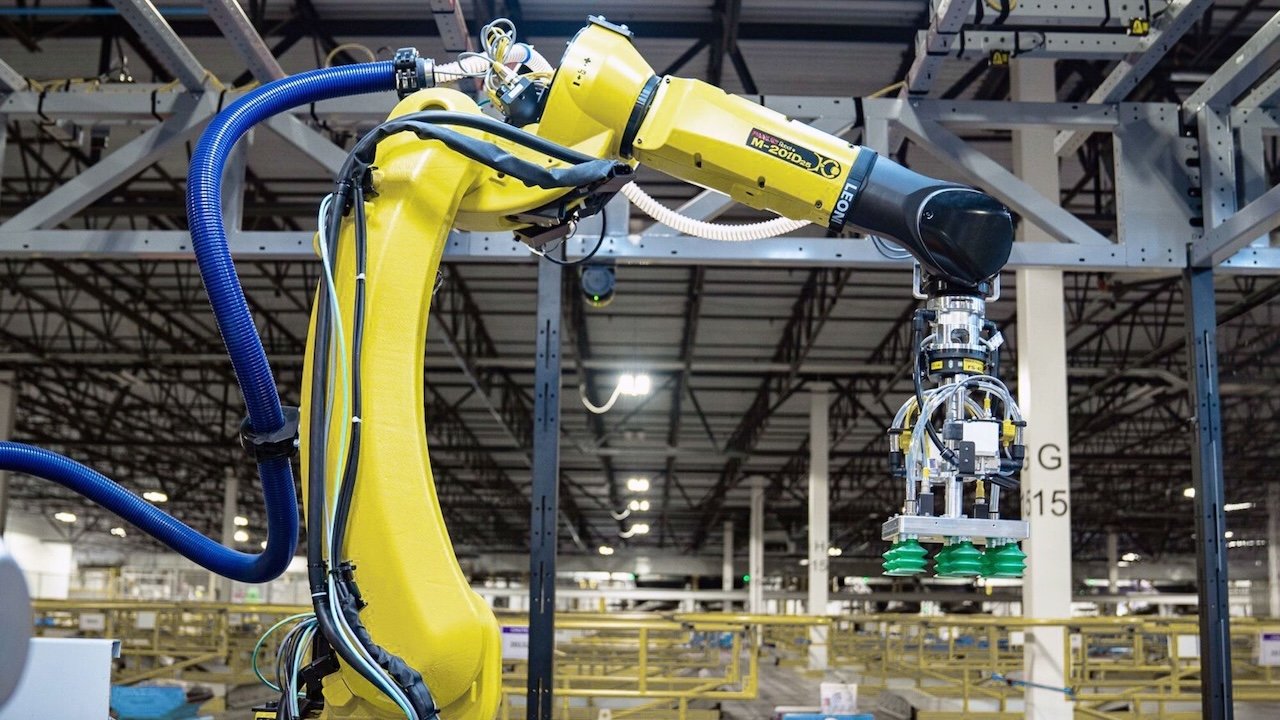
Amazon Australia has announced plans to invest more than AU$750 million building a new robotics fulfillment centre capable of processing over 125 million packages per year.
Targeted for completion in 2028, the site in Brisbane, Queensland will cover 150,000 square metres across four levels, with a floor size equivalent to 120 Olympic swimming pools.
It will have the capacity to house up to 15 million of the smaller items sold on Amazon.com.au such as pantry staples, beauty products, electronics and toys. When operating at full capacity, the site will have the ability to process over 125 million packages per year.
“People are at the heart of our operations, and by combining innovative robotics technology with skilled local talent in this state-of-the-art site, we’re building a workplace where people and technology work hand in hand to deliver for our customers,” says Wayne Angus, Amazon Australia’s Director of Operations. “This investment demonstrates our commitment to Queensland customers and our confidence in the state’s growing economy.”
9. Waitrose taps Satalia AI powered technology for online grocery delivery route optimisation push
Waitrose has partnered with AI solutions specialist Satalia as it looks to optimise online delivery routes.
The aim here is to better plan delivery schedules, reduce travel times, and minimise fuel consumption across its fleet.
“Delivering the best possible experience for our customers has always been at the heart of what we do,” says James Lee, Head of Fulfilment at Waitrose “Working with Satalia allows us to offer even greater convenience, while taking another important step toward our goal of reducing emissions and operating more sustainably.”
“By harnessing AI powered technology, we can now offer customers more precise and convenient delivery times while significantly reducing our environmental impact. This is a brilliant example of how technology can help us deliver on our promises of both exceptional service and sustainability,” says Pav Kalia, Head of Change Delivery and Technology.
10. Grubhub scores a drone food delivery first in New Jersey as it kicks off three month pilot
Grubhub and Dexa have announced a three-month pilot involving food delivery services via drones to customers in Green Brook, New Jersey.
In a LinkedIn post, Grubhub said: “This marks the first time commercial food delivery by drone will be available in the state and our first time offering drone delivery, thanks to our fully integrated programme with Dexa (Drone Express), launching 18th March at Wonder's Green Brook location.”
Customers within 2.5 miles will have the option to select drone delivery at no additional cost, enabled by Dexa’s DE‑2020 aircraft, one of only a handful of FAA Part 135 Air Carrier certified drone systems operating in the US.
“This initiative represents an important step toward advancing safe, efficient, and scalable last mile logistics,” Grubhub added.

Comments (0)
No comments yet.