Walmart head honcho John Furner looks to draw a line in the sand on AI, retail technology and pricing
John Furner, President and CEO at Walmart, has written an open letter to the US retail giant's customers about AI and pricing. "For more than 50 years, our pricing principle has been Every Day Low Prices (EDLP). Prices can change. We lower them when we can pass savings along. Sometimes they rise because an item costs more to buy or transport,” he writes.
“But using someone’s income, shopping history or moment of need to charge them more would violate the EDLP promise our business model is built on. We won’t do it. YOU are at the heart of our why and our relationship with you has always been built on trust. For decades, our associates have built that trust, one interaction at a time. So, as technology improves, we’re putting the same attention on trust and serving you as we do when you walk into our stores and clubs."
He adds: "I've heard concerns about companies using that information and technology to charge you more. want to tell you where we stand: We price the product, not the person. Many of you have seen the digital shelf labels in our stores and some have asked why we have them. A shelf price should match what rings up at checkout. Digital shelf labels help us do that more consistently by displaying the right price. They also save associates time replacing paper tags. It may sound like an easy task, but as someone who has had to change those paper tags by hand over the years, I can tell you it’s a time-consuming and unrewarding task. Our associates would much rather be helping you, our customers."
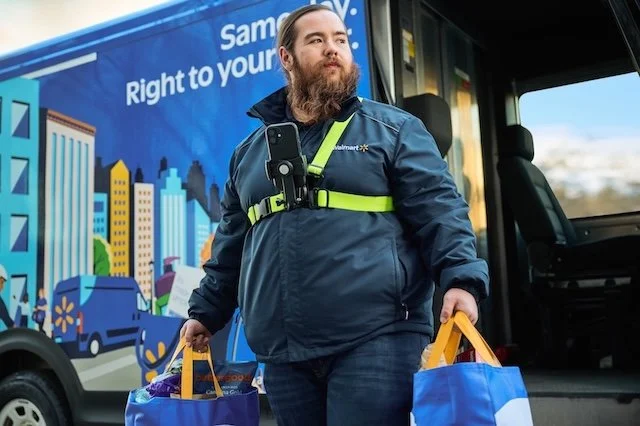
AI, Furner notes, has added new ways for Walmart to serve its customers and members. But there are also questions about the information it has access to.
“Understanding our customers and members is what makes us special and allows us to better serve them. For years, that has taken place in our stores and clubs as we help each customer with their individual needs. We want to offer that same level of personalised care when our customers shop online with Sparky, our AI shopping assistant. When you engage with Sparky, that’s an invitation to serve you better, not to use your personal information to set a personalised price. We’ve never used the relationships our associates have with customers to charge more, and we won’t do that with AI,” Furner says.
He concludes: “With that in mind, I want to share three commitments you can count on as technology changes: We don't set different prices based on who you are or the time of day, and we won't. Your income, shopping history, urgency or what we think you could pay won't change the price. And whether you’re buying groceries or electronics on a hot afternoon or in a sudden rush for an item, it's never a reason to charge you more. We'll hold our shopping tools to the same promise.”
“We won't use the information you share with us on Sparky or otherwise to raise your price or hide lower priced options that meet your needs. We’ll continue to use your information responsibly and respect your choices. You decide whether to share additional details for more personalised help. We’ll continue to be clear about how we use that information, protect it and honor the choices you make. When you do share, we will focus that data on ways that better serve you. Our people will continue to oversee pricing, and we'll monitor and test our technology against these commitments.
Drawing a line in the wrong place?
IBM's Elaine Parr argues that the letter bundles together two different things. Furner panders to consumer paranoia and to a muddled understanding of AI, and of the data we already share.
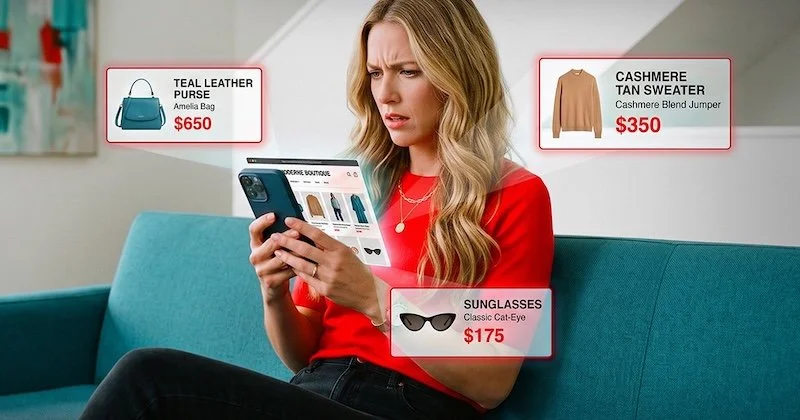
In a LinkedIn post, she said: "John says a hot afternoon or a sudden rush will never be a reason to charge more. Supply and demand is a free market principle. I’ve never seen that mythical American kid selling homemade lemonade but I bet they sell more for more when it’s hot and sunny. A price rise for everyone is dynamic pricing. If a system identifies that I urgently need something and quietly charges only me more, that is personal extraction. Time of day pricing balances demand with capacity. Hotels, airlines, ride-hailing do it. So do late-evening grocery markdowns. We tend to like it when the price goes down."
"Prices differ by store format too. None of that is necessarily personalised. Nor does a digital shelf-edge label on its own know who I am. John describes a display that keeps shelf and checkout prices aligned, and saves colleagues changing paper labels. Connect it to cameras, computer vision, my identity, my purchase history and it becomes the visible front end of a system that knows a great deal about me."
She added: "The intelligence sits in the data, the model and the rules governing what that model may do. My loyalty card already holds years of purchases. What I buy. How often. Brand switches. Promotion response. Apparent price sensitivity. AI did not create that data. It makes it easier to combine, interpret and act upon at scale."
"Loyalty pricing blurs the line too. One Clubcard or Nectar price for every member is segment pricing. A voucher selected from my history gives me a personalised effective price, whatever the retailer calls it. The Bank of England includes loyalty schemes among simple forms of personalised pricing. So the strongest part of John’s letter is the promise not to use personal information to raise my price or conceal a cheaper suitable option. That is where the line belongs."
"Use AI to respond to costs, stock, capacity, perishability, competition and aggregate demand. Use my data to understand, recommend and reward. But do not use it to estimate the maximum amount you can extract from me. Having my data is not permission to use it for every purpose. The shelf edge label is not the thing to watch. The decision engine behind it is."
2026 RTIH Innovation Awards
AI will be a key focus area at the 2026 RTIH Innovation Awards.
The awards are now open for entries and celebrate global retail technology innovation in a fast moving omnichannel world.
Our winners will be revealed at the 2026 RTIH Innovation Awards Ceremony, taking place at The HAC in Central London on Wednesday, 4th November.
Check out our 2025 winners here.
Our 2025 hall of fame entrants were revealed during a sold out event which took place at The HAC on 16th October and consisted of a drinks reception, three course meal, and awards ceremony presided over by award winning comedian, actress and writer Tiff Stevenson.
In his welcome speech, Scott Thompson, Founder and Editor, RTIH, said: “This is the awards’ fifth year as a physical event. We started off with just 30 people at the South Place Hotel not far from here, then moved to London Bridge Hotel, then The Barbican, and last year RIBA’s HQ in the West End.”
“But I’m conscious of the fact that, to quote the legend that is Taylor Swift, You’re only as hot as your last hit, baby. So, this year we’ve moved to our biggest venue yet, and also pulled in our largest number of entries to date and broken attendance records.”
He added: “This year’s submissions have without doubt been our best yet. To quote one of the judges: The examples of innovative developments across both traditional and digital retail spaces were truly remarkable.”
Congratulations to our winners, and a big thank you to our sponsors, judging panel, the legend that is Tiff Stevenson, and all those who attended our 2025 gathering.