Project portfolio management as a response to retail complexity
Retail transformation is no longer delivered through one major programme at a time. A retailer may be replacing point-of-sale systems, expanding ecommerce, introducing electronic shelf labels, improving replenishment, opening stores and modernising fulfilment within the same planning cycle. Each initiative may be justified on its own. The difficulty begins when they compete for the same budgets, specialists, suppliers, store teams and deployment windows.

Project portfolio management helps retailers see change as one connected investment portfolio.
Complexity appears between projects
A POS rollout may depend on the same integration team needed by a loyalty platform. A store refurbishment can clash with shelf-label deployment, staff training and seasonal trading restrictions. A forecasting project may be ready but unable to create value because product or inventory data is changing elsewhere. These conflicts rarely sit inside one schedule. They become visible at portfolio level, where dependencies, resource pressure and cumulative disruption can be assessed together.
For retail leaders, the question is not only whether individual projects are well managed. It is whether the organisation can deliver the full combination without weakening customer service or store operations. A portfolio can be overloaded even when most projects report green.
Prioritisation must reflect retail reality
Retailers cannot implement every worthwhile idea at once. Store teams cannot absorb unlimited process change, specialists cannot support every deployment simultaneously and major releases cannot always take place during peak trading periods. Project selection must consider strategic value alongside cost, urgency, risk, resource demand and the effect on customers and frontline employees.
A portfolio process makes those trade-offs explicit. It distinguishes mandatory work from initiatives that can be rescheduled and shows when several projects should be coordinated as one programme. The aim is not more bureaucracy, but stopping projects from entering delivery without a realistic view of what they require.
Common governance, different delivery methods
An ERP implementation may follow a controlled plan, a mobile product may develop iteratively, and a store rollout may repeat the same sequence across hundreds of locations. These projects should not be forced into one methodology, but leadership still needs consistent information about ownership, milestones, budgets, risks and expected benefits.
Effective PMO software for retail transformation can provide this governance layer. Project charters, approval paths, recurring reviews and reporting templates create comparable information, while teams retain delivery structures suited to their work. This matters when technology, operations, property, finance, marketing and suppliers participate in the same portfolio.
Portfolio data must stay close to operations
A portfolio view is useful only when information is current. In retail, important updates often originate during store visits, installations, pilot launches or warehouse deployments. If progress is transferred later into a spreadsheet or presentation, leaders work from an outdated picture.
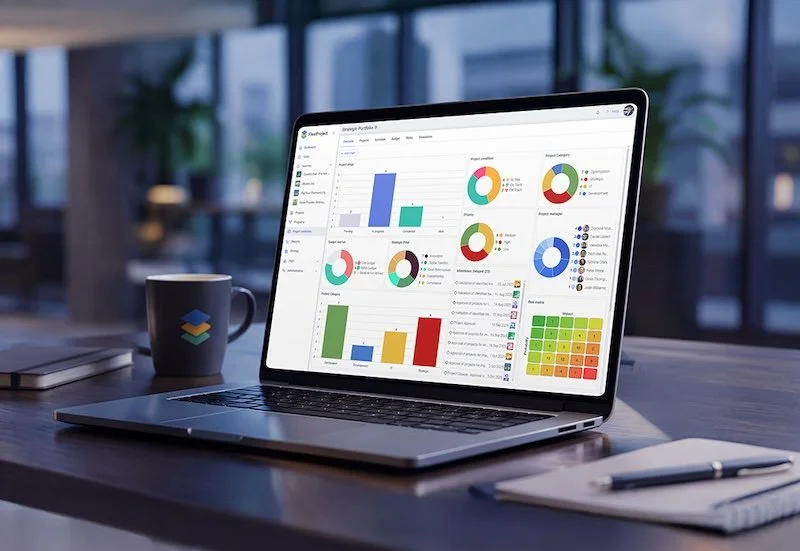
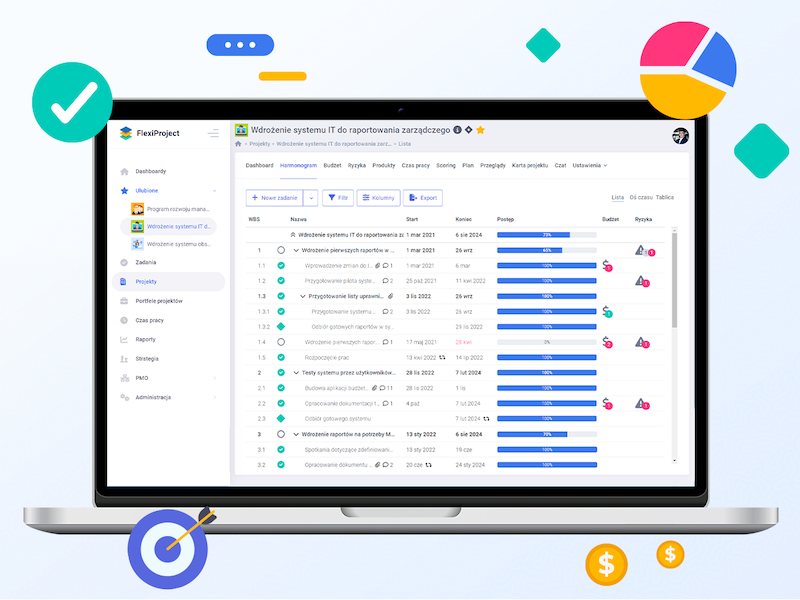
FlexiProject combines operational project delivery with strategic portfolio management. Teams can manage tasks, schedules, budgets, risks and documents, while PMOs and executives can review roadmaps, milestones, financial data, scoring, risks and reports. Its mobile application lets users check tasks, change statuses, add comments and attach photographs or documents from a smartphone, moving information from the store floor or implementation site into the management view.
FlexiProject is available in 28 languages, including separate UK and US English versions.
Turning retail change into a managed portfolio
A retailer can create separate portfolios for store technology, e-commerce, supply chain, customer experience or strategic transformation while allowing the same project to appear in more than one perspective. A unified commerce initiative may belong to both the customer experience portfolio and the core technology programme. A roadmap can show timing and dependencies, while reports bring together delayed milestones, financial forecasts and project risks.
This is the practical value of a modern PPM system: it connects the detail required by project teams with the information needed by leadership. Project scoring supports comparison before investment decisions, recurring reviews maintain accountability, and aggregated risk or budget data helps management intervene before local problems become programme-wide disruption.
Project portfolio management does not remove retail complexity. It makes it visible early enough to manage. Leaders can sequence deployments around trading constraints, protect scarce expertise, stop low-value work and focus investment on initiatives that support the operating model. The outcome should be better decisions about what to launch, delay and realistically absorb.