.png)
November is done and dusted, December is up and running, so let’s kick back and reflect on another eventful month for the retail systems space. Here's your briefing on the most important stories from November, including Retail Technology Show 2026, Primark, Ocado Group, Kroger, Whole Foods Market, Snappy Group, Waitrose & Partners, Polytag, Starship Technologies, and Uber Eats.
1. Retail Technology Show 2026 open for registrations as event returns to London ExCel in April
Registration is now open for the 2026 edition of Retail Technology Show. Taking place on 22nd and 23rd April at London’s ExCeL, RTS is gearing up to welcome over 16,000 senior retail professionals to the event.
With a new disco theme, RTS 2026 will bring together retail’s movers and shakers and the hottest tech redefining the sector, helping retailers harness disruption to fuel growth and power long-term performance.
Over 450 tech providers will showcase solutions covering every part of retail - from agentic AI and retail media to supply chain evolution and next-gen customer engagement and loyalty.
As well as Start Up Superstars, which spotlights new tech from the startup community, it will also feature a new dedicated Cyber & Loss Prevention Zone. This will feature cutting-edge innovation to help retailers navigate rising cyber risk, prevent loss, reduce crime and keep colleagues and customers safe.
The conference programme, meanwhile, will provide a platform for retail’s brightest minds to discuss the hottest topics and issues shaping the sector. 125+ industry experts - from retail leaders and brand trailblazers to thought leaders, analysts and influencers - will take to the stage, covering key topics selected and vetted by an advisory board.
2. Primark launches proof of concept for cash and card payments self-checkouts at its York store
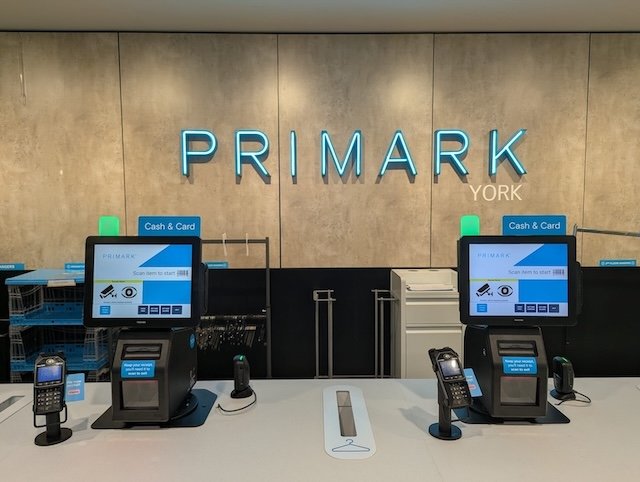
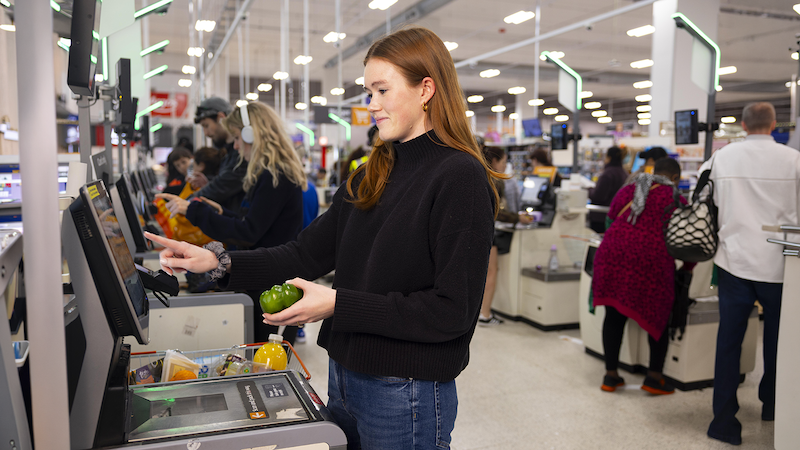
Primark has gone live with a proof of concept for self-checkouts that accept both cash and card payments at its store in York.
The retailer started to roll-out self-checkouts across its stores in 2022. But while some shoppers welcomed the quicker and easier process, others were unhappy about the limited number of traditional tills and the inability to pay with cash.
So it’s no great surprise to that this trial is getting underway, and it will be interesting to see whether it will move beyond the York store and across the UK estate.
In a LinkedIn post, Connor Button, Product Leader at Primark, said: “An amazing thing happened in York this week; the launch of our proof of concept for cash amd card self-checkouts.”
He added: “A fantastic initiative where Technology and Retail Operations have collaborated together to deliver an innovative and cost effective solution that will drive learnings on customer behaviour and operational execution.”
“I'm excited on the positive impact this will have on further elevating our great customer and colleague experience. It has been great working with so many talented people to deliver a fantastic outcome.”
3. Polytag plastic recycling technology live and scaling across Waitrose & Partners stores in the UK
Waitrose has extended its plastic recycling partnership with Polytag into a UK wide scheme.
In doing so, it becomes the first high street supermarket to deploy invisible recycling tags at scale. These have been added to plastic packaing on the majority of its own label fresh milk range.
The move follows a trial announced earlier this year.
Denise Mathieson, Head of Packaging Design & Delivery at Waitrose, said at the time: “We are committed to reducing our impact on the environment and finding innovative solutions to improve the recyclability of our packaging. Joining Polytag's Ecotrace Programme is a significant step forward in enhancing our ability to track and understand the journey of our plastic packaging post-consumption.”
“By leveraging Polytag’s technology, we will gain unprecedented insights into how our packaging is recycled, allowing us to make more informed decisions that support a circular economy.”
“This initiative aligns with our ongoing sustainability efforts and reinforces our dedication to reducing single use plastic waste. We are excited to collaborate with Polytag and other retailers to drive meaningful change at an industry level, ultimately contributing to a more transparent and effective recycling system in the UK.”
In a LinkedIn post, Alice Rackley, CEO at Polytag, said of the nationwide deployment: "Absolutely buzzing. Polytag is live and scaling across Waitrose & Partners. If you’ve ever wondered, “is it worth rinsing out my milk bottles and recycling them…?”, we see you! Keep going! With the Polytag UV tag detection network activated across the UK we are enabling brands like Waitrose & Partners to prove - at barcode level - that their customers are great at recycling."
4. Billion dollar flop: Kroger's failed automated fulfilment strategy with Ocado worse than it appears
Ocado Group’s shares tumbled this month after US grocer Kroger said it would close three underperforming warehouses developed using the UK company’s technology.
Ocado Group will miss out on $50 million of revenue in its current financial year as a result of the closures. It will receive $250 million in compensation, while Kroger expects to incur about $2.6 billion in impairments because of the closures and its automated warehouses not meeting financial expectations.
In a LinkedIn post, Brittain Ladd, a supply chain consultant and former Amazon executive, said: “Few people have a better understanding of what’s actually going on at Kroger regarding their partnership with Ocado than I do.”
“I was the first person to recommend in a research report that Kroger should acquire or partner with Ocado, and I was recruited from Amazon by Kroger to work as an internal strategy consultant. The first question I asked the executive team when I arrived was, “What is our Ocado strategy?” No one had an answer.”
He added: “Fast forward to the present and Kroger has announced that following a comprehensive review, it identified opportunities to optimise its fulfillment network by closing Ocado customer fulfilment centre (CFC) facilities in Pleasant Prairie, Wis.; Frederick, Md.; and Groveland, FL, and will monitor the performance at five other Ocado Group facilities.”
Kroger will also pilot capital light, store-based automation in high volume geographies to improve fulfillment capabilities and elevate the in-store customer experience. “Translation: Kroger is going to implement automated micro-fulfillment centres,” Ladd commented.
He continued: “The brutal truth of the matter is that the partnership between Ocado and Kroger failed because of poor decisions made by Ocado CEO Tim Steiner; multiple executives from Kroger including Yael Cossette and CEO Rodney McMullen; and consultants from several firms.”
5. Target expands partnership with ChatGPT as retail giant looks to reimagine AI powered shopping
Launching this month in beta, Target is promising a complete shopping experience through its app in ChatGPT, with the ability to purchase multiple items in a single transaction, shop fresh food products, and select drive up, pick up or shipping fulfillment options.
Shoppers will also soon be able to request personalised recommendations, browse and build baskets from across the retailer’s full assortment, and purchase through their Target account.
“Everything starts with the guest, and that means meeting them wherever they are, including emerging spaces like ChatGPT, where millions of consumers visit," says Prat Vemana, Executive Vice President and Chief Information and Product Officer at Target.
"We're proud to be one of the first retailers bringing shopping into this new channel, partnering with OpenAI to make discovery through the Target app in ChatGPT as easy and joyful as browsing our aisles. Our goal is simple: make every interaction feel as natural, helpful and inspiring as chatting with a friend."
6. Snappy Group adds Holland & Barrett CFO and former Ocado Group executive Vineta Bajaj to board
Snappy Group, the company behind Snappy Shopper and Hungrrr, has appointed Vineta Bajaj, Group CFO at Holland & Barrett and former executive at Ocado Group, to its board as a Non-Executive Director.
“Convenience is being redefined,” says Bajaj. “It’s no longer just about speed. It’s about service, sustainability, and accessibility. Customers want grocery shopping that fits their lives: 24/7 ordering, loyalty, transparency and support for their local community. The next day full basket delivery had its moment, and that was yesterday.”
Bajaj will join a board that also includes Justin King, former CEO at Sainsbury’s.
“The future of q-commerce is technology that drives profitable, local growth,” she adds.
At Ocado Group, she played a key role in global expansion and capital raises totalling nearly $2 billion. At Rohlik Group she helped double revenues past $1 billion while overseeing strategic investment and transformation.
7. M&S official TikTok Shop launches as a pilot initially featuring a curated range of beauty products
M&S has officially gone live on TikTok Shop. Initially launching as a pilot, this is part of the retailer’s focus to broaden appeal and make it easier for customers to discover and shop whenever, wherever and however they like.
The shop will initially range a curated selection of beauty products, from skincare heroes, including £6 Apothecary Hand Lotion and the retailer’s SKINKIND range (from £7.50) to home fragrance favourites, like the £10 Discover (three million bottles sound and counting).
M&S says that the move comes at a time when it is capturing the attention of the TikTok community with products including this year’s Christmas decorations range, a trench jacket from its summer collection and animal print collarless jacket going viral, leading them to sell out.
Other products that have gone viral include M&S haircare and bodywash, along with disinfectant and laundry offerings. The hashtag #marksandspencer has racked up 104.2k posts on TikTok.
8. Whole Foods Market concept store features Fulfil powered automated micro-fulfillment centre
Whole Foods Market’s new concept store in Plymouth Meeting, PA, USA combines its natural and organic products with Amazon’s name brand groceries and household essentials, with the aim of allowing customers to complete their entire shopping list in one location.
The store features a 10,000-square foot automated micro-fulfillment centre that houses over 12,000 unique items, enabling customers to order additional products via QR codes while shopping in-store or through online delivery and pickup options.
Amazon says that it plans to refine and expand the offering to additional stores over time.
"We've always taken pride in offering a wide selection of natural and organic products, but we understand our customers appreciate the convenience of one stop shopping," says Jason Buechel, Vice President of Amazon Worldwide Grocery Stores and CEO at Whole Foods Market.
"We're making grocery shopping more convenient for customers by thoughtfully blending our grocery offerings and leveraging new fulfillment capabilities in creative ways. This new concept store experience allows customers to get everything on their shopping list in one convenient stop or one online order, combining quality with convenience while still delivering the exceptional shopping experience customers expect."
9. Starship Technologies and Uber Eats teams on last mile delivery with robots across Europe and US
Starship Technologies and Uber Technologies have announced a collaboration to roll-out autonomous sidewalk robot delivery across multiple markets. The partnership will start with the UK in December, followed by multiple European countries in 2026, and US expansion planned for 2027.
Robot deliveries are launching in Leeds, UK, during December. They will be operating at level 4 autonomy and will have the capability to complete deliveries in under 30 minutes for distances of up to two miles.
"Together, we're building the infrastructure that will define the next generation of urban logistics," says Ahti Heinla, co-founder and CEO at Starship Technologies. "Uber Eats has built the world's leading delivery platform, with the widest reach, trusted by millions across 10,000 cities. We bring scalable autonomous technology that works profitably at city scale."
“Autonomous delivery is an exciting part of how we see the future of Uber Eats,” says Sarfraz Maredia, Global Head of Autonomous at Uber. “Together with Starship, we’re bringing this future to life across multiple continents, leveraging our global scale and Starship’s proven autonomy to deliver efficient and affordable experiences for consumers and merchants everywhere.”
10. Auchan Retail works with IBM Consulting on smart green pallets roll-out in warehouses and stores
Auchan Retail is rolling out 50,000 IBM Smart Green Pallets across warehouses and stores.
The pallets are recyclable, lighter than standard offerings, and fitted with connected sensors that track geolocation, temperature and shocks in real-time.
The technology allows the retailer to: better preserve the freshness and quality of products, especially refrigerated products; limit the risk of food waste; reduce the emissions linked to our logistics flows and therefore the environmental impact; improve the daily life of the teams, thanks to lighter and easier to handle pallets.
Franck Descamps, Director of Logistics Procurement at Auchan Retail, says: "We are taking a new step towards a more responsible, more connected and future oriented supply chain."

Comments (0)
No comments yet.