The weight of responsibility when heavy trucks share local roads
The presence of large commercial vehicles on local roadways is a vital part of the modern logistics network that keeps the economy moving forward every day.
Most drivers pass hundreds of heavy trucks during their weekly commutes without giving much thought to the complex dynamics involved in these interactions. However, the massive difference in size and weight between a standard car and a semi trailer creates a high stakes environment.
When a passenger vehicle and a large truck are involved in a trucking accident, the physical consequences are almost always much more severe for the smaller car. This disparity requires a high level of mutual awareness and a commitment to safe driving habits from every person on the path. Understanding the specific risks associated with heavy fleets is essential for maintaining a safe and stable transportation system.
Commercial vehicle safety is a top priority for local residents who share the streets with industrial fleets and delivery trucks throughout the year. Taking a proactive approach to road awareness ensures that the risks of a serious collision are significantly reduced for the whole community. Every driver has a role to play in fostering a culture of respect and vigilance on the shared highway.
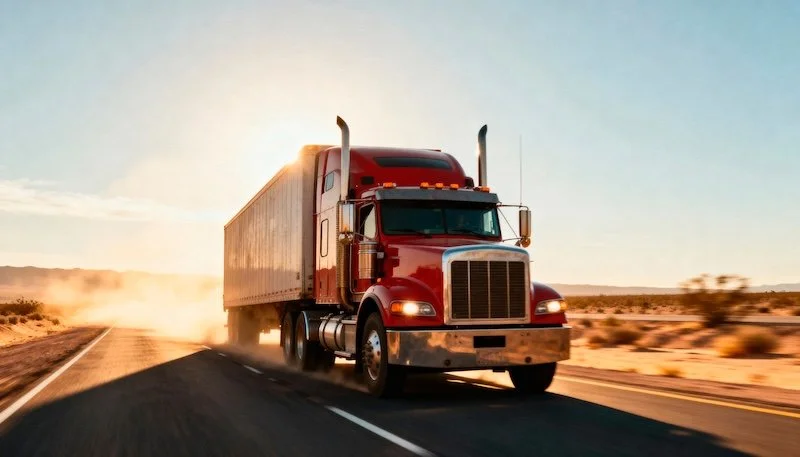
Photo credit; Freepik.
Unique Blind Spots and Extended Stopping Distances
Large commercial trucks are designed for hauling massive loads, which results in a set of physical limitations that every other driver should understand clearly. One of the most significant challenges is the presence of large blind spots, often called no zones, that exist around all four sides of the trailer. If a driver cannot see the truck’s side mirrors, the truck operator likely cannot see them either.
Stopping a vehicle that weighs up to eighty thousand pounds requires a much greater distance and much more time than stopping a standard sedan or suv. At highway speeds, a heavy truck may need the length of two full football fields to come to a complete and safe halt. This physical reality makes tailgating or cutting off a large truck an incredibly dangerous maneuver for any passenger vehicle.
Understanding these mechanical limits allows other drivers to give the trucks the space they need to navigate turns and handle sudden changes in traffic. Providing a wide berth and avoiding the blind spots is the best way to prevent a side swipe or a rear end collision. Respecting the laws of physics is a fundamental part of staying safe while sharing the road with industrial equipment.
Federal Regulations Governing Hours and Maintenance
The commercial trucking industry is governed by a strict set of federal regulations that are designed to ensure that both the drivers and the vehicles stay safe. These rules include limits on the number of hours an operator can spend behind the wheel before they are required to take a rest break. Preventing driver fatigue is a primary goal for the agencies that oversee national road safety today.
Maintenance requirements are equally rigorous, requiring regular inspections and detailed logs for every mechanical component of the truck and the trailer. This includes checking the brakes, the tires, and the lighting systems to ensure they are in perfect working order before a trip begins. A failure in any of these systems can lead to a catastrophic event on a busy public road.
Compliance with these federal standards is monitored through roadside inspections and electronic logging devices that track every mile of the journey. These layers of oversight provide a safety net that protects the public from the risks of poorly maintained equipment or overworked operators. High standards in regulation are what keep the logistics industry functioning with a high degree of professional integrity.
Shared Liability Between Drivers and Parent Companies
When a commercial vehicle is involved in an accident, the legal question of responsibility often extends far beyond the individual person behind the wheel. The parent shipping company may also be held liable for the damages if they failed to properly vet their drivers or maintain their fleet. This shared responsibility ensures that there is a high level of accountability across the entire organisation.
Evidence such as employment records, maintenance logs, and electronic data from the truck’s onboard computer is used to establish the facts of the case. Investigators look for patterns of negligence or a history of safety violations that might have contributed to the specific incident on the road. This comprehensive review is a standard part of the process for resolving high stakes commercial claims.
Holding a large corporation accountable requires a deep understanding of both state and federal laws that govern the operation of commercial fleets. It is a complex legal environment where the stakes are high for everyone involved in the recovery process for the victims. Professional oversight ensures that justice is pursued with absolute precision and care for the affected family.
Local Infrastructure and Modern Logistics Traffic
Modern local infrastructure must be designed to handle the increasing weight and volume of industrial traffic that moves through the region every day. Heavy loads put a significant amount of stress on the pavement and the bridges, requiring a constant cycle of inspections and professional repairs. The city must balance the needs of the shipping industry with the safety of the general public.
Logistics hubs and distribution centres are often located near residential areas, which increases the frequency of interactions between large trucks and passenger cars. This proximity requires careful planning for traffic signals and lane widths to prevent bottlenecks and reduce the chance of a collision. Engineering is the silent foundation that keeps the shared transportation network moving safely for everyone.
As the demand for fast delivery continues to grow, the number of commercial vehicles on the road will likely stay at a very high level. Local governments work closely with transportation agencies to develop smarter routes and improved signage to manage this flow of traffic efficiently. Stability in the community depends on a well maintained and thoughtful infrastructure plan for the long term.
Conclusion
Summarising the dynamics between heavy trucks and passenger cars shows that safety is the result of strict compliance and mutual road awareness. It is a shared responsibility that requires both the commercial operators and the general public to follow the established rules of the path. A commitment to quality in every phase of travel is what protects the whole city.
Strict compliance with federal and local safety standards ensures that the risks associated with large fleets are kept at a manageable and predictable level. By investing in better training and improved infrastructure, we can build a future where commerce and community safety coexist in a healthy balance. Reliable results come from a professional approach to every single aspect of road management.
The final result of a successful safety strategy is a reduction in the number of serious incidents and a more secure environment for every traveler. Taking the time to understand the unique challenges of heavy trucks allows for a much more informed and cautious driving experience. High standards in safety lead to a future that is stable, dry, and completely secure for everyone.