Gen Z shoppers get physical and Ikea thinks small: presenting the retail technology week in numbers
Do you like numbers? Do you like retail tech news? Then this is the article for you. Including Snapchat, easyGroup, OnBuy, Carrefour Belgium, PMC, Walmart, Matternet, Currys, Lidl GB, Dollar Tree, DoorDash, Tilt, and AliExpress.
£800,000...Currys customers are now able to make microdonations to charity when they shop online. The UK&I technology retailer has partnered with Pennies on this.
The move is part of Currys' efforts to help eradicate digital poverty, with online donations expected to at least double the funds currently raised in-store. As part of the launch, it will match customer microdonations made this weekend.
Having raised over £800,000 since Pennies launched, until now, customers have only been able to make microdonations via card terminals when paying in-store. The new set up allows the website’s over 500k daily visitors to add 25p or 50p donations at checkout. The initiative was made possible through collaboration with several key suppliers, including LTM, an AI centric technology services company, who played a vital role in developing the website's donation functionality.
With one in five children and one in seven adults living in digital poverty in the UK, this will support Currys in growing its partnership with the Digital Poverty Alliance (DPA). Having provided over 3,000 laptops so far through its flagship programme, Tech4Families, Currys and the DPA say that they are committed to delivering practical, scalable solutions that empower communities and support those most in need.
“We know just how life-changing access to technology can be and yet too many families are still shut out of the opportunities it can provide. By taking our donation programme online, we’re making it even easier to donate and moving one step closer to helping end digital exclusion. None of this is possible without the generosity of our customers and we’re excited to see the impact this expansion will deliver,” says Paula Coughlan, Chief People, Communications and Sustainability Officer, Currys.
£250 million and 1,000...Lidl GB has announced a £250 million investment in lowering weekly shop prices. Since the start of the year, the discounter has reduced prices on more than 1,000 products, covering staples such as fresh meat, fruit and veg, eggs, milk, bread and yogurt.
The UK’s fifth largest supermarket say that it has also significantly increased investment into the Lidl Plus app this year with the launch of both Lidl Points and more tailored deals, including a 60% increased spend in personalised coupons.
Lidl Points, which launched last month via the Lidl Plus app, is a rewards system that aims to give customers more control over their savings. Rewards points can be spent in the in-app marketplace, swapped for over 200 products, or exchanged for money-off coupons. The app also includes personalised coupons, Rewards of the Week and seasonal offers.
Richard Bourns, Chief Commercial Officer at Lidl GB, says: "We know customers continue to face pressure on their household budgets, especially heading into the summer months. Our £250 million investment in lowering prices on over 1,000 products ensures customers get even better value. This latest investment, combined with a significant increase in promotions via the Lidl Plus app, reinforces our unwavering commitment to deliver the highest quality products at the lowest possible prices."
Earlier this year, Lidl GB announced plans to open more than 50 new stores in 12 months as part of a £600 million investment in its British infrastructure. The move is expected to generate almost 2,000 new jobs across the country.
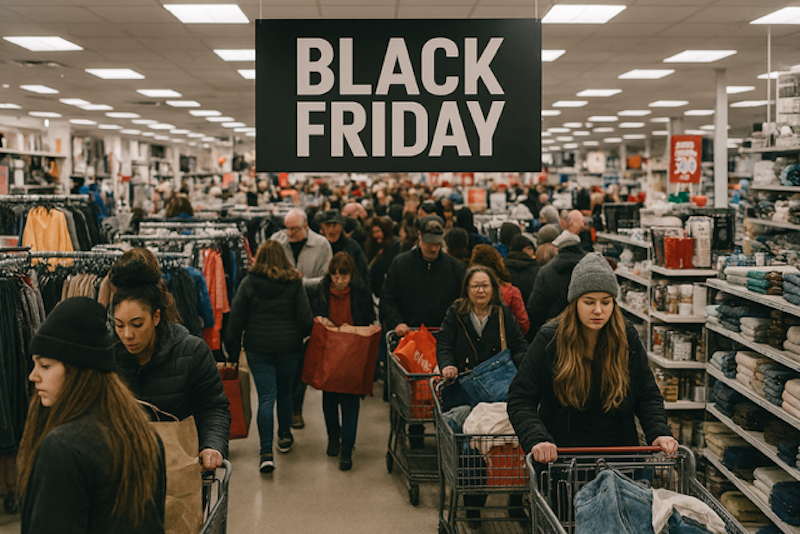
51% of Gen Z prefer going in-store for the shopping experience rather than buying something instantly online, according to research released by Snapchat and Portas.
The research, developed in partnership with YouGov, explores the shopping habits and attitudes of more than 2,058 Gen Z consumers. It identifies the emergence of a generation that invests in moments worth remembering, collects stories and shared experiences as proof they were there, and increasingly places greater value on things that are experiential, social and memory-making rather than simply transactional.
Gen Z is operating with a fundamentally different value system; one shaped by growing up in an on-demand digital world while simultaneously facing economic insecurity and uncertainty about the future. While convenience remains important, Gen Z increasingly wants shopping to deliver both efficiency and experience, blending practicality with discovery, connection and memory-making.
83% say their shopping approach depends on the situation: sometimes they want efficiency, other times they want to explore and discover new things. Gen Z sees shopping not just as a transaction, but as a way to spend time with friends, create memories and feel part of something. While 75% state getting what they want quickly and easily matters most when shopping, the research found emotional and social experiences still play a major role in purchasing behaviour.
$10 million...Freshflow, which specialises in AI powered food supply chain solutions for retailers, has closed a $10 million Series A funding round, led by Reimann Investors, with participation from Capnamic, caesar., World Fund, Venture Stars and Catatumbo Capital. It has also added IBB Ventures as a new co-investor.
In a LinkedIn post, Avik Mukhija, Founder and CEO at Freshflow, said: “Walk through a supermarket's fresh section. We've all been there: half the strawberries are mush, the avocados are rocks, the basil you wanted is gone. That's the visible tip of a much bigger problem.”
“Behind that shelf sits a fresh supply chain (producers, distribution centres, stores) that moves hundreds of billions of euros of fresh food across Europe annually. None of it runs on technology built for fresh. The systems in use today were built decades ago for canned soup. They can't handle a category that spoils and changes by the hour across the chain. Result: roughly a third of the fresh food across the supply chain, over €200 billion per year, ends up in the bin.”
He added: “Freshflow spent five years building Europe's first AI made specifically for the fresh supply chain. Today, nine of Europe's leading grocers across DACH and France run it in their stores, cutting waste by up to 30% and lifting revenue by 2–4%. From there, we're pushing upstream into distribution centres and producers themselves: "from store to source". This capital takes us further: more fresh categories, deeper into the supply chain, and into new European markets.”
21...easyGroup, the private investment vehicle of Greek-Cypriot entrepreneur Stelios Haji-Ioannou, has taken the wraps off easyShop.com, a new online marketplace that will go live later this year across 21 European countries. Marking easyGroup’s entrance into mainstream online retail, this is being developed and powered by OnBuy through its proprietary OnCommerce platform.
Haji-Ioannou says: “The easy family of brands has expanded into many new sectors by focusing on simplicity and value for money. I believe an online retail marketplace using a great domain like easyShop is a natural next step. I am delighted to welcome Cas Paton of OnBuy into the easy family, and I am looking forward to working with him to start recruiting sellers for our marketplace from now in 21 different countries. We are aiming for a consumer facing launch for consumers to be able to buy online from Q4 in 2026. Exciting times for the easy family!"
Cas Paton, CEO and Founder at OnBuy, comments: “easyShop removes many of the barriers that typically slow retail expansion by operating as a pure marketplace without inventory, logistics, or local infrastructure. Working with the easy family of brands brings together one of Europe’s most recognisable consumer names with proven marketplace expertise, accelerating awareness and enabling retailers to reach customers across multiple countries much more quickly.”
easyShop will operate as a pure marketplace, with no retail competition from the operator. Seller onboarding will begin ahead of the consumer launch.
$150 million and $2.5 billion...Factorial, a Spain-based AI workforce operations platform, has announced the closing of a $150 million Series D funding round at a valuation of $2.5 billion. The round was led by General Catalyst, which is making its first equity investment in Factorial, joined by other backers including Atomico and Four Rivers.
Alongside the equity round, General Catalyst is doubling down on its prior investment, stumping up an additional $540 million through its Customer Value Fund, bringing total capital committed to over $700 million.
Jordi Romero, CEO and Co-founder at Factorial, comments: "Ten years ago we built Factorial as a SaaS company. Today we are an AI first company, building agents for our customers, and we are doing it for over 16,000 businesses, from Europe, with the discipline that has defined our first decade. We have reset the product, the architecture, and the way our customers run their work around AI agents. General Catalyst's partnership gives us the conviction and the capital to turn that reset into a category-defining business. This round does not close a chapter. It opens the one that matters."
Pranav Singhvi, Partner at General Catalyst, says: "The next decade of enterprise software will belong to the companies that rebuild themselves around AI, not the ones that bolt it on. Factorial is doing exactly that, and doing it with a level of product horizontality and an ambitious growth at scale that is rare anywhere in the world. That combination is why we are deepening our partnership across both equity and our Customer Value Fund."
In a LinkedIn post, she said: “The first three weeks have been filled with learning, meeting an incredibly talented team, and seeing firsthand the energy and commitment people bring to the customer, brands, and business. I’m grateful for the warm welcome and look forward to partnering with teams across the company to create meaningful, lasting impact together.”
She added: “I’m joining Gap at an especially interesting moment for retail, as data and AI continue to enable new ways to unlock deeper customer and market understanding and inform better, faster decision-making across the business. Gap’s history is iconic, and I’m excited to help shape its next chapter.”
36%...Rithum has released research revealing that 36% of consumers have used AI tools or large language models (LLMs) to help buy groceries in the past six months.
1,046 online shoppers in the US and UK were surveyed for this. Among those using AI for grocery purchases, two-thirds say they use these tools to compare prices or weigh up different options before buying, streamlining the process for price conscious consumers. 47% tap AI to research product information, while 28% have already utilised AI tools to complete a grocery purchase.
Rather than relying solely on retailer websites, supermarket apps, or traditional search engines, shoppers are increasingly turning to AI tools for faster recommendations, price comparisons, and product research, all before they ever land on a retailer’s platform. For grocers, this creates a new competitive challenge. As AI becomes a key discovery channel, retailers may need to rethink how they ensure their products remain visible and competitive in AI driven shopping environments.
£6 million...Health and beauty retailer Superdrug reports a milestone involving financial wellbeing platform Steam. In a LinkedIn post, it said: “Together, our colleagues have saved over £6 million through Stream workplace savings platform since launching in 2023.”
It added: “By making saving simple and accessible, we’re helping our teams build stronger financial resilience and feel more confident about their everyday finances. It’s a great example of how small, consistent actions can have a big impact on wellbeing over time. We’re proud to support initiatives that truly make a difference for our people.”
$26 million...Tilt, a live auction app where AI connects people selling products in real-time, has secured $26 million in fresh funding. Joining the round is Vinted Ventures, the investment arm of Vinted, alongside existing backers TQ Ventures, Balderton Capital, Earlybird, Seedcamp, and others. The additional capital brings the total funding raised to date to over $50 million.
“The next generation won't browse static listings the way their parents did - they'll discover and buy through video, conversation, and live interaction, across every category,” says Abhi Thanendran, CEO and Co-founder at Tilt. “What Vinted did for second-hand, Tilt is doing for live. Their backing is the strongest possible signal that this is where the category is going next - and beyond the capital, we'll be drawing on Vinted's operational expertise and learnings as we scale."
The platform is now live across the UK, Italy, Spain, and Poland, and lays claim to being the only major live commerce platform operating at scale in Europe. The capital will be used to accelerate Tilt's AI roadmap, expand the seller base across new markets, and continue scaling the team.
Martijn van Heeswijk, Corporate Development Principal at Vinted, says: “Our mission is to make second-hand the first choice worldwide. Through Vinted Ventures, we back founders building the next generation of re-commerce. Tilt is creating a genuinely differentiated experience in live selling, a format we believe has strong potential in fashion and beyond, and we are excited to support them on that journey.”
100...AliExpress is using its summer sale (1st-10th June) to ramp up its push into live commerce. The company is partnering with more than 100 US creators and livestreamers to showcase products through live demos and product discovery, while highlighting Brand+, its channel for authenticated global brands.
"Summer is a peak season for discovery, whether shoppers are gearing up for outdoor adventures or refreshing their home setups," says Chris Gu, U.S. Country Manager, AliExpress.
"With Brand+, we're making it easier to find official products from recognised global brands, while our new creator led livestreams offer a dynamic way to see these products in action. We're combining competitive pricing with a more interactive, curated shopping experience."
AliExpress and select Brand+ partners will also host activations and giveaways on Reddit, with the aim of connecting directly with hobbyists and shoppers where they already discuss their passions.
10...Ingka Group, the largest Ikea retailer, is continuing to roll out a new compact store format that it has been testing since 2025 in a couple of European markets and in the US.
After the UK, Poland, and the US, Ikea in France is opening its first two compact stores while announcing plans to welcome customers in ten additional locations over the coming three years. The first such location, measuring 3,000 m², opened in Limoges on 27th May, while the second one is set to launch in Le Mans in the coming period.
"France is an important market for Ikea, and we are continuing to implement our strategy announced in 2023 by increasing our investments in the country. With these new locations, our ambition is to bring Ikea to new places where our unique offering can truly make a difference in people’s everyday lives,” says Juvencio Maetzu, CEO at Ingka Group.
Designed to open faster, these stores for towns and suburbs will be located primarily in retail parks where people already go for their weekly shopping. And although on average about a tenth in size compared to the classic store, they offer more than a quarter of the Ikea range for immediate pick-up. Portugal, Spain, Italy, Canada, Finland and a few other markets will also open their first compact stores in the coming months.
370 million...Quadient has released research showing that Brits are spending an estimated 370 million hours every month managing deliveries and returns.
A survey of 2,000 consumers found that parcel admin is becoming a recurring part of everyday life. The average consumer now spends 5.5 hours a month managing parcels, which is the equivalent of 66 hours a year per person. Across the UK population, that adds up to 4.44 billion hours a year.
The single biggest drain for Brits is waiting at home for a delivery, which accounts for 1.5 hours a month per person or 18 hours every year. While parcels were once mainly associated with receiving goods bought online or an occasional present, they now play a much broader role in modern life. On average, Brits now receive six parcels a month and send seven. Of the parcels received, four come from general online shopping, while one comes from regular subscriptions and one is work related.
Sending behaviour is even more varied. On average, Brits send one work related parcel a month, one returned item, two items sold through resale platforms, one parcel to friends or family, and one item they are lending to someone else.
35%...Return on investment (ROI) and economic uncertainty remain UK retailers’ top digital transformation barriers, according to research released by PMC and Retail Economics, with the trade-off between innovation investment and margin protection creating opposing pressure points for businesses.
Its survey of over 100 senior retailers and brand leaders showed that ROI and overall economic uncertainty were the most common transformation challenges for 35%.
“Despite a challenging economic reality, retailers can’t afford to take their foot off the innovation accelerator,” says Richard Lowe, CEO at PMC. “And that means cutting their digital transformation cloth a little differently. A back to basics approach - adopting simplified, product-led delivery models - will enable retailers to drive results from their tech stacks, without tying themselves in knots.”
Retail Economics' CEO, Richard Lim, says: “Retailers face a trade-off between the need to invest in innovation versus other, often competing, business needs around cost saving and margin protection.”
And this, he adds, requires a focus on setting - or resetting - digital foundations as well as fixing and removing siloed legacy systems.
$3.2 million...Handshake has announced a $3.2 million funding round led by Triple Point Ventures, with participation from Future Back Ventures by Bain & Company, Octopus Ventures, and other retail technology investors.
Handshake's AI powered platform gives retailers, wholesalers, and suppliers a single system to make, track, and execute commercial agreements, with the aim of replacing fragmented processes with a faster, more accountable, and data driven way to manage deals.
Victor Angline, Director of Merchandising Strategy and Supplier Relations at Gopuff, says: "Our merchandising teams oversee hundreds of supplier partnerships across multiple categories, so it's important we have the right tools to manage all the details. We chose Handshake to empower our merchants with a platform that enables seamless management of contracts, agreements, and joint business plans. They have been amazing partners, and we look forward to continued collaboration."
"Technology has transformed almost every corner of retail over the past decade, but retail buying still runs largely on spreadsheets, disconnected systems, and anecdotal memory," says Alex Lindsay, Co-founder and CEO at Handshake.
"That creates enormous operational complexity in an industry where margins are tight and every commercial decision matters. We believe there's a huge opportunity to build the AI native operating system for retail buying, one that gives retailers and suppliers the visibility, structure, and accountability they need to work better together."
7...Carrefour Belgium is opening its largest automated BuyBye store to date in Hasselt, featuring eight refrigerated display cases and also a cash machine.
This is located at the Corda Campus in Hasselt, one of the largest technology and innovation campuses in Europe. It is open seven days a week from 8 a.m. to 10 p.m. and is the seventh BuyBye location to date.
Carrefour previously opened BuyByes at its Service Center in Zaventem, at the Carrefour Express in Yvoir, at the ibis hotels at Charles de Gaulle Airport in Paris and at Brussels-South Station, at the NATO base SHAPE in Mons, and at the MontLégia Hospital in Liège.
$6.2 million...Rep AI, an AI platform built for e-commerce brands and online retailers, has raised $6.2 million in funding. The round was led by Silicon Road Ventures, with participation from Osage Venture Partners, Flashpoint Venture Capital, and Zendesk.
This builds on the company's initial $8.2 million Series A round announced in August 2024. The new capital will be used to accelerate product innovation, expand market reach, and support enterprise growth as Rep AI.
"E-commerce brands are increasingly overwhelmed by disconnected technology stacks that create operational silos and missed revenue opportunities," says Yoav Oz, Co-founder and CEO at Rep AI. "This funding further validates our vision of building a unified AI operating system for e-commerce - one that helps brands better understand shopper behaviour, improve conversion, and deliver stronger customer experiences from first interaction through long-term loyalty."
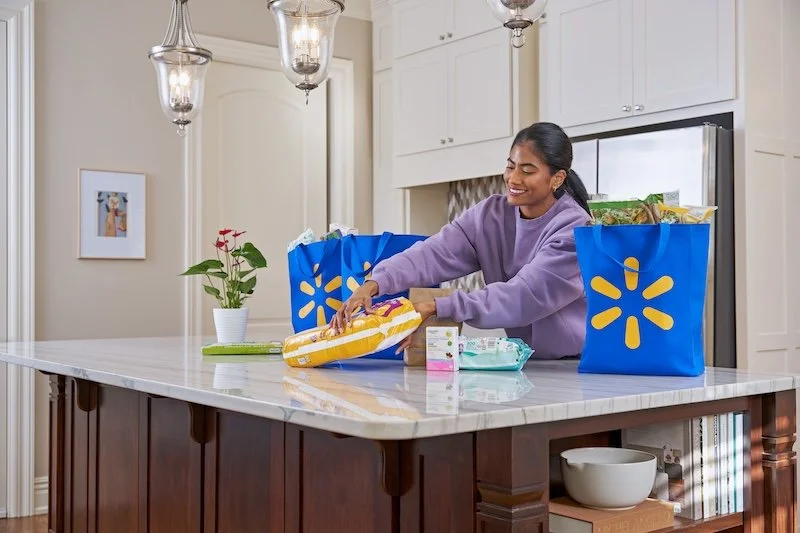
33...Walmart has announced the availability of 30-minutes-or-less delivery across 33 US markets. Customers can shop from more than 100,000 eligible items, including fresh groceries, pantry staples, baby essentials, cold and flu medicine, household supplies, pet food, electronics and prescription delivery.
This builds on Walmart’s long-term convenience strategy and broader Express Delivery offering. Powered by its store footprint, proximity to customers and an algorithm based on basket size, driver availability and distance from the store, the US retail giant says that it has significant opportunity to continue expanding delivery capabilities to more communities over time. In the first quarter of this year, it completed millions of deliveries in 30 minutes or less to more than 19,000 zip codes across the country.
Walmart is also seeing customer shopping behaviour evolve as faster delivery options become available. When customers see items available in less than 30 minutes, shopping behaviour increasingly shifts toward immediate, everyday needs and occasions, it claims.
“Customers are looking for faster, easier ways to get what they need in the moments that matter. We’ve been delivering orders in 30 minutes or less for more than a year, and today 26% of our Express Deliveries are already arriving in that timeframe,” says Tracy Poulliot, Chief eCommerce Officer at Walmart U.S. “As customers continue to look for more immediate shopping options, we’re making this service more prominent where it’s available, helping them get the items they need, right when they need them.”
The service is available in Austin, Dallas, Denver, Houston, Chicago, St. Louis, Atlanta, Tampa, Oklahoma City and several others, with additional expansion opportunities over time supported by Walmart’s proximity to customers and nationwide store footprint. In these markets, customers will see “Delivery in 30 minutes or less” when the option is available for the address associated with their account. It is available for a $10 fee for Walmart+ members.
$33 million...Matternet, a developer of commercial drone delivery systems for urban and suburban environments, has raised approximately $33 million in an oversubscribed private placement offering.
It has also completed a go public reverse merger transaction with Los Altos Ventures Corp., which has been renamed Matternet and will continue the firm’s historic business. It says that this makes it the first publicly reporting pureplay drone delivery venture.
The financing was led by a group of new investors, including Ed Eisler of EE Holdings and Mark Tompkins of Montrose Capital Partners, and included participation from several existing backers. The company intends to use the cash to launch its next-generation drone delivery platform and expand commercial operations across food, retail, and healthcare.
“As we enter the era of physical AI, we believe 2026 is the inflection point for drone delivery in the United States,” says Andreas Raptopoulos, Founder and Chief Executive Officer at Matternet. “With recent regulatory advances and growing enterprise adoption, we believe the category is entering a phase of exponential growth. With this financing, we are accelerating the development and deployment of our next-generation drone delivery platform to power instant, autonomous delivery for restaurant, retail, and healthcare leaders."
Raptopoulos adds: “Drone delivery is a magical way to move things from A to B. Instead of sending a two-tonne car across town to deliver a meal or retail item, a small, electric, autonomous aircraft can move it through the air faster, more efficiently, and at lower cost. Matternet has spent more than a decade building the aircraft, ground infrastructure, software, regulatory approvals, and operational experience required to make drone delivery work safely and reliably at scale.”
Matternet has partnered with organisations such as UPS for healthcare logistics and Dave’s Hot Chicken in the restaurant space. In recent weeks, it has also announced a partnership with SoftBank Robotics America to support the deployment of drone delivery networks, and launched drone delivery operations with the NHS in Central London.
$196.4 billion ...Retailers are accelerating investments in in-store intelligence technology at record levels, yet operational inefficiencies continue to rise, costing 6.4% of gross sales annually, up from 5.5% in 2025 and 4.5% in 2024, which total $196.4 billion across key retail sectors.
According to research from Simbe and Coresight Research, retailers are deploying pricing software and supplier platforms before establishing the shelf level data these systems require. This creates a gap between technology investment and ROI. Store technology adoption is nearly universal: 97% have deployed or plan to deploy store intelligence technology within the next year. Yet inefficiencies now cost retailers a growing share of gross sales. The research shows that technology sequencing - not investment alone - is what separates value creation from value erosion.
“Store technology decisions this year will shape competitive positions for decades,” says Deborah Weinswig, CEO and Founder at Coresight Research. “Our data shows that prioritisation determines return. Retailers that deploy shelf digitisation technology first build a compounding competitive advantage that is difficult to replicate.”
9,000 and 10,000...A new partnership will see on-demand delivery being offered from Dollar Tree’s full US store footprint on DoorDash. With more than 9,000 stores available across 48 states, consumers can now shop over 10,000 products from Dollar Tree on DoorDash.
"We pride ourselves on delivering value, convenience, and discovery to our customers every day. With our broad assortment of affordable products, including our expanded multi-price assortment, we’re excited to bring our unique value and ‘thrill of the hunt’ experience to DoorDash customers,” says Brent Beebe, Chief Merchandising Officer at Dollar Tree.
"Consumers are looking for easier ways to shop for everyday needs at prices that work for them," says Mike Goldblatt, Vice President of Enterprise Partnerships at DoorDash. "We’re excited to partner with Dollar Tree to make it even easier for shoppers to access what they need, find something new, and make the most of their budgets, all with the convenience of on-demand delivery."