.png)

It's Friday, the weekend is almost upon us, so let’s kick back and reflect on another eventful week for the retail tech space. Here's your briefing on the most important stories from the past few days, including Debenhams Group, PayPal, Tesco, adidas, project44, Walmart, Asos, Carrefour, Vusion, and Amazon.
1. First for Debenhams Group as it teams with PayPal on AI driven shopping experience in UK
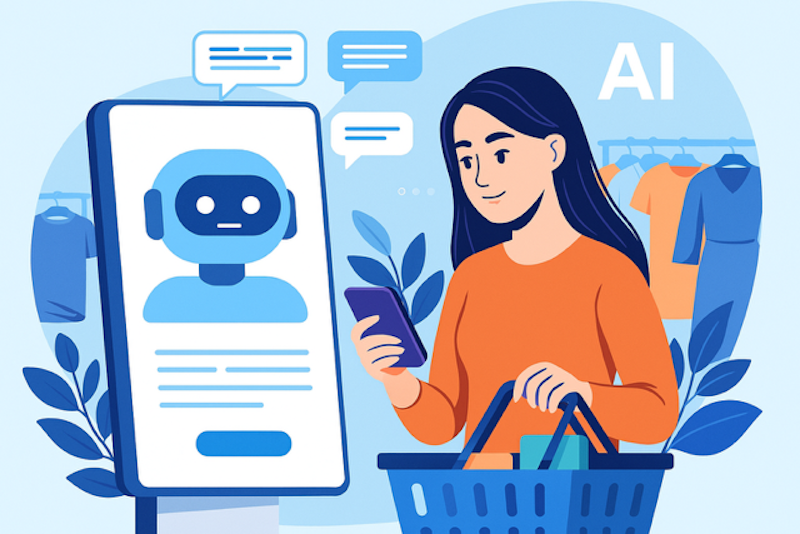
Debenhams Group, home to PrettyLittleThing, boohoo, boohooMAN, Karen Millen and Debenhams, has partnered with PayPal on an AI driven shopping experience, becoming the first retailer in the UK to enable customers to discover, receive personalised recommendations and check out entirely within the PayPal app.
PayPal is currently testing the AI assistant with select US customers, where it has also been integrated with AI tools such as Perplexity and Microsoft Copilot, with a broader US and UK launch planned later this year.
Shoppers can use an AI assistant within its platform to ask for product suggestions, explore relevant items and browse curated selections from brands including Karen Millen, boohoo and boohooMAN. Customers can then complete their purchase directly within the chat experience, with PayPal automatically using saved account details for home delivery.
Dan Finley, CEO at Debenhams Group, says: "Our goal is to help customers discover and be inspired by new products and brands, while making shopping as easy and enjoyable as possible.”
“This kind of innovation has the potential to fundamentally transform online retail; in a way we haven’t seen since the shift to mobile shopping. We’re proud to be the first UK retailer to partner with PayPal on this experience, bringing a faster, more intuitive way to shop to customers across our brands.”
2. Tesco reports significant safety progress through grocery giant's body camera programme
Oliver Tebbutt, Project Manager - Shrink & Security Technology Transformation at Tesco, has taken to social media to discuss the UK grocery retailer’s deployment of staff body cameras across both its convenience and large stores.
In a LinkedIn post, he said: “As we come to the end of the Tesco financial year, I’ve taken a moment to look back, and I’m incredibly proud of what we’ve delivered together. Through our body camera programme, we’ve made significant strides in creating a safer place for our colleagues to work and for our customers to shop.”
He added: “With the fantastic support of Reveal Media and Case Security , we’ve successfully deployed Reveal body cameras across 1,200+ convenience stores and 180 large stores, strengthening safety and confidence on the front line.”
“I’m also extremely proud that Tesco is now one of the first retailers in the UK to equip grocery home delivery drivers with body cameras, with 110+ dot.com sites now live. This is a huge step in protecting the colleagues who serve our customers every day out on the road.”
Tebbutt concluded: “Our technology teams have delivered something truly transformative: an internally developed video management system that enables us to securely store and manage our own body worn footage. This now gives us the ability to share incidents efficiently with our central hub and, where needed, with the police, ensuring we can take meaningful action against those who choose to abuse our colleagues.”
3. adidas taps project44 tech with focus on how AI transforming supply chain over next decade
project44, an AI powered decision intelligence platform for supply chains, has landed adidas as a customer.
In a LinkedIn post, Jett McCandless, Founder and CEO at project44, said: "Been chasing adidas for eight years. Last week, we officially closed them."
He added: "Eight years ago, Germany had just lifted the World Cup. Some of the players we’ll be watching this summer were still kids back then. That is how long this has been in the making. The adidas team impressed me from day one. Thoughtful. Grounded. Ambitious.”
“They have the rare ability to manage immediate, high stakes pressure, especially with a World Cup on the horizon, while staying obsessed with how software and AI will transform their supply chain over the next decade."
McCandless concluded: "Huge credit to our Europe team for earning trust the right way. This win wasn’t down to one person. It was a massive lift across product, sales, CS, and engineering. This is the team building the decision intelligence platform and logistics operating system for the world’s most demanding brands."
"I want to personally thank Sridhar Bhargav (Senior Director, Digital Process Management & Solutions) and Benedikt Birner (Vice President Global Partnerships) for the partnership. We don’t take the trust you’ve placed in us lightly."
4. Walmart launches Winter Olympics themed shoppable livestream event with Procter & Gamble
Walmart has partnered with Procter & Gamble for its latest shoppable livestream event. This went live yesterday on Walmart Live, Facebook, and YouTube and was made available on-demand afterwards.
In a LinkedIn post, Walmart’s Justin Breton said: “In today’s attention economy, entertainment and content have become the new storefront. The brands that win aren’t just showing products... They’re creating moments people actually want to spend time with. That’s exactly what we’re leaning into with our next shoppable livestream with Procter & Gamble.”
The pair went live from the Olympic Village in Milan with a Make Her Day Easy livestream event.
“Hosted by US Olympic Gold Medalist Laurie Hernandez, this experience brings customers inside a cultural moment most people never get access to, while making it instantly shoppable. Because increasingly, commerce works best when it feels less like shopping and more like access,” said Breton.
“During the live, Laurie spotlighted her everyday essentials, from Tampax to Crest to Venus, that help her stay confident, focused, and ready to perform at the highest level across three segments designed to feel human, authentic, and connected to real life. The livestream also featured Tampax’s newest brand ambassador, Tami, in one of the segments.”
Breton concluded: “What excites me most about moments like this is the ability to bring customers closer to something special. Sports, culture, content, and commerce are increasingly converging and livestream events continues to be one of the most powerful ways to meet customers where attention already lives.”
5. 7-Eleven ramps up AiFi technology powered checkout free store push across retailer's US locations
7-Eleven is expanding its frictionless checkout pilot using AiFi computer vision technology in select US locations.
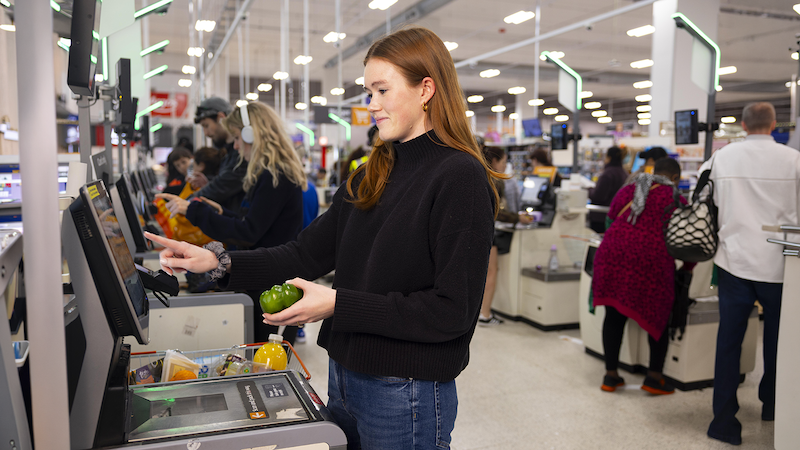
Customers scan products with their smartphone as they walk through the store, then pay for purchases using Apple Pay, Google Pay or a traditional debit or credit card. After this, they pay via a QR code on a screen at a dedicated station to complete the transaction.
In a LinkedIn post, Michael Guzzetta, Retail Innovation & Strategy Leader at Cookie Plug San Antonio, and a former H-E-B executive, said: “After Amazon pulled back from large format Just Walk Out, the easy narrative was that frictionless checkout had been overhyped and exposed. That was always too simple. The real issue was format economics.”
He added: “Large grocery boxes carry serious margin pressure, complex assortments, and higher shrink exposure. The math gets tight super fast. Convenience is different... Smaller footprints, fewer SKUs. high traffic density, and sales built on speed. If one register backs up at lunch, you feel it immediately. In my opinion, that’s where frictionless still has a shot.”
7-Eleven operates thousands of compact stores where throughput matters more than theatrical innovation, Guzzetta noted. If autonomous checkout can smooth peak demand without a massive ceiling retrofit or painful capex curve, it starts to look less like a tech experiment and more like operational plumbing.
He concluded: “Frictionless didn’t fail. It just needed the right habitat. The interesting story now isn’t whether the model works. It’s which formats can support it today without breaking the unit economics.”
“I expect to see more expanding pilots in convenience/grab 'n go, stadiums, airports, and possibly even theme parks, where margin is high, throughput is crazy and the need for quick convenience is the highest.”
6. Aussie OMS specialist Fluent Commerce bags A$46 million in funding from Bain Capital
Fluent Commerce, an Australian order management systems company whose customers include Prada Group, L’Oreal, Kingfisher, LVMH and JD Sports, has secured A$46 million in new funding from Bain Capital. It says that the investment will support global growth, and enable customers to scale faster with new AI powered capabilities in its Fluent Order Management offering.
Fluent Commerce CEO Graham Jackson says: “Our goal is to serve our customers with real-time data to enable them to remove profit leaks and to grow. Whether it’s into a new market or launching a new brand or experience, we provide the decision-making engine for AI ready commerce operations. This investment from Bain Capital enables us to supercharge our international growth and become the AI powerhouse for global brands.”
Paul Kennedy, Partner at Bain Capital, says: “We are excited to partner with Fluent Commerce as it accelerates its global expansion. Fluent has built a best-in-class order management platform guided by a proven management team, a focused customer first strategy, and technology leadership that has earned the trust of leading global brands. Our conviction in the company is grounded in our global technology investing experience, which we will continue to apply as we support its ongoing growth.”
7. New Asos virtual try-on experience launches in partnership with AI fashion platform AIUTA
Asos is laying claim to a unique hybrid approach to virtual try-on that lets customers see how selected products could look on them by uploading their own image or choosing an AI generated virtual model that represents their likeness.
This initially launches in partnership with AI fashion platform AIUTA with around 10,000 products on the Asos IOS app. The feature will be available to select UK and US customers before being rolled out more broadly. It is claimed that each experience loads in just four to sevent seconds, well ahead of typical industry solutions.
Melissa Lim, Head of Digital Product at Asos, says: “We know customers want the confidence of seeing how something will really look but don't want to be pushed into doing it one way. Our hybrid approach meets them where they are, giving everyone a try‑on option that feels right for them.”
8. Footwear and sports retailer Dosenbach-Ochsner deploys Exotec Skypod robotic system
Swiss company Dosenbach-Ochsner, part of the Deichmann Group, has deployed the Exotec Skypod system at its Luterbach site (Canton of Solothurn) - a robotic solution designed for intralogistics and warehouse automation.
More than 100 Skypod robots are now operational, supplying picking and packing stations from approximately 174,000 storage locations.
Dosenbach-Ochsner sells its footwear under the Dosenbach, Ochsner Shoes and Ochsner Sport brands across nearly 380 stores throughout Switzerland, and also online.
"E-commerce places very different demands on logistics compared to traditional bricks and mortar retail," says Gregor Oberfranz, Head of Logistics at Dosenbach-Ochsner. "This is particularly evident when sudden spikes in demand need to be absorbed and processed at pace. With Exotec, we are fully able to meet that challenge."
9. Pricer loses ESLs exclusivity agreement with Carrefour as retailer inks deal with Vusion
As part of its Carrefour 2030 plan, Carrefour is tapping Vusion’s platform as it looks to digitalise all of its hypermarkets and supermarkets in France by 2030. The partnership covers deployment of electronic shelf labels, smart rails, and AI driven cameras.
The deal sees Pricer lose its position as exclusive ESLs supplier to the retail giant.
In a press release, it said: “Today Carrrefour has decided to introduce an additional supplier for the sourcing of digital in-store solutions based on electronic shelf labels in France. In 2025 total sales to Carrefour was below 10% of our total net sales, and its contribution to our total gross profit was mid-single digit. The assessment for 2026 is that the contribution to Pricer total gross profit will be low single digit.”
“We look forward to continuing to build on our long lasting relationship, serving our large base of Carrefour stores, and supporting the growing base of franchise stores in Europe,” said Magnus Larsson, President and CEO at Pricer.
Meanwhile, Alexandre Bompard, Chairman and CEO at Carrefour, commented: “Carrefour 2030 is a growth plan that relies notably on accelerating tech and AI. By partnering with Vusion, a French technological champion with global reach, we are propelling our stores into a new era. The digitalisation of our shelves is the essential foundation for deploying our vision of modern retail, serving competitiveness, quality of life at work for our employees, and customer satisfaction.”
10. Amazon gives green light to first UK building that pursues new global zero carbon certification
Amazon has begun construction on its first delivery station designed to achieve Living Future's Zero Carbon Certification in the UK and Europe. This is situated in Stockton-on-Tees in the north-east of England, with Amazon set to stump up more than £40 million, creating 100+ roles in the process including managers, supervisors, and associates.
The investment is part of Amazon's plans to invest £40 billion in the UK from 2025 to 2027.
The 10,800m² delivery station, where packages are sorted for delivery to customers’ doorsteps throughout North Yorkshire and parts of County Durham, is set to open in the autumn. The building becomes eligible for certification in 2027 following a full year of operational data collection and third-party assessment.
It will be constructed to the UK Net Zero Carbon Buildings Standard, the new UK framework. It incorporates several key sustainability features including locally sourced and lower carbon building materials, and energy efficient systems. Amazon will track performance data and share learnings to help refine the methodology for future industry adoption.
“Decarbonising buildings means tackling both how we build and how we operate,” says Prajvin Prakash, UK Director at Amazon Logistics. “This site shows how we’re using smarter materials, advanced technology, and AI driven insights to cut emissions from day one and improve performance over the long term.”
“When fully operational, it’s expected to consume around 50% less energy than a typical logistics building - a significant step forward as we work toward our goal to achieve net-zero carbon by 2040. Backed by our £40 billion UK investment, we’re pairing sustainability progress with long-term economic growth in communities like Stockton-on-Tees.”

Comments (0)
No comments yet.