ISE 2026 Barcelona review: scale, substance, and the foundations we still need
James Pepper, CEO at Vista Technology Support, rounds up his key takeaways from ISE 2026, which took place last week in Barcelona, Spain.
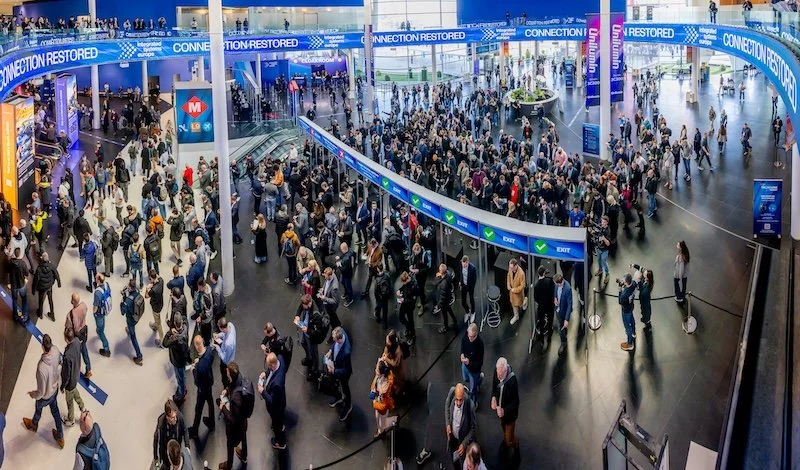
Twenty two years after its first edition, Integrated Systems Europe continues to serve the professional audiovisual industry’s annual reality check. The 2026 show in Barcelona set new benchmarks: more than 92,000 attendees, over 1,700 exhibitors and the largest show footprint the event has ever delivered. Those numbers are not just impressive; they show an industry expanding in confidence, ambition, and reach.
Integrated Systems Europe (ISE) is Europe’s event to visit to see the latest display technology, architectural AV, and media-over-IP technologies.
What’s new for 2026
Vista’s key takeaways from this year's ISE event;
Display Innovation: MicroLED‑in‑Package (MiP), COG, Transparent LED, and 21:9 5K
This year’s display launches were more than incremental. Advancements in MicroLED in Package (MiP) technology, ultra‑fine pixel pitches, transparent LED meshes, and new 21:9 5K LCD canvases signalled a maturing visual landscape across collaboration, retail, and architectural installations.
MicroLED‑in‑Package (MiP) technology - The Key benefits to retail and hospitality businesses.
Premium visuals at closer range: Ultra fine pitches and improved uniformity make displays suitable for high‑impact retail, control environments, and premium meeting spaces.
Built for uptime: Enhanced durability reduces pixel failures, lowering service interventions across long operating cycles.
Efficient brightness: Better energy efficiency at high brightness makes MiP suitable for sunlit retail and storefront environments.
Creative canvases: Slim, lightweight transparent LED options enable new architectural installations without compromising impact.
Chip on Glass technology from LG
Another highlight from ISE 2026 was LG’s introduction of its new Chip on Glass (COG) technology. This innovation integrates the driver circuitry directly onto the glass substrate of the display, resulting in thinner bezels, a sleeker profile, and greater design flexibility. COG panels deliver improved visual uniformity and allow for even slimmer, more seamless large format displays ideal for premium retail storefronts and modern architectural applications.
21:9 5k LCD canvases
Equally impressive were the new 21:9 5K LCD canvases, which drew attention for their expansive aspect ratio and ultra-high resolution, ideal for immersive collaboration spaces and digital signage.
Leading manufacturers such as LG, Samsung, and Philips showcased these wide-format displays, highlighting their suitability for hybrid meeting rooms, command centers, and premium retail environments.
Media‑Over‑IP: The IPMX Breakthrough
One of the strongest signals from Barcelona was the acceleration of interoperable AV‑over‑IP. With dozens of IPMX certified products announced, the industry finally has a standards‑based foundation for AV transport that aligns with IT expectations.
IPMX - What Operators and IT Gain
· Interoperability you can specify: Multi‑vendor AV‑over‑IP infrastructure becomes predictable, reducing integration friction.
· Standards over bespoke: Network friendly, open transport reduces custom engineering and simplifies future upgrades.
· Scales with the network: Builds on commodity switching, making expansion from rooms to entire campuses far more practical.
IPMX enhances digital and AV systems in all business environments including stores, restaurants, and head offices by enabling predictable, multi-vendor interoperability, simplifying integration and upgrades through open, standards-based network networking, and providing scalable infrastructure that can easily expand from individual rooms to entire offices and stores. This approach reduces complexity, future-proofs installations, and supports seamless growth as business needs to evolve.
The Physical Reality of Digital Screens: Mounts, Enclosures & Site Conditions
As visual technology advances, so do the mechanical and environmental demands that come with it. High‑brightness window displays, tiled direct-view LED (dvLED) walls, and outdoor signage all require engineered mounting solutions that manage weight, heat, servicing, airflow, and cable routing.
At ISE this year, vendors across the digital signage zones demonstrated sturdier rails, more flexible menu‑board systems and outdoor‑rated enclosures designed to withstand real‑world deployment conditions.
A standout example was Ergonomic Solutions, who showcased their latest range of mounting systems for retail, hospitality and QSR environments covering everything from wall‑mounted screens to in‑window displays, enclosed outdoor units, and modular menu boards. Consistency, compatibility, and deployment speed were common threads across their entire line.
Core message: If the physical installation isn’t right, the technology can’t deliver. Treat fixtures and fittings as part of the solution, not an afterthought.
The Invisible Layer: Cabling, Power, and Bandwidth Planning
Where many businesses fall short is not in screen selection, but in the unseen infrastructure behind the walls and above the ceilings. As content grows i.e., 4K, real‑time data, live streams and as players become more capable, the network load follows.
What should retailers consider before deploying the latest Digital Signage or office AV?
Cabling: Cat6A should now be considered the baseline for multi‑gigabit performance, safe bundling temperatures, and future compatibility.
Power over Ethernet: Modern displays and players often require PoE+ or PoE++ loads; this demands correct cable gauge, power, and switch capacity.
Traffic patterns: Signage networks spike during content refreshes and can sustain high throughput during live feeds, designed for peaks, not averages. Vista Technology Support can advise on your store, restaurant or office data cabling and Wi-Fi requirements.
Cybersecurity for Digital Signage: Expanding Attack Surface, Expanding Responsibility
Digital signage has become software defined and cloud‑connected media players, sensors, administrative portals, APIs, and data feeds. That makes these systems susceptible to the same vulnerabilities as any other networked endpoint.
Notably, ISE 2026 featured cybersecurity for the first time, highlighting the critical importance of treating digital signage with the same rigor as any other endpoint within retail or hospitality environments. This shift underscores the need for comprehensive security strategies that address the unique risks posed by highly visible, publicly accessible signage systems.
Digital signage is often located in prime sight of customers and the general public; therefore, signage systems are often accessible and can pose a security vulnerability for businesses.
Key measures include:
· Endpoint grade asset management, patching, and firmware control
· Multi‑factor authentication on CMS and player portals
· Zero‑trust segmentation between signage, POS, and corporate networks
· Secure‑boot capable hardware and signed updates
· Managed services for monitoring, configuration governance, and rapid response
The road ahead for digital signage in 2026
2026 stands out as a defining year for our sector. We are witnessing remarkable advances from fine pitch LED, MiP and COG technologies that bring vibrant screens and truly beautiful displays, to IPMX providing the robust, standards-based infrastructure we’ve long awaited. This year marks a significant shift: cybersecurity, mounting safety, and network readiness have finally claimed their rightful place at the core of strategic planning.
For those aiming to shape the future, the path is clear: lasting success comes from viewing each digital signage project as an integrated ecosystem of content, display, mounting, cabling, power, bandwidth, and security all working in harmony.
By getting the basics right, we enable genuinely immersive public experiences, dazzling creativity, and insight driven engagement. 2026 is more than the sum of its technologies; it is about unforgettable moments of visual storytelling that captivate audiences and redefine what is possible.