.png)
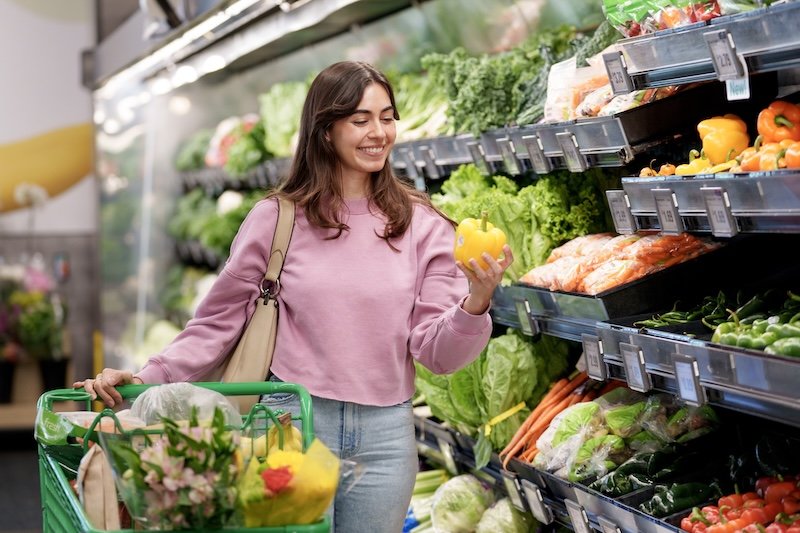
Yesterday, we reported that Amazon was binning its Amazon Go and Amazon Fresh physical stores experiment as it shifted its focus to on demand online delivery and new big box locations.
This shows that the US online giant hasn't learnt how to excel at in-store merchandising, despite owning Whole Foods since 2017, according to Marc de Speville, Partner, Digital Commerce at The Partnering Group.
He argues that there are three flawed assumptions behind Amazon’s grocery strategy.
First, the idea that the frequency of perishables purchases will drive higher sales of more profitable general merchandise and greater lifetime customer value is wrong.
“The hypermarket model doesn't work nearly as well online as it does in-store, as it's so much easier to jump to another website than drive to another store. And selling perishables online is not a profitable business per se,” de Speville said.
The second assumption is that Amazon's proven logistical expertise in general merchandise can be easily transferred to perishables. However, the requirements to fulfill full basket grocery orders with 40-50 SKUs across four temperature zones including made to order deli are totally different to and far more complex than general merchandise or even non-perishable groceries, which average one to two and four to five SKUs respectively.
Despite the purchase of Kiva in 2013 and a tech solutions focus, Amazon still relies on standard manual fulfillment for fresh orders and hasn't made any clear progress in automating this process.
The third assumption is that addressing a single pain point or copying existing retail formats is the way forward. “The failure of Amazon Fresh, Just Walk Out and other physical stores shows that the tech giant hasn't learnt how to excel at in-store merchandising, despite owning Whole Foods since 2017,” de Speville commented.
He added: “Amazon's main advantages vs supermarket incumbents are its willingness to test and fail, backed by extensive financial resources. The problem is that management isn't thinking big or strategic enough.”
“Just Walk Out was aimed at one particular pain point - check-out. Installing a MFC inside Whole Foods is mainly to enable customers to buy brands that don't meet WF standards. Building a massive hypermarket that is also optimised for online order fulfilment - well, Walmart knows a thing or two about that already.”
If Amazon is still determined to break into perishables, he believes that it needs to find a totally new way to integrate online and offline grocery in a way that combines superior customer experience and profitability, by automating the boring parts (centre store) and investing more in the human, high touch element (perishables).
“Such a solution has been staring them in the face for over a decade. While existing fulfillment solutions don't yet quite meet the necessary technical requirements in terms of throughput, latency, and capital and space efficiency, they are good enough to test customer acceptance.”
He concluded: “Amazon needs to think like the startup it used to be - big, bold, and breaking boundaries. It would be great to see it happen - the basic supermarket model is ripe for true disruption, having barely changed since the first self-service store opened in 1916.”
2026 RTIH Innovation Awards
Physical stores will be a key focus area at the 2026 RTIH Innovation Awards.
The awards will open for entries in April. They celebrate global retail technology innovation in a fast moving omnichannel world.
Our winners will be revealed at the 2026 RTIH Innovation Awards Ceremony, taking place at The HAC in Central London on Thursday, 15th October.
Check out our 2025 winners here.
Our 2025 hall of fame entrants were revealed during a sold out event which took place at The HAC on 16th October and consisted of a drinks reception, three course meal, and awards ceremony presided over by award winning comedian, actress and writer Tiff Stevenson.
In his welcome speech, Scott Thompson, Founder and Editor, RTIH, said: “This is the awards’ fifth year as a physical event. We started off with just 30 people at the South Place Hotel not far from here, then moved to London Bridge Hotel, then The Barbican, and last year RIBA’s HQ in the West End.”
“But I’m conscious of the fact that, to quote the legend that is Taylor Swift, You’re only as hot as your last hit, baby. So, this year we’ve moved to our biggest venue yet, and also pulled in our largest number of entries to date and broken attendance records.”
He added: “This year’s submissions have without doubt been our best yet. To quote one of the judges: The examples of innovative developments across both traditional and digital retail spaces were truly remarkable.”
Congratulations to our winners, and a big thank you to our sponsors, judging panel, the legend that is Tiff Stevenson, and all those who attended our 2025 gathering.


Comments (0)
No comments yet.