.png)

Do you like numbers? Do you like retail systems news? Then this is the article for you. Including Pricer, DRESSX, MyDello, Aptos, PwC, Tahina, the BRC, Evri Group, InPost UK, and Savvy.
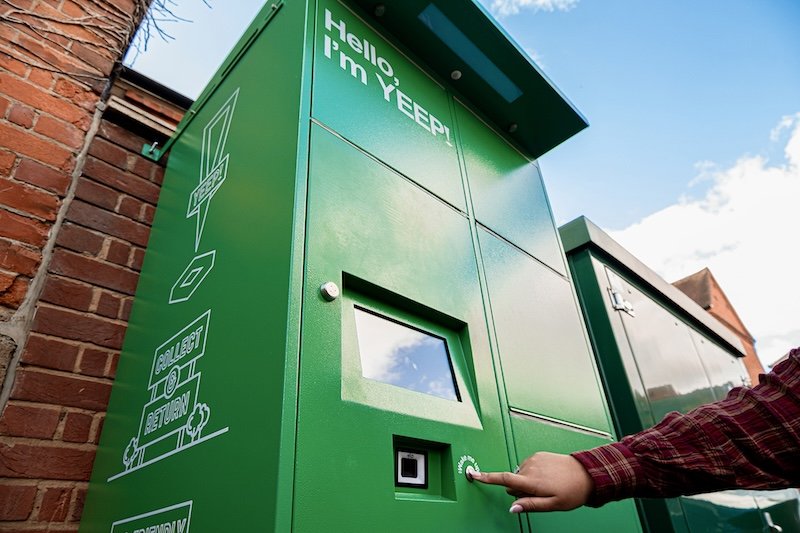
13,000…InPost is closing out the year with a milestone: 13,000 delivery and returns lockers now live across the UK.
In a LInkedIn post, the company said: “As the busiest season of the year gets underway, this expanded network means even more consumers can collect, send and return parcels with flexibility when it matters most - while retailers and host locations benefit from increased footfall and smarter logistics. A strong way to round off the year, with more to come.”
140 MSEK…Dutch co-operative supermarket chain PLUS has signed an approximately 140 MSEK agreement with Pricer to upgrade 265 of the retailer’s stores with new electronic shelf labels (ESL). The roll-out is planned for 100 stores during 2026 and 165 during 2027.
Since an agreement was agreed in 2020, it has equipped 440 locations with Pricer’s solution based on the store operation platform Pricer Plaza and ESLs, with the aim of increasing the efficiency of several in-store processes, such as supporting in-store picking of online orders, as well as optimising the processes for inventory and stock management.
“This agreement is a testament to our collaborative partnership with PLUS. By transforming aisles into digital gateways, we are transcending the physical shelf to provide the transparency and choice shoppers demand, ensuring they always find exactly what they need, when they need it,” says Kajsa Blixth, Chief Commercial Officer at Pricer.
1...DRESSX, a specialist in avatar fashion and AI styling technologies, reports its first experience on Meta Horizon Worlds with the launch of DressX Fashion Rivals, a competitive styling experience available on both VR and mobile.
“Bringing DRESSX to Meta Horizon is a breakthrough moment for our company and for the evolution of digital fashion,” say Daria Shapovalova and Natalia Modenova, DRESSX co-founders.
“Since founding the company, our vision has been to empower people to express themselves freely across virtual environments. With DressX Fashion Rivals, Meta Horizon gives us the scale, the tools, and the community to take digital fashion into an active cultural space where millions can dress, play, compete, and connect.”
Players receive a themed prompt, build an outfit from a curated digital wardrobe, walk the runway with custom animations, and rate each other’s creations.
“We are excited to introduce a new category of experience into Meta Horizon and to give millions of users a space where creativity is celebrated, individuality matters, and fashion becomes a medium for connection,” say Shapovalova and Modenova.

1,000...Research (carried out across 1,000 UK shopers) from retail and shopper marketing agency, Savvy, reveals a cautious yet resilient consumer mindset as households prepare for their final days of Christmas spending.
Although the UK has moved beyond the peak of the cost-of-living crisis, it highlights how many families are continuing to feel financial strain.
“Against a backdrop of fragile consumer confidence and uncertainty following the recent budget, UK shoppers are working hard to make their money go further,” says Catherine Shutttleworth, CEO at Savvy.
“Record Black Friday engagement shows how shoppers are responding to value and using deals, planning earlier and drawing on their loyalty point balances to help make Christmas special.”
“A big shift we’ve see this year is the growing influence of AI in the festive shopping experience. One in four shoppers are now using AI chatbots for inspiration this Christmas, rising to half of 18 to 34 year olds. With the major AI firms integrating commerce into their platforms, this will be a key trend to watch in 2026.”
75% of consumers say their discretionary spending will either increase or stay the same in 2026, presenting a significant opportunity for retailers that can meet expectations. Spending plans remain susceptible to economic factors, with 64% citing inflation and the cost of living as the top consideration that will influence their spending plans.
The top reason consumers choose to shop in a physical store instead of online is the ability “to see, touch or try on the product before buying” (61% UK/54% US). The second most important factor is “the ability to get the item immediately” (54% UK/ 53% US)..
19% of all respondents visit stores multiple times a week just to browse, with no specific purchase in mind. This trend is higher among younger consumers, with 59% of 25-to-34-year-olds shopping one or more times per week without a specific purchase goal.
The most annoying in-store frustration cited by consumers is "long lines at the cash register/till" (62% UK/ 63% US). The second biggest is “products being out of stock or hard to find” (53% UK/ 51% US). The report highlights that 89% of younger UK consumers (ages 25-34) would still be willing to make a purchase when an item is not immediately available.
285...Glory reports that Waitrose has selected the company’s CI-100X solution to streamline and improve its back office cash management process in its stores across the UK.
Glory is installing 285 CI-100X back office cash recycling devices in the UK grocery retailer’s stores with the roll-out now underway.
Mark McCallum, Senior Vice President EMEA, Managing Director UK & Ireland at Glory, says: “We are very much looking forward to working closely with Waitrose as we install our CI-100X devices across their back office UK store network. The CI-100X will also be fully integrated with our Flooid1 cash office software solution.”
“Waitrose is one of the most well known and loved retailers in the UK and we are hugely excited to play a part in helping to support their continued success.”
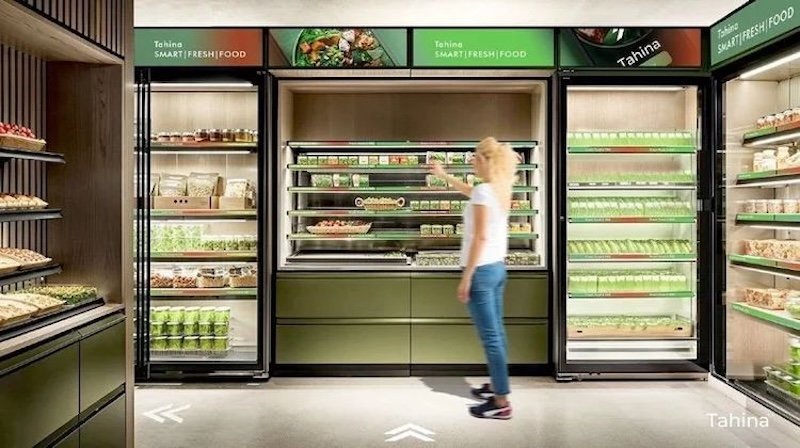
£1.5 million to £2 million...Tahina, a London-based FoodTech startup which combines autonomous retail with fresh, healthy meals, reports that it is working towards a £1.5 million to £2 million investment round (SEIS/EIS approved) to open its flagship London store and scale its cashierless technology.
Co-Founder Javier Troitino-Ramos says, “The traditional fast food model is under pressure. Costs are rising, and customers expect much more. Tahina is providing a clear way forward with our technology driven approach.”
Co-Founder Emilio Malik adds: “With our tech and production model, we’re confident in our ability to grow into a £100 million+ brand over the next decade. People want fresh, sustainable meals without the premium price tag or long wait times - that’s exactly where we thrive.”
Tahina plans to open 10+ locations over the next three years and expand its presence through Tahina Capsules - modular, autonomous food units for offices, universities, hospitals, and event venues. The company says that its aim is to hit £10 million in revenue and disrupt the £980 billion global fast food market.
€3.1 million...Estonian logistics startup MyDello has landed €3.1 million in new funding.
It has raised a total of €4.35 million to date, having secured a €1.25 million seed funding in October 2023.
Icelandic VC Frumtak Ventures led the latest investment round, with participation from existing investor Finnish early stage VC Superhero Capital. Joining the board are Frumtak Ventures general partner Andri Heiðar Kristinsson and (previous investor in MyDello) Jevgeni Kabanov, President of urban mobility company Bolt, an Estonian scaleup.
The cash will be used to accelerate international expansion, starting with the UK, where customers can use the platform from December. MyDello intends to fully embed its AI technology into its systems, with the aim of automating most shipment operations by end of 2026.
MyDello is an exclusively B2B company, working with clients drawn from sectors such as manufacturing, wholesale, and e-commerce. The company labels itself the first digital freight forwarder to offer instant door to door pricing and routing for all freight modes (generated with a single inquiry), from 1 kg all the way up to 10 shipping containers, drawing on agreements with 400+ carriers and partnerships with the likes of DHL, Lufthansa, Maersk, Qatar Airways, and Finnair.
MyDello has onboarded 12,500 businesses from 110 countries to its platform. It is currently available across 12 countries in Europe and China, with the company on track to cover every European country by 2027.
2,500...UK parcel delivery firm, Evri Group, has announced a recruitment drive of 2,500 roles nationwide in the wake of a merger with DHL eCommerce UK, and acquisitions of Coll-8 and UK Mail.
This comes amid parcel volumes increasing 12% to 425 million in its record half year results for the 26 weeks ended 30th August 2025.
Martijn de Lange, CEO, Evri Group, says: “We continue to deliver phenomenal growth at Evri, and none more so than within our hard working courier network, who are truly the backbone of our business.”
“At a time when many companies are reducing headcount and unemployment is growing, we’re proud to be creating thousands of opportunities and leading the way with initiatives like Evri Plus.”
Evri plans to hire the 2,500 roles across head office corporate functions, couriers, depot and hub roles, and Evri Premium roles. This follows the relaunch of its Evri Plus initiative earlier this year, which it says is backed by union and gives self-employed couriers access to benefits such as 28 days paid holiday, pension contributions, parental leave, and guaranteed national minimum wage.
£24.6 billion...According to PwC research, UK consumers are set to spend £24.6 billion on presents and celebrations over the Christmas period this year, a 3.5% increase from the £23.7 billion spent in 2024. Average spending per adult is forecast to rise from £449 to £461.
This year, 15% of shoppers say they will increase their spending compared with last Christmas, with an almost equal number (14%) saying they will spend less. This is a slightly more pessimistic outlook than this time last year, when 20% of consumers said they would spend more on festivities and 16% spend less.
12.6% amd 64%...The British Retail Consortium (BRC) has published research showing the changing way in which people made payments in 2024. This year’s survey reveals a significant decline in the use of credit cards, from 14.2% of transactions to 12.6%. With higher interest rates making credit cards a more expensive way to shop, consumers turned to debit cards where usage increased from 62.0% to 64.0% of transactions.
As the cost-of-living crisis eased, some customers returned to old habits. The weekly shop showed signs of a comeback with consumers making fewer but larger transactions. The total number of transactions fell from 20.9 billion to 20.4 billion while the average transaction value rose across all payment types.
While cash usage declined it still remains an important payment method for many customers, accounting for 19.2% of all transactions, though the average transaction value was significantly smaller than other payment methods. Despite their declining popularity, for larger transactions, consumers preferred using credit cards which offer additional protections for shoppers.
More shoppers were exploring less traditional payment methods than ever before, particularly for larger transactions. This included the use of gift vouchers, PayPal and buy now pay later.

Comments (0)
No comments yet.